


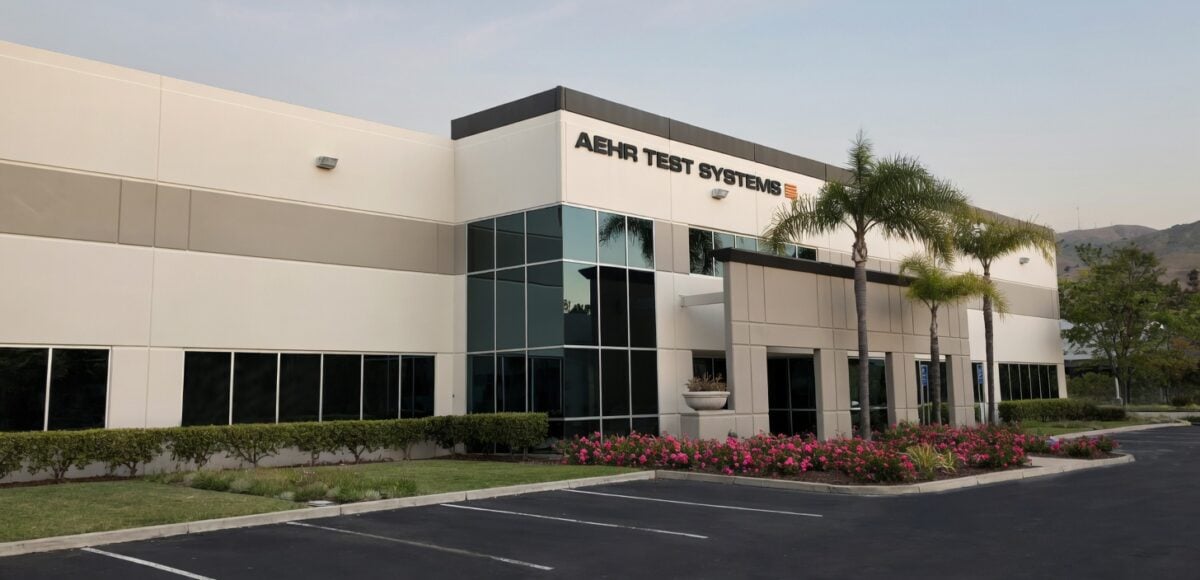
Key Highlights
- AEHR delivered Q3 EPS of -$0.05, surpassing the Street’s -$0.07 estimate, though revenue of $10.3M fell short of the $10.8M consensus
- The company secured $37.2M in bookings during the quarter with a book-to-bill ratio exceeding 3.5x, a dramatic increase from the prior quarter’s $6.2M
- Effective backlog climbed to a record $50.9M after incorporating $12.2M in additional orders received during Q4’s first five weeks
- Management now anticipates FY2026 revenue will land at the upper end of its $45M–$50M guidance corridor
- Lake Street Capital lifted its target price to $56 from $50; William Blair reaffirmed its Outperform stance
Aehr Test Systems delivered quarterly results that appeared mixed on the surface — yet investors looked beyond the revenue shortfall and focused squarely on the dramatic surge in bookings.
Third-quarter revenue totaled $10.3 million, representing a 44% decline year-over-year and falling slightly below the $10.8M analyst consensus. The company recorded a non-GAAP net loss of $1.5 million. However, the loss per share of $0.05 came in two cents better than Wall Street’s expectations.
The standout narrative centered on new orders. Aehr disclosed $37.2 million in third-quarter bookings, a substantial leap from the preceding quarter’s $6.2 million figure. The book-to-bill ratio exceeded 3.5x — a metric that indicates robust pipeline momentum for future revenue conversion.
[[TWEET_EMBED]]The backlog at quarter-end registered $38.7 million. When management incorporated an additional $12.2 million in orders secured during the opening five weeks of the fourth quarter, the effective backlog reached an all-time high of $50.9 million. Executives now anticipate achieving the upper boundary of their $60M–$80M second-half bookings projection.

CEO Gayn Erickson highlighted that the company is “the first company to successfully demonstrate and ship a wafer level burn-in solution for AI processors.” He referenced a $14 million production follow-on order from its primary AI accelerator customer for FOX-XP systems engineered to test nine 300mm wafers simultaneously.
AI and Silicon Photonics Drive New Customer Wins
A fresh silicon photonics customer submitted an inaugural order for multiple FOX-XP systems aimed at the hyperscale data center optical interconnect marketplace. These systems are slated for delivery during the fiscal fourth quarter, which concludes May 29, 2026.
Aehr’s primary silicon photonics customer also ordered a follow-on high-power FOX-XP WaferPak system along with an upgrade to its current configuration.
Within the power semiconductor arena, a new silicon carbide customer based in Taiwan — serving the Greater China electric vehicle market — purchased a FOX-XP system for qualification and production purposes. Erickson acknowledged observing an “uptick in activity” among silicon carbide manufacturers but cautioned that Aehr isn’t yet projecting substantial revenue contributions from this vertical.
Memory Prospects and Full-Year FY2026 Guidance
The memory sector represents a longer-horizon growth opportunity. Aehr is currently engaged in discussions with an important supplier regarding specifications for next-generation high-bandwidth flash technology, with a potential development partnership expected to finalize within the next few months. Such an agreement could trigger a 12–18 month development timeline, potentially leading to volume order ramps during fiscal 2028.
For the complete fiscal year, Aehr maintained its FY2026 revenue guidance range of $45M–$50M while signaling that results will likely reach the upper boundary of that band. The company also executed the full $40 million ATM authorization and closed the third quarter with $37.1 million in cash reserves.
Lake Street Capital elevated its price target to $56 while maintaining its Buy recommendation, characterizing the bookings inflection as the “headline story.” William Blair’s Jed Dorsheimer, who carries an Outperform rating, indicated that additional customer announcements are “inbound.”
AEHR shares entered Wednesday trading up 35% for April and more than 140% year-to-date, according to Dow Jones Market Data.
Get 3 Free Stock Ebooks
Discover top-performing stocks in AI, Crypto, and Technology with expert analysis.
- Top 10 AI Stocks - Leading AI companies
- Top 10 Crypto Stocks - Blockchain leaders
- Top 10 Tech Stocks - Tech giants


