


TLDR
- Block revealed plans to eliminate more than 4,000 positions (approximately 40% of staff), attributing the move to AI efficiency gains
- The announcement triggered concerns about AI’s potential to upend established financial services companies such as American Express
- American Express (AXP) shares declined nearly 8% during Friday’s session
- Significant put option volume indicated traders positioning for additional downside, with the put-to-call ratio reaching 2.6
- AXP has declined 11.39% year-to-date, accompanied by a sharp increase in implied volatility
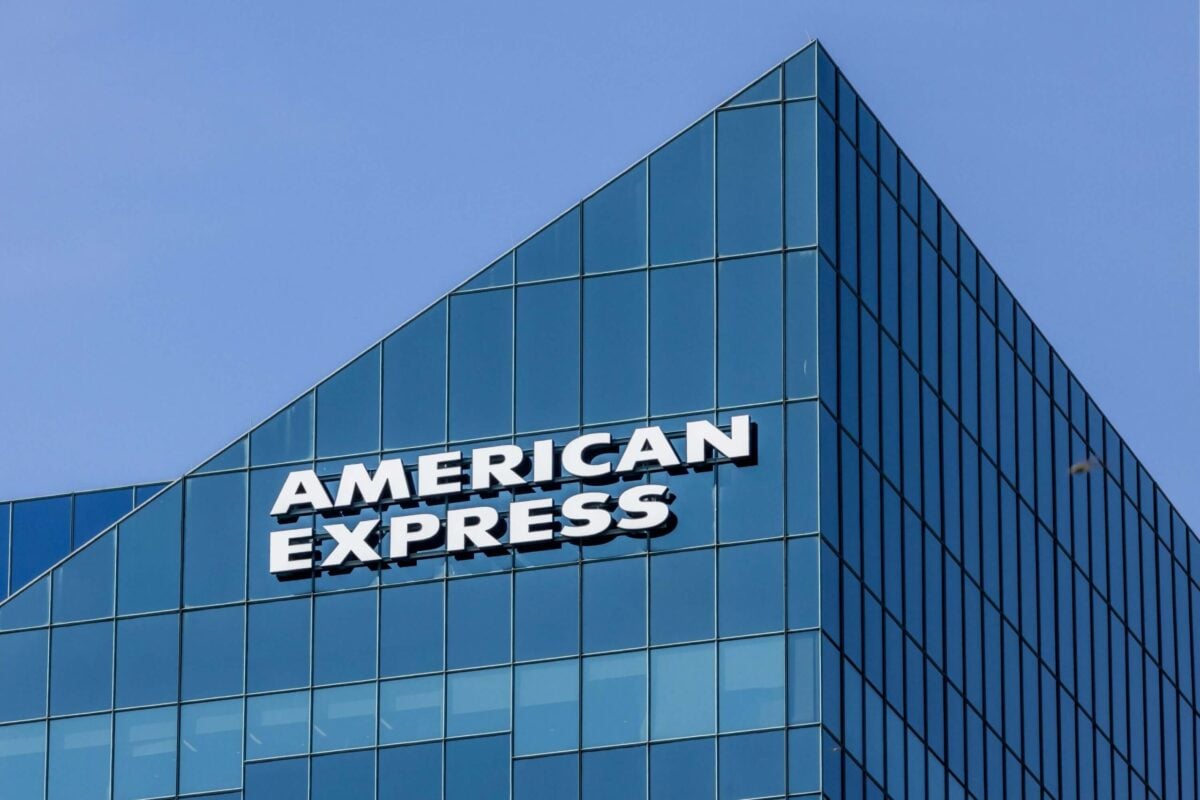
American Express $AXP experienced a nearly 8% decline on Friday following Block’s disclosure of substantial workforce reductions that shook investor sentiment throughout the financial services industry.
Block disclosed plans to eliminate over 4,000 positions, representing approximately 40% of its entire workforce. The announcement accompanied the company’s fourth-quarter and full-year 2025 financial results.
Block’s founder and CEO Jack Dorsey characterized the workforce reduction as a consequence of AI-driven operational efficiency. In his shareholder communication, he stated: “A significantly smaller team, using the tools we’re building, can do more and do it better.”
Dorsey emphasized that “intelligence tool capabilities are compounding faster every week,” indicating this represents an ongoing transformation rather than an isolated restructuring event.
The market response was swift and severe. If a technology-oriented digital payments platform like Block can eliminate nearly half its personnel through automation, investors naturally questioned the implications for legacy financial institutions.
This concern placed American Express squarely in focus. Even with its established position as a credit card industry leader and substantial technology investments over the years, the market perceived AXP as potentially exposed.

The selloff was immediate. AXP shed nearly 8% throughout the trading day, settling at $307.95. The stock fluctuated between $307.67 and $321.01 during the session.
Options Market Signals More Concern
The selloff extended beyond equity trading. Options activity reinforced the bearish sentiment.
Approximately 22,400 put contracts traded on Friday, representing roughly five times typical daily volumes. The bulk of this activity concentrated on March and June 2026 $280 strike puts, with approximately 4,700 contracts at those strikes.
The put-to-call ratio surged to roughly 2.6. This clearly indicated traders were purchasing downside protection rather than expressing bullish sentiment.
At-the-money implied volatility increased by over six points, signaling heightened expectations for future price fluctuations in AXP shares.
Broader Context
Friday’s decline represents part of a larger downtrend. AXP now shows an 11.39% year-to-date loss, marking a challenging beginning to 2026 for a stock that recently touched a 52-week peak of $387.49.
Typical daily volume averages approximately 3.1 million shares. Friday’s volume registered just 379,000, indicating the decline stemmed more from sentiment shifts than widespread selling.
American Express maintains a market capitalization near $212 billion, operates with a gross margin of 60.65%, and provides a dividend yield of 1.06%.
The stock’s technical sentiment indicator currently displays a “Buy” signal, though that hasn’t prevented the recent downward pressure.
AXP has incorporated AI into its operations for years and has successfully navigated technological transitions throughout its history. Nevertheless, Block’s announcement proved sufficient to trigger Friday’s investor exodus.
The concentrated put option activity in March and June 2026 expiration cycles suggests market participants are preparing for sustained uncertainty surrounding AXP through the middle of the year.
Get 3 Free Stock Ebooks
Discover top-performing stocks in AI, Crypto, and Technology with expert analysis.
- Top 10 AI Stocks - Leading AI companies
- Top 10 Crypto Stocks - Blockchain leaders
- Top 10 Tech Stocks - Tech giants


