



TLDR
- Astera Labs stock dropped 14% on Tuesday following AMD’s announcement of a partnership with Oracle to deploy 50,000 GPUs starting in the second half of 2026
- The stock decline appears connected to concerns that AMD’s collaboration with Oracle could impact Astera’s PCIe connectivity solutions, similar to worries raised in September about Intel’s deal with Nvidia
- Arista Networks launched a new Ethernet ecosystem, creating additional competitive pressure on Astera Labs in the AI infrastructure connectivity market
- Despite the stock decline, Astera Labs recently showcased its connectivity solutions built with PCIe, UALink, Ethernet, CXL, and OpenBMC standards for AI infrastructure
- The stock has surged 160% over the past year but faces valuation concerns from multiple analysts who have issued Sell ratings due to high pricing
Astera Labs shares fell 14% by late morning trading on Tuesday. The drop came right after AMD announced a new partnership with Oracle to deploy 50,000 GPUs beginning in the second half of 2026.
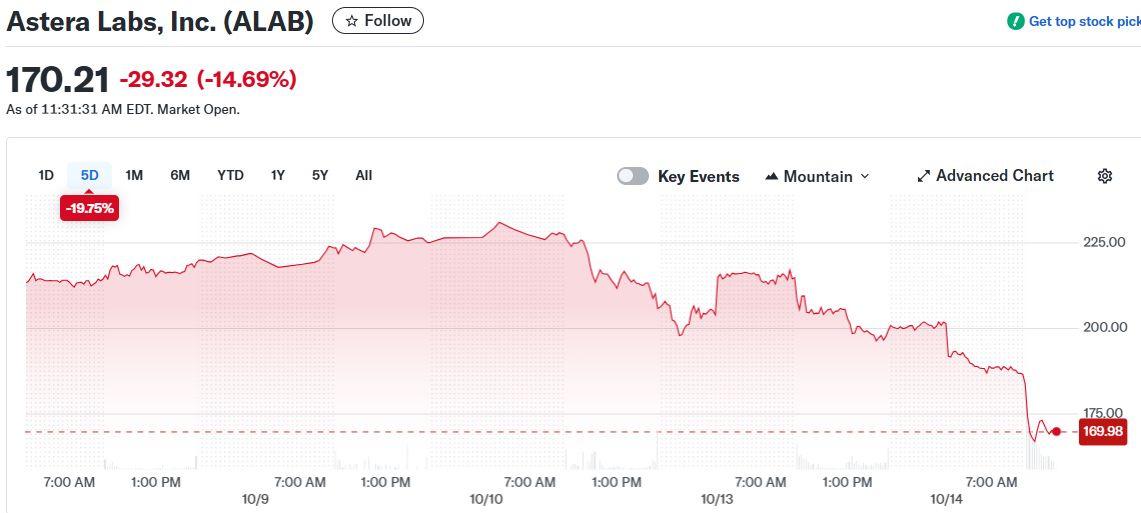
The semiconductor connectivity company designs solutions for cloud and AI infrastructure. Its stock has been volatile lately as the market watches how new partnerships between major tech companies might affect its business.
The AMD-Oracle deal seems to have brought back worries that first surfaced in September. Back then, Morgan Stanley raised concerns about Intel’s agreement with Nvidia to co-develop PC and data center chips.
The investment bank pointed out that extending NVLink into the x86 domain could potentially replace traditional PCIe connections between x86 CPUs and Nvidia GPUs. This matters because Astera Labs generates substantial revenue from its PCIe content.
The latest AMD-Oracle partnership appears to have reignited similar concerns among investors. They’re questioning whether these types of deals could reduce demand for Astera’s connectivity solutions.
But there’s another factor weighing on the stock. Arista Networks recently unveiled a new Ethernet ecosystem that creates fresh competitive pressure for Astera Labs.

The market reaction suggests investors are worried about Astera’s position as industry standards evolve. More competition in the AI infrastructure connectivity space is making them nervous.
Recent Product Announcements
Just one day before the stock decline, Astera Labs revealed its connectivity solutions for AI infrastructure. These products work with PCIe, UALink, Ethernet, CXL, and OpenBMC standards.
AMD’s director of AI Technology and Ecosystems praised the collaboration. He said the future of AI infrastructure depends on an open ecosystem that lets customers choose the best AI accelerator for their specific needs.
The partnership with Astera Labs on UALink connectivity aims to help customers deploy AMD Instinct GPUs at scale. The goal is delivering performance, energy efficiency, and flexibility in open rack architectures.
Analyst Views and Stock Performance
Earlier this month, Bank of America initiated coverage of Astera Labs with a Neutral rating. They set a $230 price target based on the company’s position to benefit from its PCIe and UALink retimers and switches.
However, several Seeking Alpha analysts have recently given the stock Sell ratings. Their main concern centers on valuation.
The stock has surged 160% over the past year. This rapid rise has some analysts questioning whether the current price reflects realistic growth expectations.
The company’s market cap now stands at $34.28 billion. The average trading volume is 6.1 million shares.
The year-to-date price performance shows a gain of 48.21%. Technical sentiment signals currently indicate a Buy rating despite Tuesday’s sharp decline.
Astera Labs continues to work on collaborations for open standards in AI infrastructure. The company showcased these efforts at recent industry events but the market remains focused on competitive threats from both new partnerships and rival products.
Get 3 Free Stock Ebooks
Discover top-performing stocks in AI, Crypto, and Technology with expert analysis.
- Top 10 AI Stocks - Leading AI companies
- Top 10 Crypto Stocks - Blockchain leaders
- Top 10 Tech Stocks - Tech giants


