


TLDRs;
- Bank of America rises 1.4 percent as Treasury yields boost lending income expectations.
- Surging oil prices strengthen investor confidence in bank profits and market momentum.
- Investment banking fees are expected to jump ten percent supporting overall revenue growth.
- Economic slowdown and credit pressures could limit BAC’s gains despite favorable rate conditions.
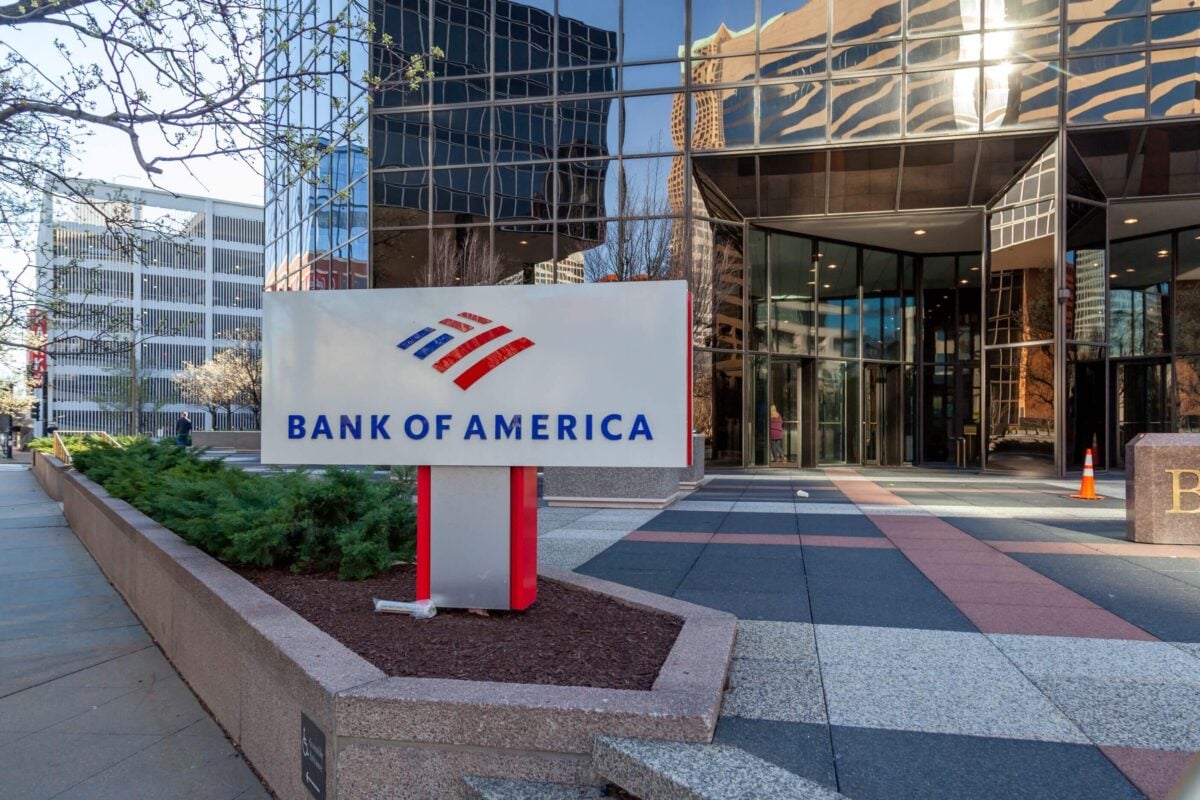
Bank of America (NYSE: BAC) saw its stock climb 1.4% on Tuesday, closing at $48.17, even as major U.S. indexes experienced modest declines.
While the S&P 500 fell 0.36% and the Dow lost 0.19%, BAC’s performance stood out as investors focused on the potential for stronger lending income. The shift comes amid rising Treasury yields, which have historically bolstered banks’ net interest income by widening the gap between loan earnings and deposit costs.
Analysts say this renewed attention to lending margins is part of a broader rotation among financial stocks, as investors respond to a changing interest rate outlook. Traders are no longer pricing in Federal Reserve rate cuts for 2026, prompting a re-evaluation of revenue prospects for major banks.
Bank of America Corporation, BAC
Oil Price Surge Supports Gains
Energy markets also played a role in BAC’s upward movement. Oil prices surged more than 4% during the trading session, reinforcing investor sentiment that banks could benefit from stronger corporate and consumer borrowing activity. As energy prices climb, inflationary pressures rise, which can influence interest rates and borrowing costs, factors that directly impact bank profitability.
Carol Schleif of BMO Private Wealth noted, “Watching oil and watching interest rates” is key to understanding trader behavior. For investors, this dual effect of rising yields and oil prices creates a favorable backdrop for BAC’s short-term outlook.

Investment Banking and Fee Growth
Beyond lending, Bank of America is projecting strong fee income from investment banking. Co-President Dean Athanasia highlighted turbulence in capital markets and wealth management, describing them as “all good revenues.” A 10% increase in investment banking fees is expected for the first quarter, offering an additional growth lever beyond net interest income.
The combination of higher fees and potential lending gains positions BAC as a relative outperformer among major banks. Other big financial institutions such as JPMorgan, Wells Fargo, and Citigroup also experienced gains, though BAC’s rise was among the more notable moves.
Risks and Economic Headwinds
Despite the positive momentum, potential headwinds remain. U.S. business activity dropped to its lowest point in nearly a year in March, partly due to rising energy prices. Private credit markets, including funds managed by Apollo Global and Ares, faced heavy redemption requests, restricting withdrawals. About $14 trillion in high-grade bonds are expected to enter the market this year, which could push interest rates higher and tighten credit spreads.
The key question for BAC investors is whether higher yields can sustain revenue growth before broader economic slowdown impacts lending margins. For now, traders appear confident, but continued monitoring of oil prices, credit conditions, and Treasury yields will be critical for future performance.
Summary
Bank of America’s stock outperformed broader markets on March 24, boosted by climbing Treasury yields, a surge in oil prices, and strong fee growth projections. While the outlook remains favorable in the short term, economic headwinds and credit pressures could affect future gains. Investors are closely watching the balance between rising rates and slowing growth to gauge whether BAC can maintain its momentum.
Get 3 Free Stock Ebooks
Discover top-performing stocks in AI, Crypto, and Technology with expert analysis.
- Top 10 AI Stocks - Leading AI companies
- Top 10 Crypto Stocks - Blockchain leaders
- Top 10 Tech Stocks - Tech giants


