


Key Highlights
- Bitcoin plummeted to $70,900, registering a 2.5% decline over 24 hours following Trump’s declaration of a U.S. Navy blockade in the Strait of Hormuz
- Equity futures suffered losses on Monday, with Dow futures retreating approximately 0.6%, S&P 500 futures declining 0.7%, and Nasdaq futures shedding 0.8%
- Ceasefire negotiations between Washington and Tehran held over the weekend in Islamabad collapsed without reaching a peace agreement
- Crude oil markets experienced dramatic gains, with WTI crude surging beyond 8% to surpass $104 per barrel
- First-quarter earnings season for major U.S. financial institutions commences this week, with Goldman Sachs reporting Monday
Bitcoin maintained levels above $73,000 throughout most of Saturday before experiencing significant selling pressure. The decline initiated following Vice President JD Vance’s confirmation late Saturday evening that ceasefire discussions between the United States and Iran held in Pakistan had reached an impasse.
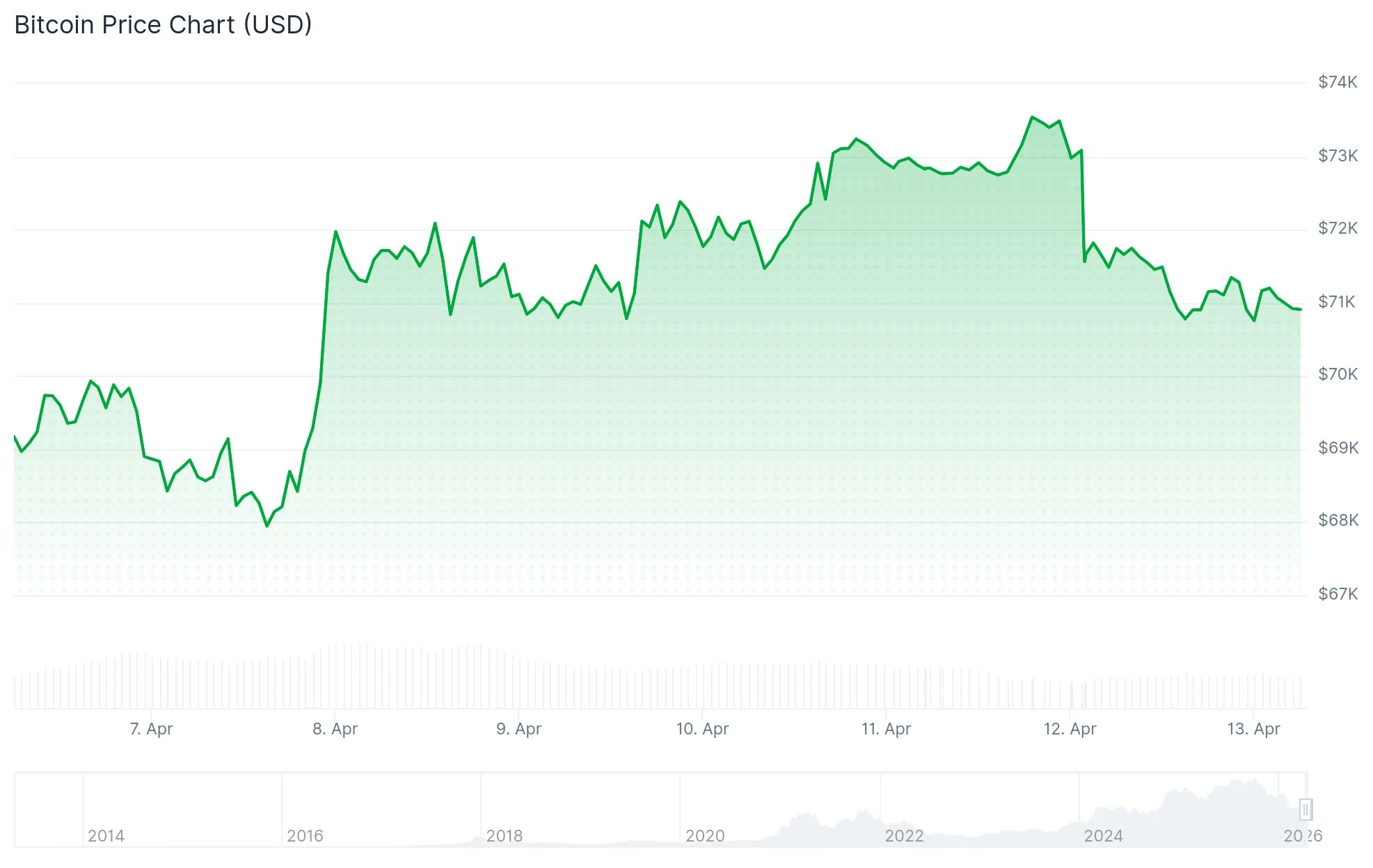
Subsequently, President Trump announced via Truth Social on Sunday that the U.S. Navy would implement a blockade targeting “any and all ships trying to enter, or leave, the Strait of Hormuz.” Following this pronouncement, Bitcoin accelerated its descent, dropping to $70,900.
The leading cryptocurrency has shed 2.5% in the past 24-hour period.
Tehran had previously imposed restrictions on maritime navigation through the strategic waterway following U.S. military strikes conducted in late February. Washington’s blockade declaration represents a significant intensification of hostilities between the two nations.
Equity index futures retreated Monday morning as traders absorbed the implications of the announcement. Dow Jones futures declined approximately 0.6%, suggesting an opening loss exceeding 580 points. S&P 500 futures contracted 0.7% while Nasdaq 100 futures dropped 0.8%.

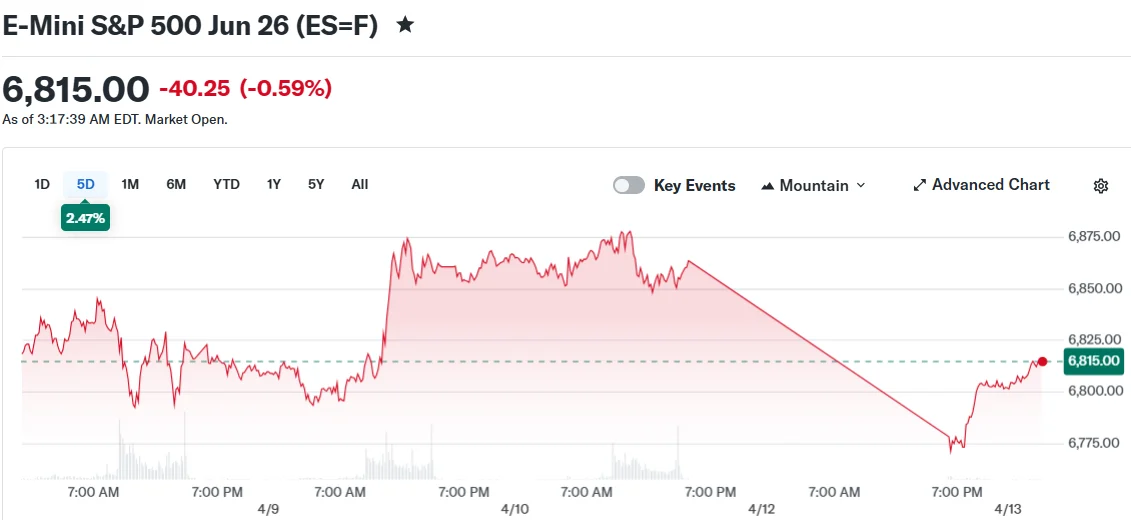
The downturn arrives after an impressive week for equities. During the previous week, optimism surrounding a potential temporary ceasefire had driven indices higher. The S&P 500 climbed approximately 3.6%, the Nasdaq advanced nearly 4.7%, and the Dow increased 3%. These gains represented their strongest weekly showing since November.
Crude Markets Rally on Strategic Waterway Tensions
Oil markets demonstrated extreme volatility in response to the news. West Texas Intermediate crude jumped more than 8% to trade above $104 per barrel. Brent crude posted gains of 7.5%. The Strait of Hormuz serves as a critical chokepoint for global petroleum shipments.
Reports indicate the Islamabad negotiations collapsed over multiple contentious issues beyond ceasefire terms. Disagreements encompassed demands concerning authority over the strait, monetary compensation, and cessation of Israeli military operations in Lebanon.
Both delegations departed without achieving any diplomatic breakthrough. Vice President Vance participated as part of the American negotiating team.
Financial Sector Earnings Launch This Week
Investors will simultaneously monitor the commencement of first-quarter corporate earnings season throughout the coming days. Goldman Sachs leads the reporting schedule with its announcement on Monday.
Bank of America, Wells Fargo, Citigroup, JPMorgan Chase, and Morgan Stanley will all deliver their quarterly results later this week.
Market participants face divided attention between escalating geopolitical developments and financial sector results that may illuminate current economic conditions.
As of Sunday evening, Bitcoin remained anchored near $70,900. Stock index futures maintained their bearish trajectory heading into Monday’s opening bell.
Get 3 Free Stock Ebooks
Discover top-performing stocks in AI, Crypto, and Technology with expert analysis.
- Top 10 AI Stocks - Leading AI companies
- Top 10 Crypto Stocks - Blockchain leaders
- Top 10 Tech Stocks - Tech giants


