



Market Summary
- Bitcoin is hovering near $66,600 as markets enter the Good Friday holiday period, with CME futures and spot ETF trading suspended
- Net Bitcoin demand has dropped into negative territory at -63,000 BTC over 30 days, even as ETF inflows and institutional buying reached recent peaks
- Major Bitcoin addresses have shifted to distribution mode, with holdings in the 1,000–10,000 BTC range declining approximately 188,000 BTC from their highest point
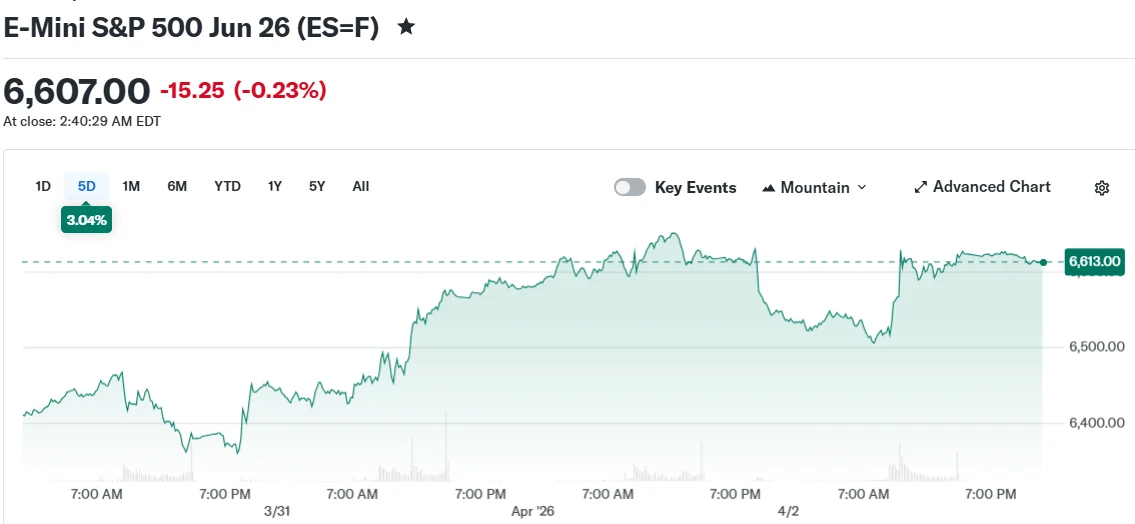
- U.S. equity markets ended a five-week decline, with both the S&P 500 and Nasdaq finishing the week marginally higher
- West Texas Intermediate crude oil jumped 11% to reach $111.54, marking its biggest single-day dollar increase in over 40 years
As the Easter holiday weekend approaches, [[LINK_START_2]]Bitcoin[[LINK_END_2]] is navigating choppy waters while U.S. equity markets managed to eke out gains after an extended downturn.
BTC was changing hands around $66,600 on Thursday as Good Friday market closures shuttered CME futures contracts and ETF trading platforms. This temporary suspension eliminates two major demand channels precisely when purchasing momentum appears to be weakening.
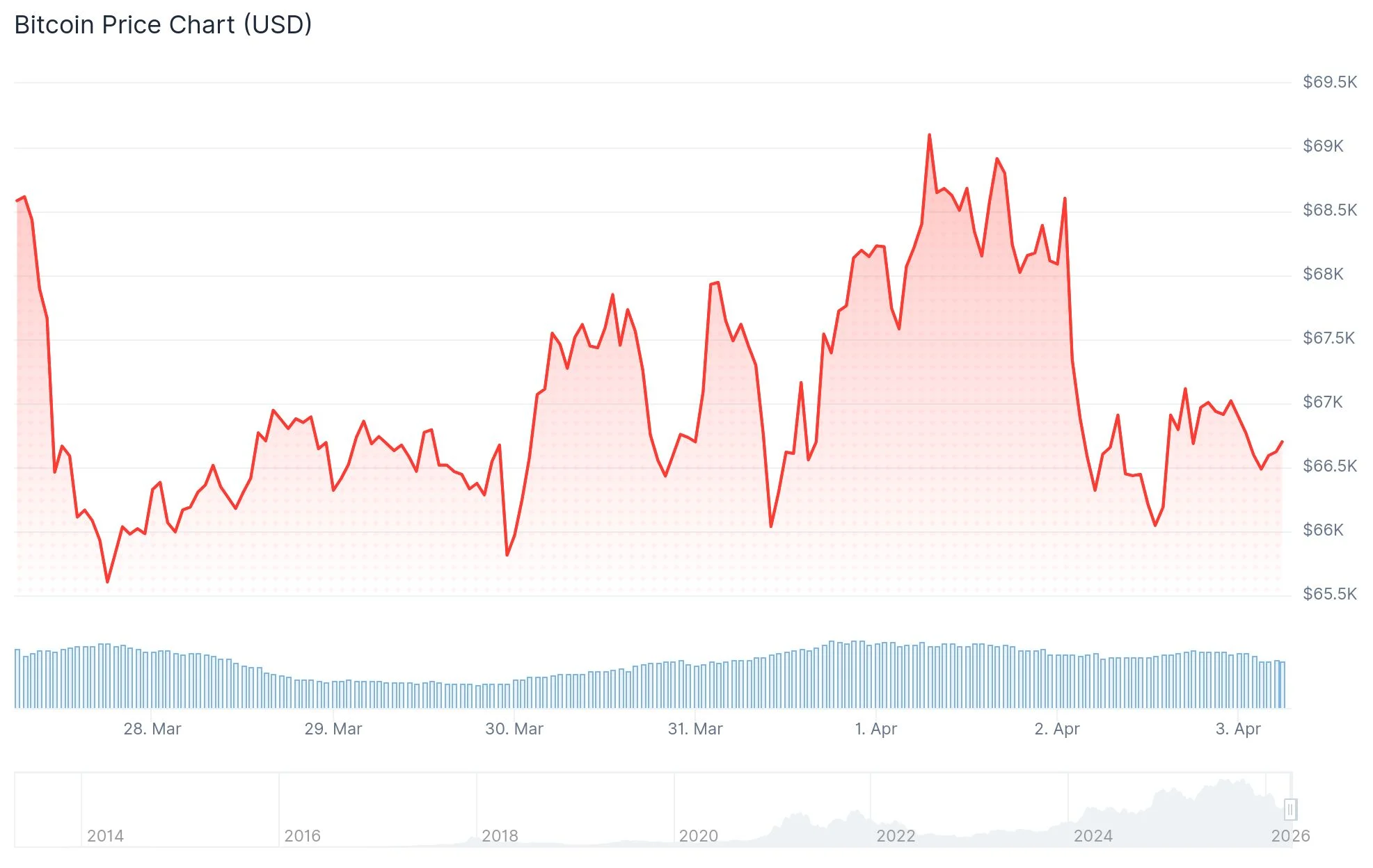
According to CryptoQuant analytics, the 30-day apparent demand metric currently stands at approximately -63,000 BTC. This negative reading persists despite spot Bitcoin ETFs absorbing roughly 50,000 BTC during the past month—the strongest accumulation since October 2025.
Strategy, the prominent corporate Bitcoin acquirer, purchased approximately 44,000 BTC during this same timeframe. However, distribution from other market participants exceeded these combined inflows significantly.
Whale Wallets Shift to Distribution
The most telling indicator of market stress comes from large-balance addresses. Wallets containing between 1,000 and 10,000 BTC have transitioned into net selling mode. Their 12-month balance variation has declined to roughly -188,000 BTC, a dramatic reversal from the positive 200,000 BTC recorded at the 2024 market high.

Medium-tier holders have similarly reduced their accumulation activity. The Coinbase Premium indicator has remained in negative territory, suggesting diminished appetite from U.S.-based spot market participants.
Singapore-based trading firm Enflux informed CoinDesk that Bitcoin’s downside support level is partially anchored to Federal Reserve interest rate cut expectations. This foundational support mechanism is currently facing a significant test.
The ISM prices-paid metric climbed to 78.3 in March, reaching its highest reading since June 2022. Such elevated figures reduce the probability of immediate monetary easing, which in turn weakens Bitcoin’s macro-based price support.
ETF movement patterns already reflect this evolving landscape. The week ending March 24 recorded $296 million in net withdrawals from Bitcoin ETFs. April’s inflows have been comparatively subdued.
CryptoQuant identified a resistance band between $71,500 and $81,200 for any potential upward correction. The next critical economic release is the U.S. core PCE inflation figure scheduled for April 9.
Equity Markets and Energy Commodities
U.S. stock indices finished the week in positive territory despite Thursday’s decline. The Dow Jones Industrial Average dropped 61 points during Thursday’s session, yet all three primary indexes concluded the week with gains, breaking their five-week downward trajectory.
The trading day was characterized by an extraordinary movement in crude oil markets. West Texas Intermediate crude concluded at $111.54, representing an 11% single-day advance. The absolute dollar increase of $11.42 established the largest one-day WTI movement in available data extending back to 1983.
The price surge followed President Trump’s address regarding the Iranian conflict situation, which provided no concrete developments toward resolving the Strait of Hormuz blockade.
J.P. Morgan analyst Fabio Bassi projected that crude prices will remain elevated throughout the second quarter. He identified near-term risk in the $120–$130 per barrel territory, with scenarios exceeding $150 becoming plausible if Strait disruptions persist into mid-May.
Market participants will also be monitoring the March nonfarm payrolls data release scheduled for Friday, despite equity market closures. Economic forecasters anticipate a hiring rebound following February’s weather- and labor-action-impacted results.
Get 3 Free Stock Ebooks
Discover top-performing stocks in AI, Crypto, and Technology with expert analysis.
- Top 10 AI Stocks - Leading AI companies
- Top 10 Crypto Stocks - Blockchain leaders
- Top 10 Tech Stocks - Tech giants


