



Key Takeaways
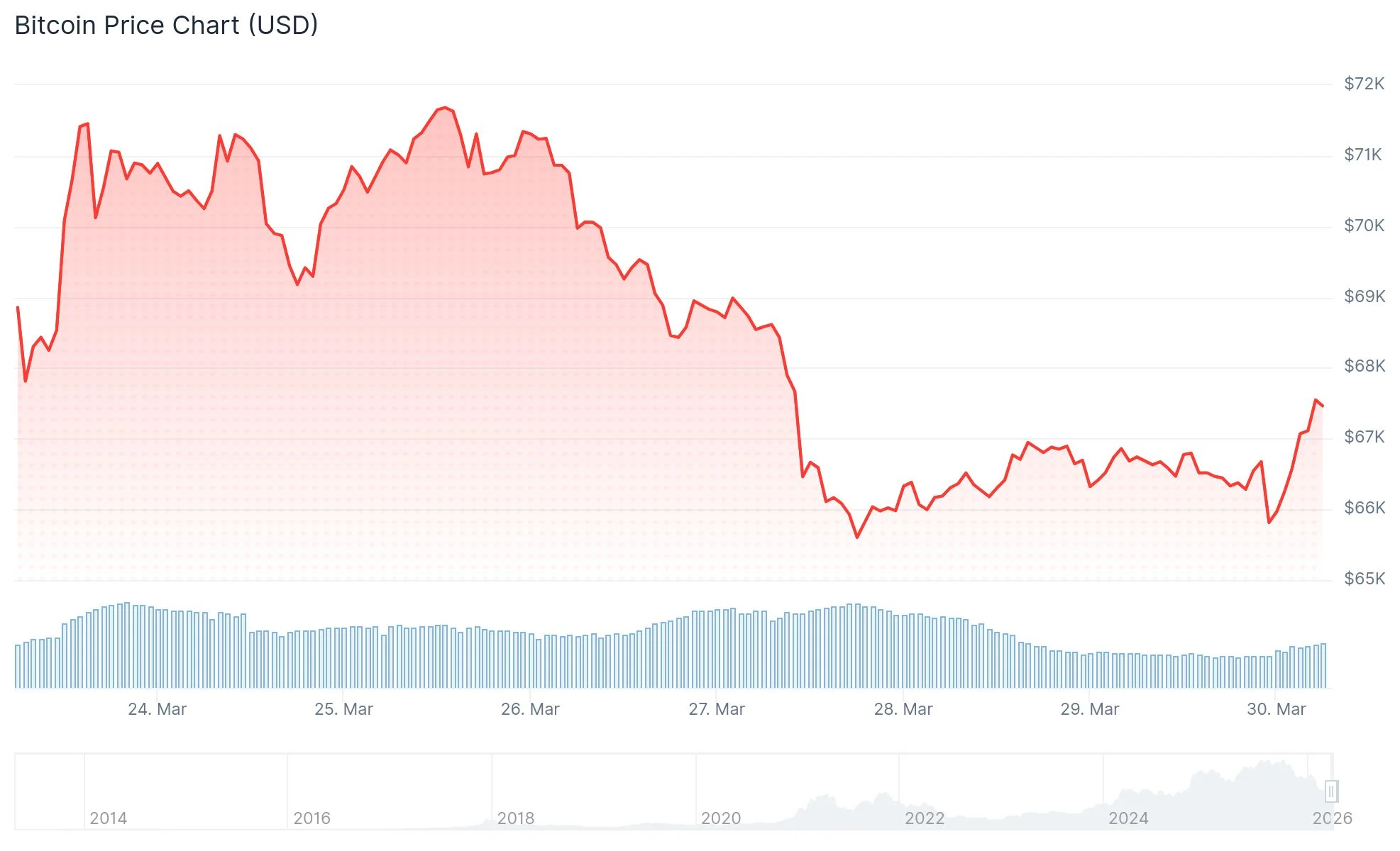
- BTC is currently trading around $66,500–$67,000, representing a decline from $71,000 recorded last week and standing 47% beneath its $126,080 all-time high.
- Long positions on Bitfinex have reached their highest point in 28 months — a pattern that has historically preceded price declines.
- Escalating tensions between the U.S. and Iran are fueling inflation concerns, limiting the Federal Reserve’s ability to reduce interest rates.
- Market watchers identify $60,000 as the critical support zone should bearish conditions intensify.
- Institutional capital continues flowing into Bitcoin, with U.S. spot BTC ETFs recording more than $1.13 billion in net inflows this month.
Bitcoin’s price has remained relatively stable within the $66,500 to $67,000 range throughout the last day. This marks a notable retreat from approximately $71,000 seen just a week ago, with the cryptocurrency momentarily dipping to $65,000 on Saturday before staging a modest rebound. Current price levels place BTC 47% below its October 2025 all-time high of $126,080.
Market sentiment remains severely depressed, with the crypto Fear & Greed Index registering just 9 — deep within “extreme fear” territory.
A particularly noteworthy metric is contributing to the bearish outlook. Long positions on Bitfinex — essentially bets on rising bitcoin prices — have surged to 79,343, marking the highest reading since November 2023. Historical analysis reveals this type of long position accumulation typically functions as a contrarian indicator. Throughout the fourth quarter of 2025, BTC/USD longs on Bitfinex increased by 30%, even as bitcoin’s actual spot price tumbled 23% to $87,550.
The trend has proven remarkably consistent: when Bitfinex long positions reach peaks, bitcoin typically experiences price declines. Conversely, when longs contract, prices generally bounce back.
Geopolitical Tensions Weighing on Market Sentiment
Ongoing hostilities between the United States and Iran continue casting a shadow over global financial markets. Iranian military operations targeting Gulf nations including Kuwait and Saudi Arabia, combined with stagnant diplomatic negotiations, have driven oil prices upward. This situation intensifies inflation worries and diminishes expectations for Federal Reserve interest rate reductions — both factors that create headwinds for cryptocurrency valuations.

Rachael Lucas, a crypto analyst with BTC Markets, characterized this week’s price action as “a classic risk-off unwind.” Bitcoin climbed to $72,000 midweek following optimism about potential diplomatic progress, only to surrender those gains when negotiations faltered.
Jeff Mei, COO at BTSE, projected that oil and gas prices will remain elevated for the foreseeable future, creating a drag on economic expansion. “We believe that crypto prices have more room to fall, with bitcoin potentially falling to the $60,000 support level,” he stated.
Andri Fauzan Adziima, Research Lead at Bitrue, concurred that the market remains highly reactive to news headlines. He indicated that any meaningful reduction in U.S.-Iran hostilities could trigger a price surge beyond $70,000.
Institutional Demand Contrasts with Retail Caution
A clear divergence has emerged between retail and institutional investor behavior. Lucas observed that individual investors are “hedging or sitting on the sidelines,” while professional money managers continue deploying capital. U.S. spot bitcoin ETFs have attracted over $1.13 billion in monthly inflows, ending a four-month streak of net outflows. Strategy has maintained its acquisition program, and Morgan Stanley is advancing preparations for launching a low-fee bitcoin ETF product.
Lucas emphasized: “When retail fear and institutional accumulation diverge this sharply, history suggests the institutions tend to be right.”
Upcoming macroeconomic releases this week, including initial jobless claims data and March non-farm payrolls figures, could influence market sentiment significantly if employment numbers fall short of expectations.
Get 3 Free Stock Ebooks
Discover top-performing stocks in AI, Crypto, and Technology with expert analysis.
- Top 10 AI Stocks - Leading AI companies
- Top 10 Crypto Stocks - Blockchain leaders
- Top 10 Tech Stocks - Tech giants


