



TLDR
- BTC declined 3.4% to approximately $68,000 on Saturday following a mid-week peak at $74,000
- February employment data revealed a loss of 92,000 jobs, with unemployment climbing to 4.4%
- The greenback recorded its largest weekly surge in twelve months, weighing on digital assets
- Large holders liquidated approximately 66% of their recent BTC accumulation while smaller investors continued purchasing
- Bitcoin ETFs experienced $348.9 million in withdrawals — the most significant single-day exodus in three weeks
Bitcoin’s week began on an optimistic note but concluded with downward momentum. After reaching $74,000 on Thursday, the cryptocurrency reversed course, sliding back to approximately $68,000 by Saturday morning — representing a 3.4% decline over 24 hours.
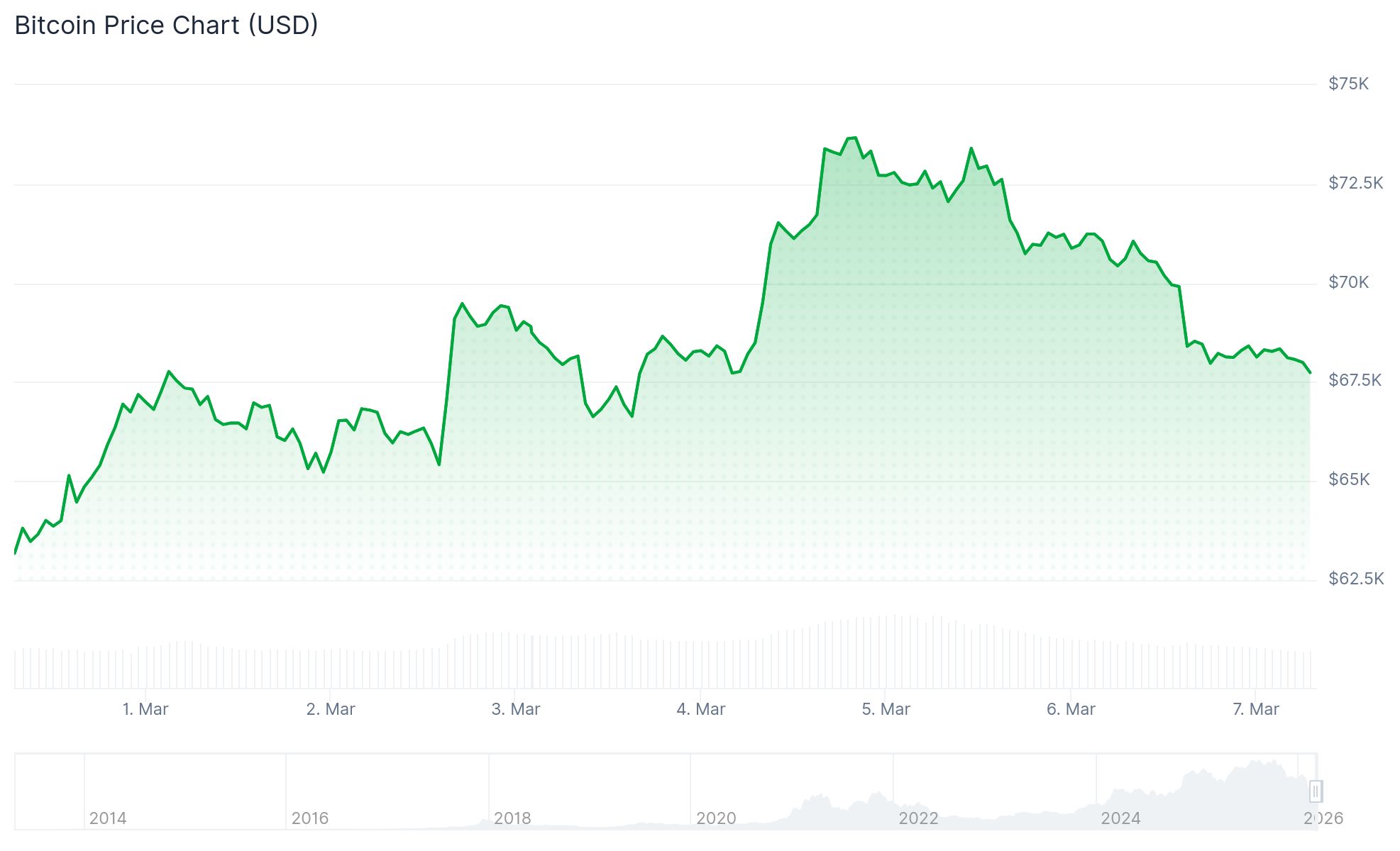
The downturn followed the Bureau of Labor Statistics’ revelation that 92,000 jobs were eliminated from the U.S. economy during February. This figure significantly underperformed the 50,000 job additions that market analysts had anticipated. Meanwhile, the unemployment rate ticked upward from 4.3% to 4.4%.
Traditional financial markets also absorbed the impact. The Dow Jones tumbled over 900 points within the first minutes of Friday trading. The Nasdaq declined 1.7%.
Alternative cryptocurrencies experienced similar downturns. Ether decreased 4.4% to $1,974. Solana shed 4% to reach $84.31. Dogecoin declined 2.9% to $0.09. XRP slipped 2.2% to $1.37.
Despite Friday’s selloff, the majority of leading digital assets maintained weekly gains. Bitcoin posted a 3.6% increase over the seven-day period. Ether advanced 2.6%. BNB climbed 2.1%.

Large Holder Distribution and ETF Withdrawals
According to Santiment analytics, large holders — addresses containing between 10 and 10,000 BTC — accumulated positions from February 23 through March 3 while Bitcoin fluctuated between $62,900 and $69,600. When BTC surpassed $70,000 and touched $74,000, these same addresses distributed approximately 66% of their accumulated holdings.
Concurrently, smaller participants — wallets containing less than 0.01 BTC — increased their positions. Santiment highlighted that this divergence usually signals additional downside remains.
Spot Bitcoin ETFs registered $348.9 million in net withdrawals on Friday, representing the most substantial single-day outflow since February 12.
Analyst Michael van de Poppe said: “If Bitcoin doesn’t find support in this $67–68K region, then we’re likely going to retest the lows.”
Macroeconomic Challenges
The greenback experienced its most significant weekly appreciation in a year. Escalating oil prices — Brent crude reached $90 per barrel, climbing more than 20% within the week — combined with persistent Middle Eastern tensions amplified inflation concerns, diminishing expectations for imminent Federal Reserve rate reductions.
Glassnode metrics revealed that 43% of Bitcoin’s entire supply currently sits underwater. This dynamic generates selling resistance during price rallies, as investors attempt to reach breakeven levels.
A potentially positive indicator: net stablecoin inflows surged 415% to $1.7 billion throughout the week, indicating substantial capital waiting in reserve.
Economist Timothy Peterson observed that Bitcoin’s present price range has historically represented a floor, referencing a 99.5% statistical probability that BTC maintains levels above $60,000.
The Crypto Fear & Greed Index dropped to a reading of 12 on Saturday, entering “Extreme Fear” classification.
Get 3 Free Stock Ebooks
Discover top-performing stocks in AI, Crypto, and Technology with expert analysis.
- Top 10 AI Stocks - Leading AI companies
- Top 10 Crypto Stocks - Blockchain leaders
- Top 10 Tech Stocks - Tech giants


