



Key Takeaways
- BTC plummeted beneath the $69,000 threshold, declining more than 4% while crude oil climbed to $119 per barrel
- U.S.-Iran hostilities pushed Brent crude momentarily to $119, disrupting energy distribution across the Middle East
- Market experts caution crude could escalate to $200 if the Strait of Hormuz remains inaccessible
- Federal Reserve maintained current interest rates while indicating potential postponement of cuts amid inflation concerns
- Blockchain analytics reveal addresses containing 100+ BTC increased by 753 wallets during the last quarter
The leading cryptocurrency experienced a notable downturn this week, slipping beneath the $70,000 mark as escalating crude prices and conservative Federal Reserve commentary dampened investor enthusiasm throughout global financial sectors.
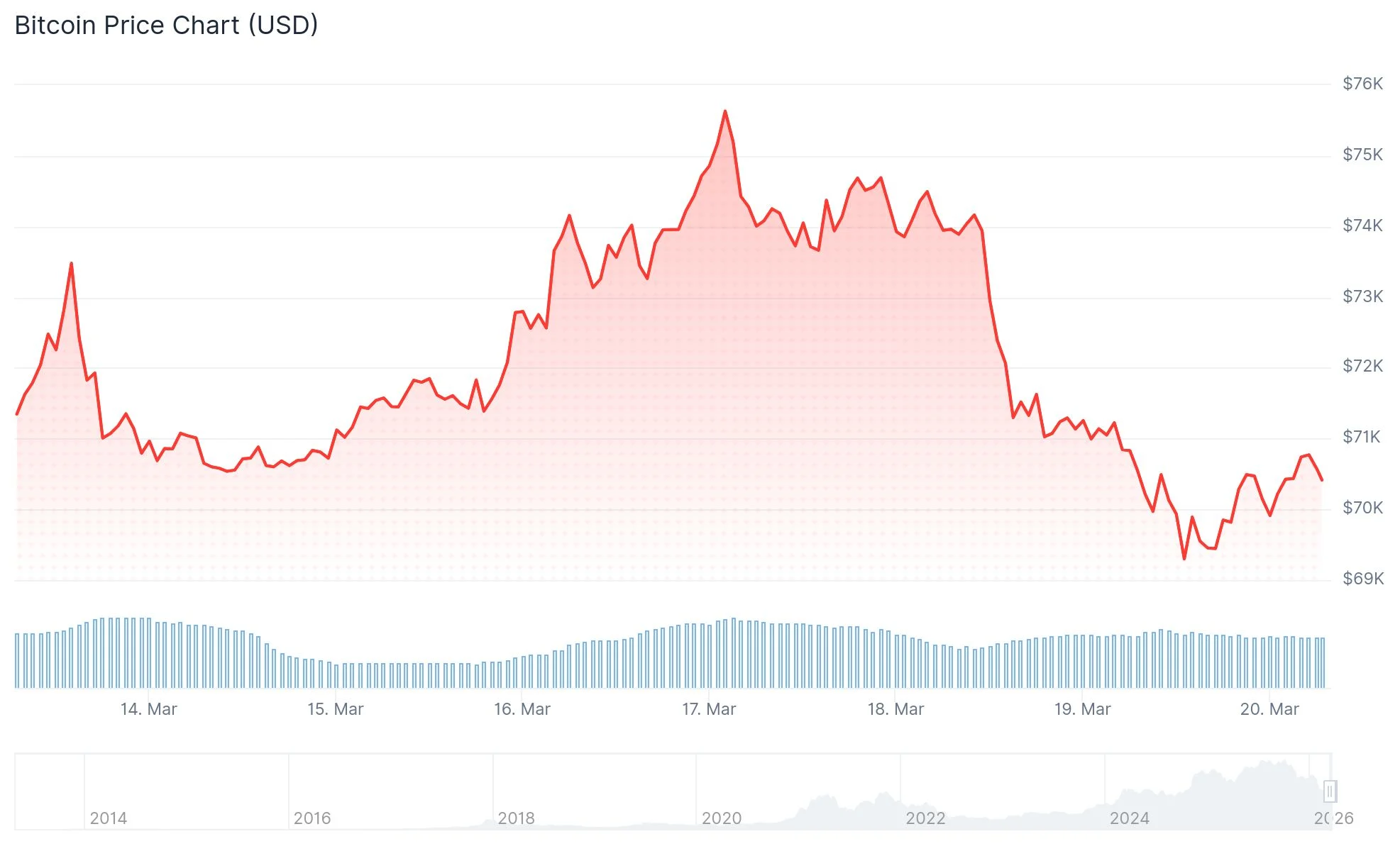
BTC touched an intraday bottom of $68,814 on Thursday, representing a decline exceeding 4% from its session peak above $71,000. Trading activity on Friday morning showed the digital asset recovering to approximately $70,675, though still posting modest losses.
The cryptocurrency’s retreat coincided with Brent crude’s dramatic Thursday surge to $119 per barrel. Escalating tensions between Washington and Tehran, including reported attacks on energy infrastructure by both nations, fueled the spike.
Regional oil benchmarks including Oman and Dubai had already crossed the $150 threshold. Vandana Hari, who leads oil research firm Vanda Insights, told Al Jazeera that crude hitting $200 was “already within sight.”
“How much further crude climbs from here almost entirely hinges on how much longer the Strait of Hormuz remains closed,” Hari said.
Adi Imsirovic, an energy expert at the University of Oxford, also told Al Jazeera that $200 oil was “perfectly possible” and described it as “a major handbrake to the world economy.”
Energy Price Surge Pressures Risky Assets
[[EMBED_0]]Financial analyst The Kobeissi Letter observed that BTC’s decline reflected broader market liquidations connected to energy price volatility. “The world is quite literally facing what appears to be the largest energy crisis in history,” they posted on X.
Crude prices subsequently retreated following multiple diplomatic and policy interventions. Israeli leader Benjamin Netanyahu announced Israel would cease further strikes on Iranian energy installations. Scott Bessent, U.S. Treasury Secretary, revealed Washington might tap the Strategic Petroleum Reserve and potentially permit sanctioned Iranian crude currently in transit to enter world markets.

By Friday, Brent crude had dropped back under $110 per barrel, providing some market stabilization.
Central Bank Postpones Monetary Easing
The Federal Reserve maintained its current interest rate policy during this week’s meeting. Chair Jerome Powell cautioned during his media briefing that escalating energy costs could drive near-term inflation higher, suggesting the institution would delay rate reductions until price pressures demonstrated sustained moderation.
Producer Price Index figures published Thursday revealed inflation had climbed to 3.4% in the previous month, predating the intensification of Iranian-American confrontations. Market participants are now reducing forecasts for the number of potential rate cuts throughout 2025.
[[EMBED_1]]Despite the market correction, blockchain analytics demonstrated that Bitcoin addresses holding 100 coins or more expanded by 753 during the preceding three-month period, representing 3.9% growth, even while market capitalization contracted 20.2% across the identical timeframe.
Get 3 Free Stock Ebooks
Discover top-performing stocks in AI, Crypto, and Technology with expert analysis.
- Top 10 AI Stocks - Leading AI companies
- Top 10 Crypto Stocks - Blockchain leaders
- Top 10 Tech Stocks - Tech giants


