



Key Takeaways
- BTC touched $70,623 on Sunday following the U.S. blockade announcement of the Strait of Hormuz
- U.S.-Iran diplomatic efforts fell apart after Tehran declined to halt its nuclear weapons development
- Crude oil prices surged 9.5% to $105 per barrel in the first half-hour of U.S. futures trading
- Open Interest in Bitcoin futures declined to $51.39 billion from $54.82 billion in a single day
- BTC has gained 7.4% since hostilities between the U.S. and Iran commenced on Feb. 28
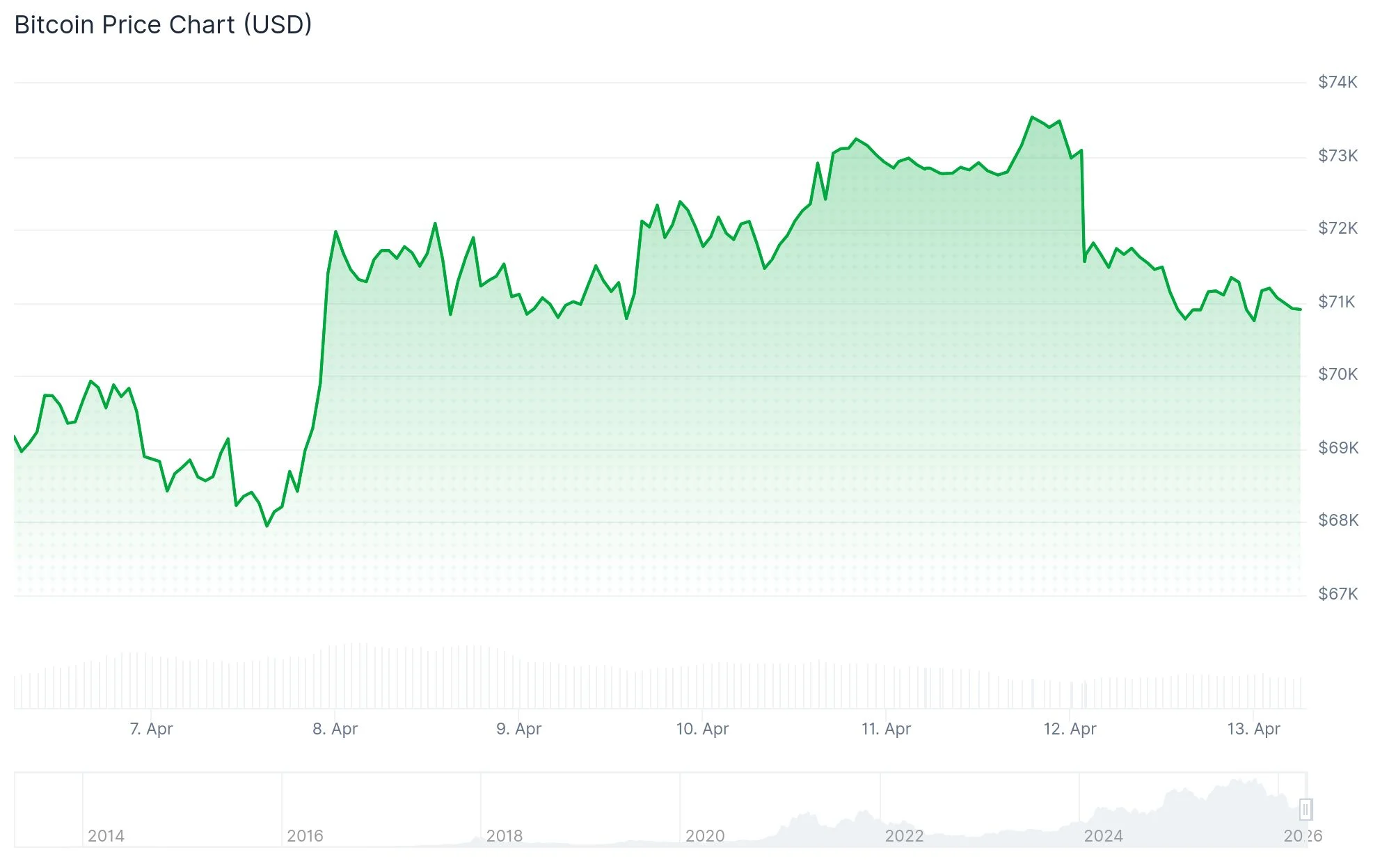
Bitcoin experienced a sharp decline to $70,623 on Sunday following the United States’ declaration of a naval blockade targeting the Strait of Hormuz. The announcement followed the collapse of diplomatic negotiations between Washington and Tehran over the weekend.
President Donald Trump validated the blockade through a Truth Social post, stating that Iran’s refusal to abandon its nuclear weapons development was the sole issue of genuine significance in the failed negotiations.
Vice President J.D. Vance revealed Saturday evening that diplomatic discussions held in Pakistan did not yield an extended ceasefire agreement. BTC had maintained trading levels above $73,000 throughout most of Saturday before experiencing a substantial pullback.
Following the blockade disclosure, Bitcoin retreated to approximately $70,900 — representing a 2.5% decline across a 24-hour period. The cryptocurrency dropped further to $70,623 as U.S. futures markets commenced trading Sunday.
Crude oil prices skyrocketed 9.5% to reach $105 per barrel within the initial 30 minutes of market activity. Brent crude climbed to $98 on Monday as tensions persisted.

BTC Maintains Position Above $70,000 Support
By Monday, the leading cryptocurrency had recovered above the $71,000 threshold, sustaining its position above the 50-day Exponential Moving Average (EMA) situated at $70,753. This 50-day EMA is currently functioning as immediate-term support.
Bitcoin futures Open Interest contracted to $51.39 billion on Monday, based on CoinGlass analytics. This represents a decrease from the previous day’s $54.82 billion, indicating diminished risk tolerance among leveraged market participants.

The Relative Strength Index (RSI) currently registers at 54, indicating moderate bullish momentum. The MACD indicator continues to show positive readings, suggesting that downward pressure may be subsiding.
Bitcoin’s Returns Since Conflict Onset
The premier cryptocurrency has appreciated roughly 7.4% since tensions between the United States and Iran escalated on Feb. 28, when a U.S. military strike resulted in the death of Iranian Supreme Leader Ayatollah Ali Khamenei. Bitcoin was valued at approximately $71,194 at press time.

This performance positions Bitcoin favorably compared to both the S&P 500 index and gold during the identical timeframe.
The Strait of Hormuz facilitates approximately 20% of worldwide oil commerce. Supply chain disruptions in this critical waterway have generated market volatility throughout the past six weeks.
A confirmed daily closing price above $73,000 could establish a trajectory toward $75,623 — representing the 23.6% Fibonacci retracement level of Bitcoin’s decline from $126,200 to $60,000. Critical support on the downside persists at the 50-day EMA around $70,753. A decisive breakdown beneath this threshold could trigger a movement toward $60,000.
Bitcoin established its record high of $126,080 in October.
Get 3 Free Stock Ebooks
Discover top-performing stocks in AI, Crypto, and Technology with expert analysis.
- Top 10 AI Stocks - Leading AI companies
- Top 10 Crypto Stocks - Blockchain leaders
- Top 10 Tech Stocks - Tech giants


