


TLDR
- BYD sold 2.26 million electric vehicles in 2025, overtaking Tesla’s 1.64 million and becoming the top global EV seller.
- Tesla’s 2025 deliveries fell 9% year-over-year, marking its second straight annual decline in vehicle sales.
- BYD’s overseas sales surged 150% in 2025, reaching 1 million units, with strong growth in Europe, Southeast Asia, and the Middle East.
- Tesla’s Q4 2025 deliveries missed expectations, partly due to the phase-out of a US$7,500 federal EV tax credit.
- Despite delivery drops, Tesla shares rose 11% in 2025, driven by investor confidence in robotaxi and AI-related developments.
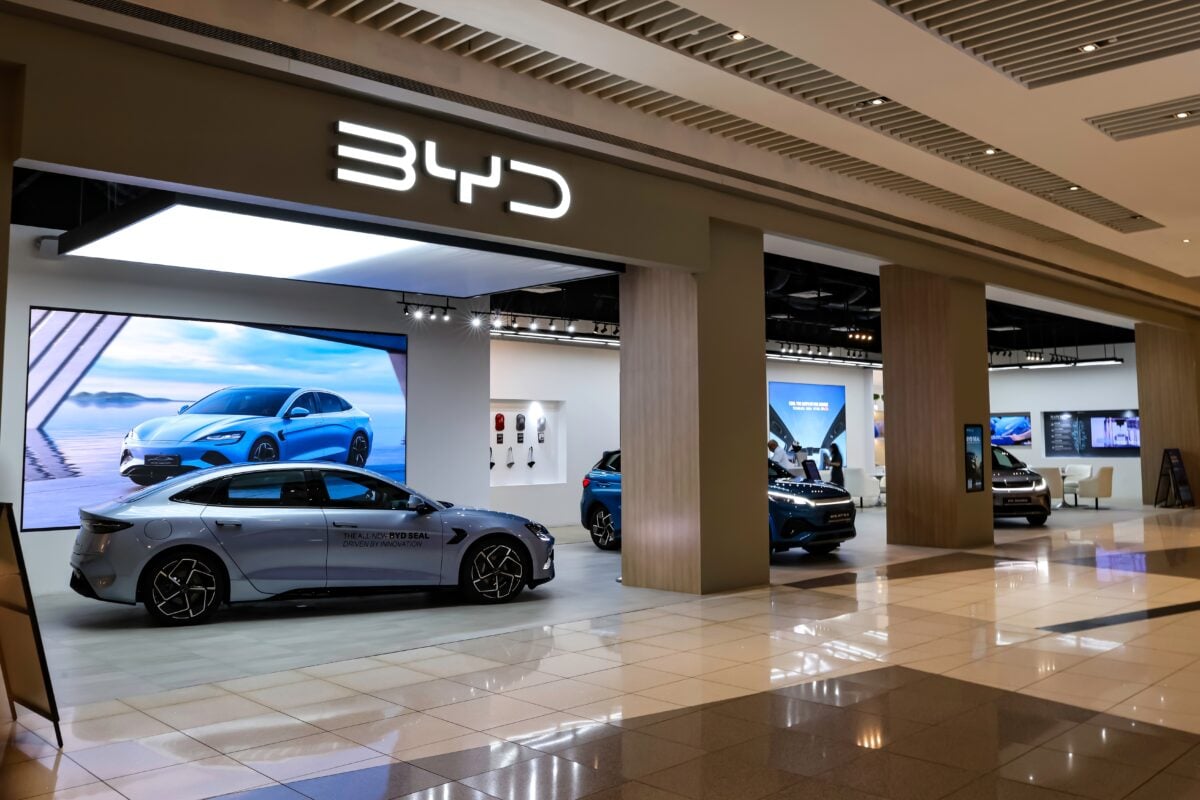
Chinese automaker BYD overtook Tesla as the world’s leading electric vehicle (EV) manufacturer by sales in 2025. BYD reported 2.26 million EV sales, while Tesla delivered 1.64 million vehicles. This shift in market leadership came after Tesla’s second consecutive year of declining deliveries.
Tesla Records Lower Annual and Quarterly Deliveries
Tesla delivered 1.64 million vehicles in 2025, falling short of 2024’s total of 1.79 million units. The drop marked a decline of nearly 9%, extending its downward trend for the second year. For Q4 2025, Tesla posted 418,227 deliveries, missing analysts’ expectations of around 440,000. The company attributed part of the shortfall to the end of a $7,500 federal tax credit in the U.S. The tax credit expired after being phased out under the Trump administration in September.
Despite challenges in China and Europe, Tesla saw some demand increase in smaller and emerging markets. “Sales around smaller and emerging markets have started to see larger growth metrics,” said Dan Ives of Wedbush Securities. Tesla ended the year with a stock price gain of 11%, fueled by optimism around its robotaxi plans. CEO Elon Musk stated that driverless vehicle tests in Austin, Texas, had begun without safety drivers.
The company also continued to pursue the development of humanoid robots for home and office tasks. Musk’s earlier 2011 comments, where he laughed at BYD, resurfaced as BYD surpassed his company. In that interview, Musk said, “I don’t think they have a great product.” Tesla still leads in self-driving development and remains heavily invested in autonomous technology.
BYD Reports Surge in EV Sales and Overseas Expansion
BYD reported a 27.9% year-on-year increase in battery-electric vehicle sales, totaling 2.26 million units in 2025. The company expanded its global reach with 1 million units sold outside China, up 150% from the previous year. BYD targets 1.6 million overseas sales in 2026 but has not set a global sales goal. The automaker continues to face import tariffs in the U.S. but sees strong growth in Europe, Southeast Asia, and the Middle East. It has leveraged its competitive pricing and localized strategies to enter price-sensitive markets.
Founded in 1995, BYD started as a battery manufacturer and now dominates China’s new energy vehicle market. The company sells both fully electric and plug-in hybrid vehicles, categorized as new energy vehicles in China. Known locally as “Biyadi,” BYD operates under the brand slogan “Build Your Dreams.” Its expanding product range and price strategy have helped boost domestic and global sales. The automaker plans to strengthen its overseas network to increase profitability in the coming years.

In 2024, Tesla narrowly led BYD in EV sales, delivering 1.79 million units compared to BYD’s 1.76 million. The 2025 results reversed that margin, giving BYD a clear lead for the calendar year. BYD’s continued focus on cost efficiency and regional adaptation supports its expansion. The company did not comment on the competition with Tesla but emphasized global market goals. BYD is positioning to increase its footprint in non-U.S. markets while navigating trade restrictions.
Get 3 Free Stock Ebooks
Discover top-performing stocks in AI, Crypto, and Technology with expert analysis.
- Top 10 AI Stocks - Leading AI companies
- Top 10 Crypto Stocks - Blockchain leaders
- Top 10 Tech Stocks - Tech giants


