


TLDRs;
- U.S. sanctions disrupt Venezuela oil logistics, placing Chevron’s joint ventures under renewed pressure.
- Stalled cargoes highlight how quickly export-dependent heavy crude operations can seize up.
- Oil prices remain stable, but policy shifts now rival crude markets as key CVX drivers.
- Technical levels and upcoming data releases shape near-term trading sentiment for Chevron shares.
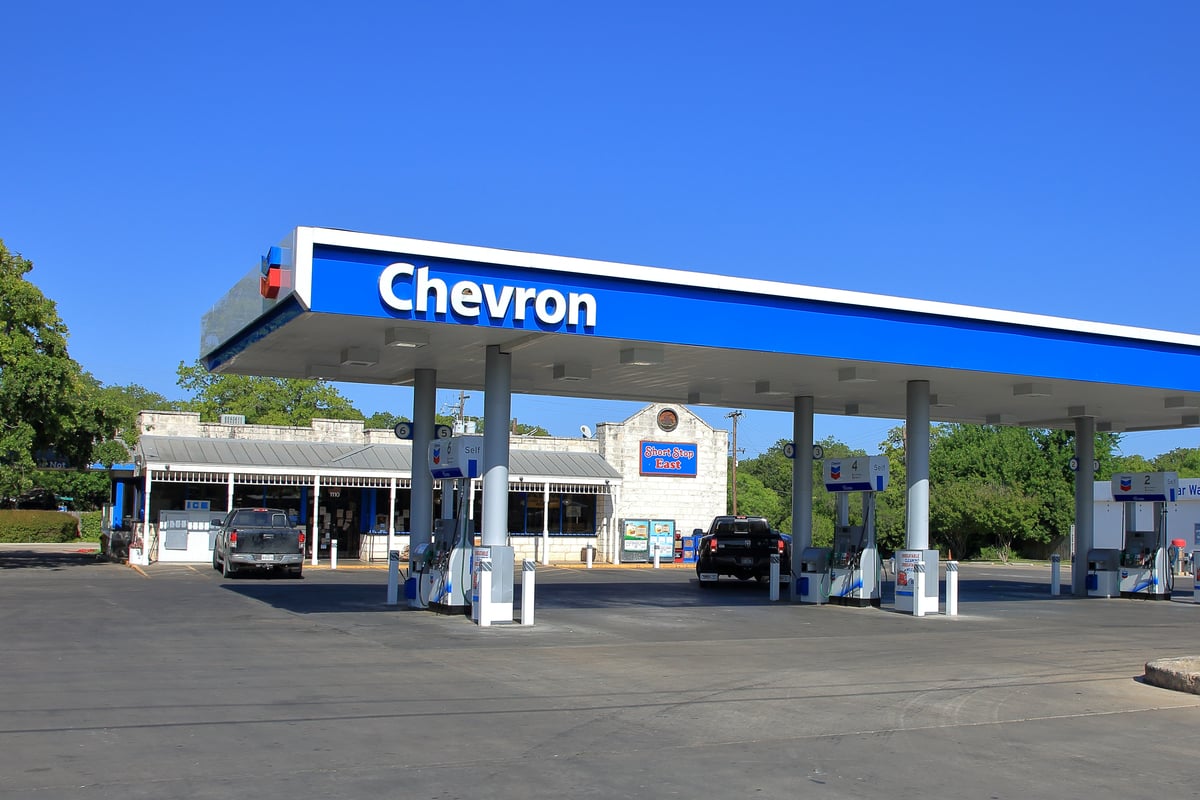
Chevron(CVX) entered the new trading week under close scrutiny after renewed U.S. restrictions on Venezuela disrupted crude exports.
The pressure point is not only production but also logistics. Venezuela’s state oil company, PDVSA, has begun curbing output as storage fills and tankers remain idle offshore, signaling that the export bottleneck is already material.
For Chevron, the issue is particularly sensitive. Unlike several peers that exited Venezuela years ago, Chevron maintained joint ventures with PDVSA and relied on seaborne exports to monetize the country’s extra-heavy crude. When shipping slows or halts, cash flow from these operations can tighten rapidly, regardless of production capacity on paper.
While Chevron has emphasized that it continues to operate in full compliance with U.S. laws and licensing requirements, the market is focused on whether exemptions or carve-outs will remain intact. Even temporary delays in cargo movements can ripple through earnings expectations when volumes are concentrated in a small number of export routes.
Heavy Crude, Heavy Constraints
Venezuela’s oil is among the most challenging in the global market. Its extra-heavy crude often requires blending with lighter diluents before it can move through pipelines and into tankers. That makes the trade highly sensitive to both political decisions and logistical coordination.

When sanctions interfere with access to diluent or shipping insurance, the entire chain slows. For investors, this means Chevron’s Venezuela exposure is less about headline production numbers and more about operational continuity. A modest policy shift in Washington can unlock or freeze hundreds of thousands of barrels per day, altering supply expectations almost overnight.
This dynamic places Chevron in a unique position compared to peers like Exxon Mobil and ConocoPhillips, which chose arbitration and exit over continued engagement. Chevron’s decision to stay provides optionality if conditions improve, but it also leaves the stock exposed when sanctions tighten.
Oil Prices Hold Steady
Despite the Venezuela disruption, broader oil markets have remained relatively calm. Brent crude has hovered around the low $60-per-barrel range, while U.S. West Texas Intermediate trades in the high $50s. OPEC+ recently opted to keep output policy unchanged, reinforcing a sense of near-term supply stability.
Major banks have echoed that view. Analysts see Venezuela-related risks as manageable for now, with limited immediate impact on global balances. Forecasts for average oil prices in 2026 have largely been left untouched, reflecting confidence that other producers can absorb incremental disruptions.
For Chevron shareholders, this means the stock’s reaction may hinge less on crude prices and more on policy clarity. Sanctions uncertainty introduces a separate risk channel that does not always correlate with oil benchmarks.
Technical Levels in Focus
From a trading perspective, Chevron shares closed the previous session near recent highs, outperforming several peers. Technicians are watching whether the stock can hold above the $151 area, which marked a recent low, and whether it can decisively clear resistance near $156.
These levels matter because they frame how much geopolitical risk is already priced in. A break below support could signal rising concern over prolonged export constraints, while a move higher would suggest confidence that the sanctions impact will be contained.
Beyond geopolitics, macro data will also shape sentiment. Investors are monitoring U.S. manufacturing data, upcoming petroleum inventory reports, and the monthly jobs release for signals on demand and economic momentum. Chevron’s next major company-specific catalyst is its late-January earnings report, where guidance on capital spending and share repurchases will be closely parsed.
Get 3 Free Stock Ebooks
Discover top-performing stocks in AI, Crypto, and Technology with expert analysis.
- Top 10 AI Stocks - Leading AI companies
- Top 10 Crypto Stocks - Blockchain leaders
- Top 10 Tech Stocks - Tech giants


