



Key Takeaways
- U.S. average gasoline price reaches $4.12/gallon, climbing approximately $0.53 in the past month
- Presidential directive orders U.S. Navy blockade of Strait of Hormuz following failed diplomatic talks with Iran
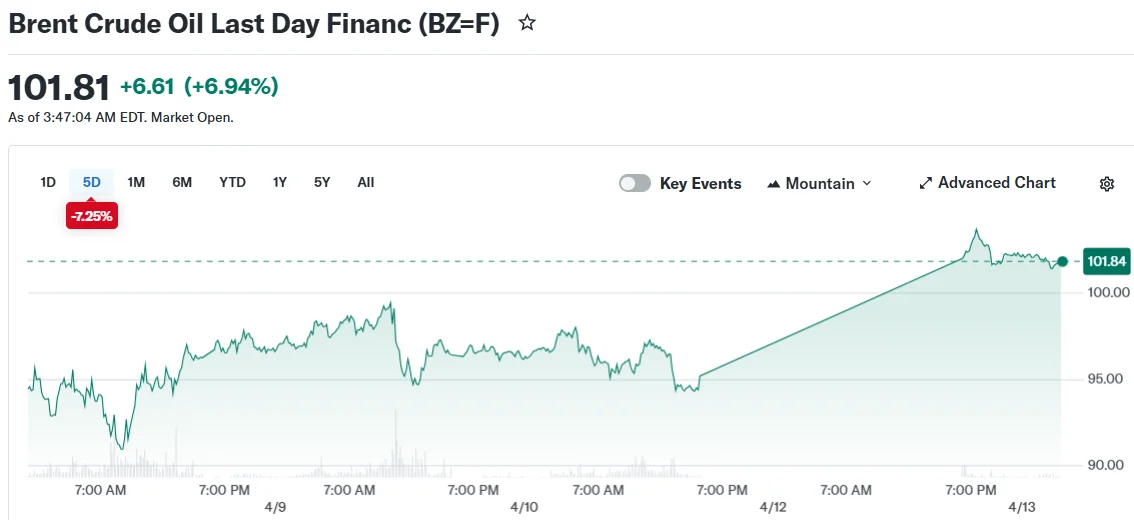
- WTI crude oil spiked more than 8% to surpass $104/barrel; Brent increased 7.5% to approximately $102
- Financial analysts at JPMorgan project gasoline could reach $5/gallon with continued strait closure
- Physical Brent crude touched unprecedented $144/barrel this month; Friday’s spot pricing at $126
Crude oil markets rocketed beyond the $100 threshold Monday following President Trump’s directive to deploy the U.S. Navy in a blockade of the Strait of Hormuz, effectively shutting down a critical global oil transit corridor.
West Texas Intermediate crude exploded upward by more than 8%, breaching $104 per barrel. Brent crude advanced 7.5%, settling near $102.
The blockade order followed the collapse of diplomatic discussions between U.S. and Iranian officials over the weekend. In a social media statement, Trump declared: “Effective immediately, the United States Navy, the Finest in the World, will begin the process of BLOCKADING any and all Ships trying to enter, or leave, the Strait of Hormuz.”
Fuel markets reacted swiftly to the announcement. Gasoline prices across America have risen to an average of $4.12 per gallon, representing an increase of approximately 53 cents compared to 30 days prior.
GasBuddy’s petroleum analysis chief Patrick De Haan delivered a straightforward assessment Sunday: “The verdict is in — gas prices are likely to return to climbing with Trump’s new Strait block.” De Haan highlighted that gasoline futures are already reflecting elevated wholesale costs facing retailers.
Analysts at JPMorgan have issued warnings that sustained closure of the Strait could drive retail gasoline prices to $5 per gallon across the United States.
Tightening Physical Markets Signal Supply Strain
The most acute pressure is manifesting in physical oil markets. Refineries throughout Europe and Asia are competing aggressively for available crude shipments, driving spot Brent values to historic highs.

According to Platts pricing data, dated Brent — representing crude available for immediate physical delivery — commanded $126 per barrel on Friday. The benchmark touched an all-time peak of $144 per barrel earlier in the month.
This represents an extraordinary deviation from typical market conditions. Under normal circumstances, the differential between physical Brent and futures contracts hovers between $1 and $2 per barrel.
JPMorgan analyst Natasha Kaneva observed Sunday evening: “Today’s much wider gap signals a market struggling to source barrels for delivery now, even if it still assumes supply will normalize later.”
Such pronounced spreads indicate immediate supply constraints affecting real-world deliveries, beyond speculative positioning.
Impact on American Consumers
For motorists across the United States, the correlation is direct. Elevated crude prices translate to increased wholesale gasoline expenses. These wholesale increases flow through distribution chains to retail stations, ultimately appearing at fuel pumps.
De Haan from GasBuddy highlighted gasoline futures data indicating imminent price increases for station operators replenishing inventory.
The blockade has also reignited broader economic concerns regarding inflationary pressures and potential headwinds to global economic expansion, particularly with both WTI and Brent firmly established above the psychologically significant $100 level that typically alarms economists.
JPMorgan’s research team stated Sunday: “Signs are emerging that the system may be coming under increasing strain.”
Dated Brent closed Friday at $126 per barrel, with this month’s record $144 pricing still reverberating through energy markets.
Get 3 Free Stock Ebooks
Discover top-performing stocks in AI, Crypto, and Technology with expert analysis.
- Top 10 AI Stocks - Leading AI companies
- Top 10 Crypto Stocks - Blockchain leaders
- Top 10 Tech Stocks - Tech giants


