



TLDR
- Dow Jones fell over 500 points (1%), S&P 500 dropped 1.2%, and Nasdaq sank nearly 2% on Thursday
- Tech stocks led the decline with Cisco falling 11% after weak profit outlook, while Meta, Amazon, and Apple saw steep losses
- Investors rotated away from megacap tech stocks ahead of Friday’s Consumer Price Index inflation report
- Strong January jobs report dampened expectations for near-term Fed interest rate cuts
- Single stock volatility increased as markets struggle with AI disruption concerns and tech companies’ heavy AI spending
US stock markets posted sharp losses on Thursday as investors pulled back from technology stocks. All three major indexes closed lower.
The Dow Jones Industrial Average fell 590 points, or 1.2%. The S&P 500 dropped 1.2%, while the Nasdaq Composite declined nearly 2%.
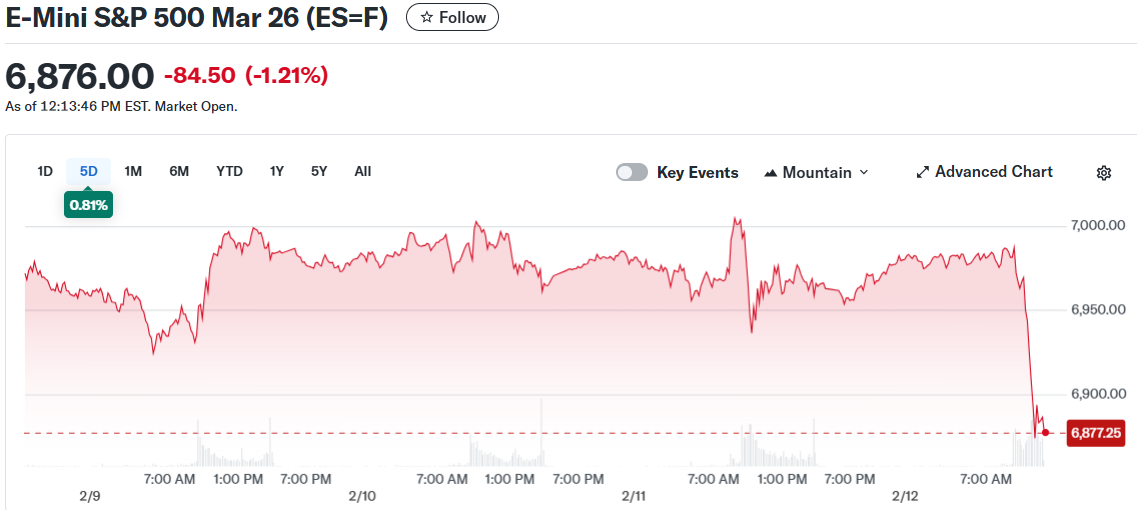
The selloff marked a reversal from early gains. Markets opened higher before turning negative later in the session.
Technology stocks drove the decline. Cisco Systems stock fell over 11% after the company issued a weak profit outlook despite rising sales from AI infrastructure spending.
Big Tech names followed the downward trend. Nvidia and Microsoft both lost over 1% for the day.
Meta, Amazon, and Apple experienced even steeper losses. These megacap companies carry heavy weightings in major indexes.

AI Spending Concerns Weigh on Investors
Market analysts pointed to several factors behind the selling pressure. Concerns about artificial intelligence’s impact on established industries continued to affect software stocks.
Investors also questioned whether massive AI spending by tech giants would hurt profitability. The largest AI spenders faced scrutiny over capital expenditure intensity and returns on AI investments.
Steve Sosnick, chief strategist of Interactive Brokers, noted a pattern emerging. Markets have opened higher on overseas gains, then faded later in US trading sessions.
Daniel O’Regan from Mizuho highlighted the concentration of selling in large tech stocks. Growth stocks and riskier assets also faced pressure.
Economic Data Shifts Focus to Inflation
Friday’s Consumer Price Index report became the next focal point for markets. A softer reading would suggest easing price pressures while economic growth continues.
Thursday’s jobless claims data showed a smaller decline than expected. The figure drew attention after January’s nonfarm payrolls report revealed the US economy added twice as many jobs as anticipated.
The strong hiring data complicated Federal Reserve policy expectations. A resilient labor market combined with persistent inflation reduces the likelihood of near-term interest rate cuts.
Rate cuts have been a key driver of recent equity gains. The yield on the 10-year Treasury note fell to 4.13%.
Weaker economic data added to market concerns. January home sales came in below expectations.
Jonathan Krinsky from BTIG observed increasing volatility in individual stocks. He noted that single stock moves for AI winners and losers were becoming more extreme.
CBRE fell 24% after hitting a record two days earlier. Equinix surged more than 12%.
McDonald’s shares moved higher after the company’s earnings beat expectations. Coinbase, Applied Materials, and Rivian were scheduled to report earnings after the market close.
The S&P 500 continued to struggle below the 7,000 level. Technical factors added to market uncertainty ahead of Friday’s inflation data.
Get 3 Free Stock Ebooks
Discover top-performing stocks in AI, Crypto, and Technology with expert analysis.
- Top 10 AI Stocks - Leading AI companies
- Top 10 Crypto Stocks - Blockchain leaders
- Top 10 Tech Stocks - Tech giants


