


Key Takeaways
- Tilman Fertitta’s updated proposal values Caesars Entertainment at approximately $7 billion in equity with a $34 per share offer
- Carl Icahn, a competing bidder, has presented a $33 per share proposal in the ongoing acquisition battle
- The casino operator manages more than 55 gaming facilities spanning 16 states, featuring properties like the legendary Caesars Palace
- Caesars currently holds over $11 billion in outstanding debt alongside total liabilities exceeding $20 billion
- Should negotiations succeed, industry insiders suggest 2027 as a probable completion timeframe, while Caesars remains silent on the proposals
A high-stakes competition between two prominent billionaires has emerged for control of Caesars Entertainment, a leading force in America’s casino sector. The acquisition contest intensified over the weekend following Tilman Fertitta’s decision to increase his proposal to $34 per share.
Fertitta’s enhanced offer places Caesars’ equity valuation near the $7 billion mark. The businessman leads Fertitta Entertainment from Houston, which controls the Landry’s restaurant empire, the NBA’s Houston Rockets franchise, and the Golden Nugget casino brand.
Currently holding the position of U.S. Ambassador to Italy, Fertitta maintains significant ownership stakes in both Wynn Resorts and DraftKings while bringing extensive casino sector expertise to the table.
His principal competitor in this pursuit is Carl Icahn, the renowned activist investor presenting a $33 per share counter-offer. Icahn’s current position represents approximately 1.2 percent of Caesars’ outstanding shares.
The investor previously controlled a substantially larger 15.9 percent ownership stake. Icahn was instrumental in orchestrating the $17.3 billion transaction that transformed Eldorado Resorts into the current Caesars brand during 2020.
Icahn initiated the bidding in January with a $28.50 per share opening proposal. Fertitta’s subsequent higher offer prompted Icahn to increase his valuation.

Stock Market Response to Acquisition Interest
The competing proposals have generated noticeable movement in Caesars’ trading activity. Share prices stood at $25.02 when markets closed last Tuesday, subsequently advancing to $28.41 in yesterday’s session.
This upward movement followed a 19 percent surge triggered by Financial Times reporting regarding takeover consideration. Despite recent gains, the stock remains down more than 70 percent across the previous five-year period.
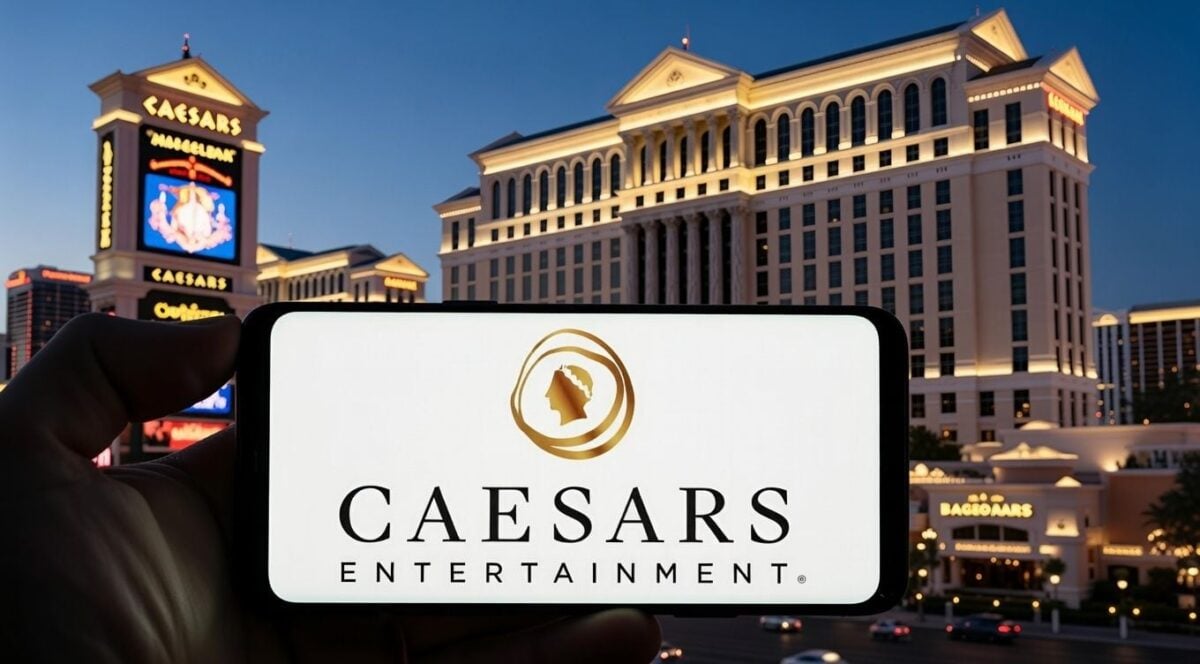
Caesars Entertainment’s operations encompass more than 55 gaming establishments with physical locations across 16 American states. The company’s real estate holdings feature iconic venues such as Caesars Palace in Las Vegas, originally launched in 1966.
Significant financial obligations weigh on the organization. Year-end 2025 figures showed debt exceeding $11 billion against cash reserves of merely $887 million.
Financial Obligations Complicate Acquisition Structure
Industry experts note that incorporating lease commitments pushes Caesars’ comprehensive liabilities beyond the $20 billion threshold. This positions the company’s enterprise valuation above $30 billion.
The substantial debt portfolio introduces additional complexity to any potential transaction. Prospective acquirers must develop strategies addressing these financial obligations within their deal frameworks.
Both proposals remain under consideration without formal rejection. Negotiations between involved parties are reportedly continuing.
While an expedited transaction could theoretically conclude by April, informed sources indicate 2027 represents a more plausible completion date.
Caesars Entertainment has maintained silence regarding both acquisition proposals. Company representatives released only a standard statement noting their policy against addressing market speculation or unconfirmed reports.
No binding agreement has been finalized with either potential acquirer as of now.
Get 3 Free Stock Ebooks
Discover top-performing stocks in AI, Crypto, and Technology with expert analysis.
- Top 10 AI Stocks - Leading AI companies
- Top 10 Crypto Stocks - Blockchain leaders
- Top 10 Tech Stocks - Tech giants


