


Key Highlights
- General Motors shares climbed approximately 5% following the announcement of supervised autonomous driving tests on public roads in California and Michigan.
- Over 200 test vehicles will operate on highways with trained safety operators, supported by more than one million miles of collected driving data.
- Bank of America released an optimistic research note highlighting GM’s strong truck profit margins and transformation toward subscription-based digital services.
- The company’s OnStar deferred revenue pipeline is projected to reach $7.5 billion by the conclusion of 2026.
- General Motors will offer its Super Cruise technology as a separate purchasable feature for its 2027 model year pickup trucks.
General Motors initiated supervised public road trials of its sophisticated automated driving technology this week across California and Michigan. This development, paired with an encouraging assessment from Bank of America, drove GM shares upward by approximately 5% on Monday.
The automated driving platform has undergone extensive training using millions of actual road miles and rigorous simulation testing. General Motors confirms the technology has reached maturity for transitioning from controlled environments to real-world traffic conditions.
Over 200 specially equipped test vehicles will operate on highway systems. Qualified safety operators will maintain control positions throughout testing, prepared to intervene when necessary.
GM’s data gathering fleet has compiled more than one million miles of driving information spanning 34 states. This comprehensive dataset now powers the artificial intelligence algorithms driving the new system.

GM stock was hovering around the $76 level on Monday. Despite a year-to-date decline of approximately 13%, Monday’s rally lifted shares above the 200-day moving average — a technical threshold that market participants frequently monitor.
Bank of America Upgrades Outlook on GM
The self-driving announcement represented just one positive catalyst. Bank of America issued an upbeat research assessment following GM’s executive presentations at the Bank of America Global Automotive Summit the previous week.
CFO Paul Jacobson revealed at the conference that General Motors anticipates its deferred revenue from software and connected services — primarily through its OnStar platform — will climb to $7.5 billion by the end of 2026.
Bank of America analysts characterized this development as a “tech-like” strategic shift with potential to enhance long-term profitability. The research firm emphasized GM’s pickup truck earnings power and underappreciated market positioning as justification for their optimistic stance.
General Motors simultaneously revealed plans to separate its Super Cruise autonomous technology from standard packages for 2027 model year pickup trucks, making it available as an individual purchase option. Bank of America interprets this strategy as a catalyst for accelerating digital service revenues throughout 2026.
Pickup Trucks Remain Profit Engine
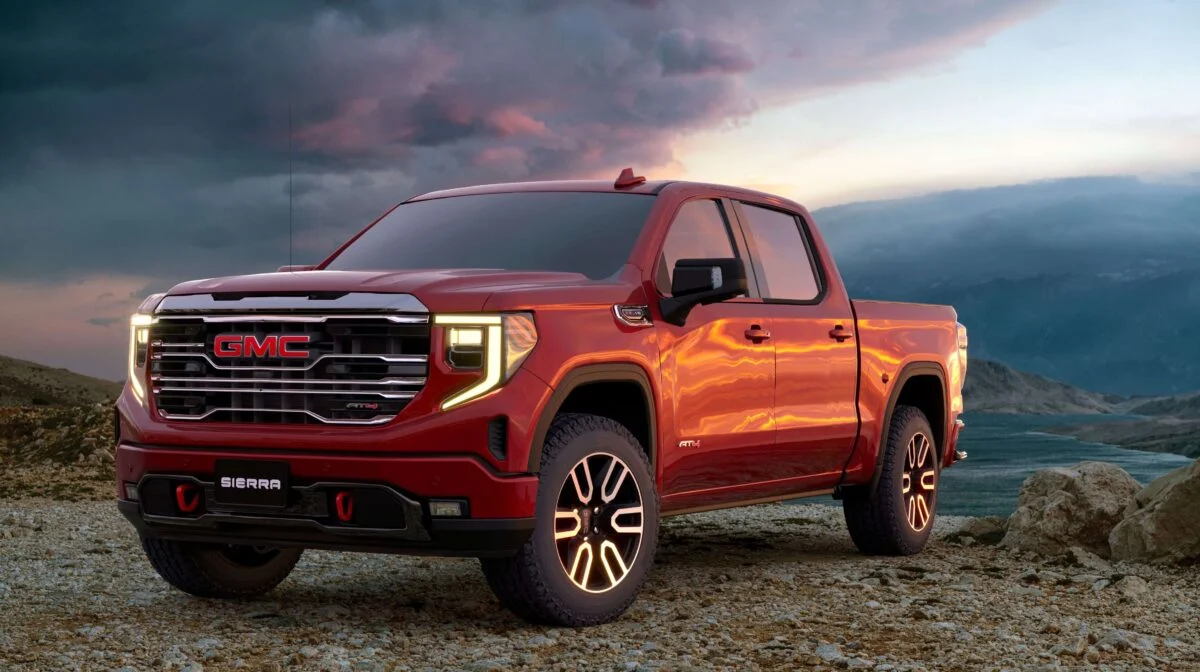
The GMC Sierra and Chevrolet Silverado continue serving as cornerstones of GM’s profitability strategy. These vehicle lines generate approximately $17,500 per unit — nearly twice the company’s overall average.
The Trump administration’s relaxation of stringent emissions regulations has provided GM additional flexibility to emphasize its profitable internal combustion engine trucks and SUVs as electric vehicle demand moderates.
GM’s $6.0 billion stock repurchase authorization and a 20% dividend boost approved earlier this year remain as signals of executive confidence in future cash generation. The equity currently provides a 0.95% dividend yield.
The consensus Wall Street rating on GM stands at “Moderate Buy,” derived from 14 Buy ratings, four Hold recommendations, and one Sell rating. The consensus price objective of $95.76 suggests potential upside exceeding 25% from present trading levels.
GM’s extended-term autonomous vehicle roadmap encompasses a hands-free driving capability for the all-electric Cadillac Escalade IQ, scheduled for highway deployment by 2028 before eventually expanding to complete point-to-point autonomous operation.
Get 3 Free Stock Ebooks
Discover top-performing stocks in AI, Crypto, and Technology with expert analysis.
- Top 10 AI Stocks - Leading AI companies
- Top 10 Crypto Stocks - Blockchain leaders
- Top 10 Tech Stocks - Tech giants


