


TLDR
- The precious metal tumbled close to 5% on Tuesday before staging a recovery of up to 2% on Wednesday as bargain hunters stepped in
- The US dollar’s strength, climbing approximately 1.5% over the week, is limiting gold’s upward momentum
- Geopolitical tensions between the US and Iran are fueling safe-haven appetite while simultaneously elevating crude oil prices
- Elevated oil prices are intensifying inflation concerns, dampening prospects for Federal Reserve interest rate reductions
- Market participants now see 80% probability of more than one rate reduction this year, down from expectations of two cuts just five days ago
The precious metal experienced dramatic volatility this week, plunging on Tuesday before staging a notable recovery during Wednesday’s trading session as market participants balanced geopolitical risk against greenback strength.
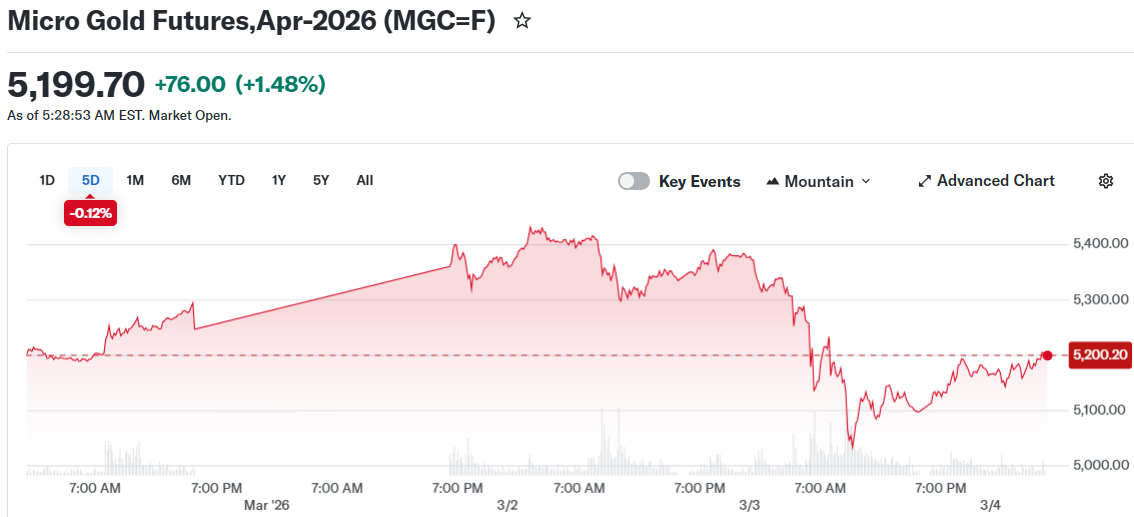
Spot bullion advanced 1.6% to reach $5,171.89 per ounce during late morning hours in London trading. This recovery followed the prior session’s 4.5% decline, marking one of the most significant single-day retreats in recent history.
The yellow metal achieved a record peak exceeding $5,595 per ounce in the final days of January. Year-to-date gains have approached 20%.
The Tuesday downturn was primarily attributed to a rally in the US Dollar Index, which surged nearly 1.5% across two trading days to touch six-week peaks. Greenback appreciation makes gold less attractive for international buyers holding alternative currencies.
Certain market participants were forced to liquidate gold holdings to offset losses elsewhere in their investment portfolios, intensifying downward pressure.

Silver experienced an even sharper correction, plummeting over 8% on Tuesday before bouncing back 4.1% to $85.38 during Wednesday’s session. Platinum declined 10% before recovering 2.8% to settle at $2,148.50 per ounce.
Iran Conflict Drives Safe-Haven Demand
The ongoing military confrontation between the US-Israel alliance and Iran has entered its fifth consecutive day. Israeli forces conducted additional strikes on Tehran on Tuesday, targeting a structure in Qom where religious leaders were convened to select a replacement for Supreme Leader Ayatollah Ali Khamenei, as reported by Israel’s Kan News. Iran’s semi-official Mehr news agency acknowledged the strike but maintained the facility was unoccupied during the attack.
The escalating conflict has generated significant turbulence across global financial markets, maintaining elevated investor anxiety. Concerns regarding wider regional destabilization continue mounting as Iranian officials have issued warnings of retaliation following American military operations against Iranian-affiliated installations.
Vessel movement through the Strait of Hormuz, a critical chokepoint handling approximately one-fifth of global oil and natural gas shipments, has virtually ceased. President Trump announced the United States would furnish naval protection and insurance coverage for oil tankers navigating the strategic waterway, though maritime industry representatives characterized the measure as insufficient.
Rising Oil Prices Complicate Rate Cut Expectations
The surge in crude oil valuations is elevating inflationary pressures across the economy. This development is diminishing the likelihood that central banking authorities, particularly the Federal Reserve, will implement interest rate reductions in the near term.
Market pricing now reflects 80% probability of more than a single quarter-point Fed rate decrease throughout this year. Just five trading days ago, markets had fully incorporated expectations for two separate cuts.
Elevated interest rate environments present challenges for gold as the commodity generates no yield or dividends.
Institutional investors’ net long positioning in gold has declined since late January to approach decade-low levels, based on CFTC regulatory filings. Market strategists suggest this reduced positioning could provide a floor preventing further substantial declines.
In China, government-released PMI indicators revealed manufacturing sector contraction, while privately conducted surveys demonstrated better-than-anticipated expansion, reflecting conflicting economic signals from the planet’s second-largest economy.
Remember: Preserve all tokens like [[EMBED_0]], [[IMG_0]], [[LINK_START_0]], [[LINK_END_0]], [[SCRIPT_0]], [[FIGURE_0]] etc. exactly as they appear. These are placeholders for embeds, images, and links that must not be changed.
Get 3 Free Stock Ebooks
Discover top-performing stocks in AI, Crypto, and Technology with expert analysis.
- Top 10 AI Stocks - Leading AI companies
- Top 10 Crypto Stocks - Blockchain leaders
- Top 10 Tech Stocks - Tech giants


