


Key Highlights
- Gold futures plunged 7% on Monday, eliminating all year-to-date 2026 advances
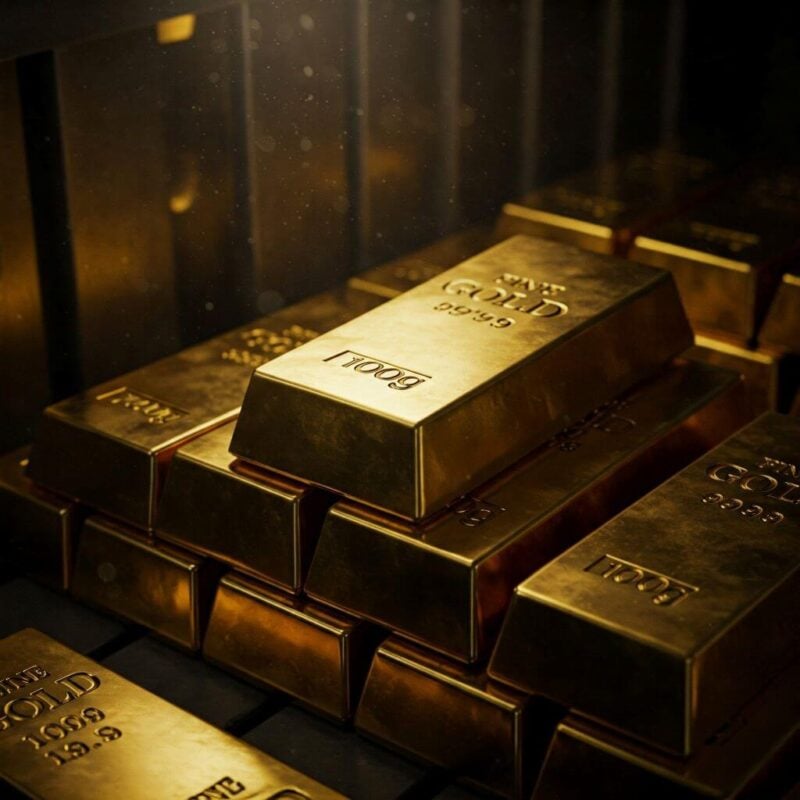
- Spot gold retreated to approximately $4,288/oz — marking the steepest weekly decline in over four decades
- President Trump issued a 48-hour ultimatum to Iran regarding the Strait of Hormuz
- Escalating oil prices amid regional tensions are amplifying inflation anxieties and diminishing rate reduction prospects
- Silver and platinum experienced significant losses; ECB and Bank of England hinted at potential rate increases
Precious metals markets experienced severe turbulence this week, with gold suffering substantial losses as the intensifying US-Israel-Iran standoff drives crude oil prices upward and intensifies concerns about persistent inflation.
On Monday, spot gold retreated to approximately $4,288 per ounce. This represents a decline exceeding 10% over the previous week — marking the yellow metal’s most severe weekly slide since 1983.
Gold futures contracts declined roughly 7% during Monday’s morning session. These dramatic losses have completely wiped out the metal’s accumulated gains throughout 2026.
Gold entered this year riding impressive momentum after recording a remarkable 65% surge throughout 2025. However, the escalating Middle Eastern conflict has rapidly transformed market dynamics.
The primary catalyst behind this selloff centers on inflation expectations. Surging crude oil costs, triggered by the regional conflict, are generating widespread market concerns that monetary authorities will maintain elevated interest rates — or potentially increase them further.
Understanding Gold’s Vulnerability to Inflation Expectations
Gold generates no yield or interest payments. When borrowing costs remain elevated or trend higher, capital typically flows toward income-generating assets. This dynamic diminishes gold’s relative appeal.

Additionally, the US dollar has gained strength, creating further headwinds for bullion prices. A firmer greenback increases gold’s cost for international purchasers using alternative currencies.
Greg Shearer, who leads base and precious metals strategy at JPMorgan, characterized the decline as “an extremely brutal flush.” He explained that gold became ensnared in a widespread “sell everything” market rotation rather than targeted liquidation.
The European Central Bank and Bank of England have both indicated potential rate increases later this year. While the Federal Reserve hasn’t suggested hikes, market participants have systematically eliminated expectations for 2025 rate cuts.
Analysts at OCBC noted the market is “trading less on geopolitical hedging flows and more on fears that stickier inflation could prompt a more hawkish central bank stance.”
Presidential Ultimatum Intensifies Market Uncertainty
During the weekend, President Trump delivered a 48-hour ultimatum demanding Iran reopen the Strait of Hormuz, threatening to “obliterate” vital energy facilities should Tehran decline.
🚨 “If Iran doesn’t FULLY OPEN, WITHOUT THREAT, the Strait of Hormuz, within 48 HOURS from this exact point in time, the United States of America will hit and obliterate their various POWER PLANTS, STARTING WITH THE BIGGEST ONE FIRST…” – President DONALD J. TRUMP pic.twitter.com/htLz1A0Mf7
— The White House (@WhiteHouse) March 22, 2026
Tehran countered with threats to strike energy and water facilities throughout the Middle East region while vowing complete closure of the strategic waterway.
The confrontation between Israel and Iran has now stretched into its fourth week. Any further escalation could propel crude prices substantially higher, exacerbating inflation anxieties.
Surprisingly, despite heightened geopolitical uncertainty, gold has failed to attract typical safe-haven investment flows. Instead, inflation considerations have overwhelmingly shaped trading decisions.
Additional precious metals also declined. Silver retreated 2.7% to $65.90 per ounce. Platinum dropped 3.9% to $1,850 per ounce. Copper experienced similarly steep losses.
Ewa Manthey, commodities strategist at ING, observed that during market stress episodes, gold’s exceptional liquidity can transform it into a funding source — prompting investors to liquidate positions to offset losses in other holdings.
Despite near-term weakness, JPMorgan analysts maintain a constructive long-term outlook. They suggested that if energy supply disruptions persist and economic growth suffers, “the backdrop for gold will likely quickly flip materially bullish.”
As of Monday morning, spot gold was trading at its weakest level since late December.
Get 3 Free Stock Ebooks
Discover top-performing stocks in AI, Crypto, and Technology with expert analysis.
- Top 10 AI Stocks - Leading AI companies
- Top 10 Crypto Stocks - Blockchain leaders
- Top 10 Tech Stocks - Tech giants


