


TLDR
- Spot gold maintained stability around $5,183 per ounce Thursday, trading within a tight range
- Upward pressure on the US dollar combined with diminishing expectations for interest rate reductions weighed on gold
- Escalating tensions in the Middle East sent Brent crude temporarily above $100 per barrel, marking a nearly 60% year-to-date surge
- Gold ETF holdings experienced their largest weekly decline in more than two years as market participants liquidated positions
- Silver advanced over 1.6% to reach $87.19; BMI analysts project silver will average $93 per ounce throughout 2026
The precious metal continues to maintain elevated levels near historic highs, though upward momentum has stalled following the outbreak of US-Israeli hostilities with Iran on February 28. Market participants are currently weighing safe-haven appeal against dollar strength and declining probability of Federal Reserve monetary policy easing.
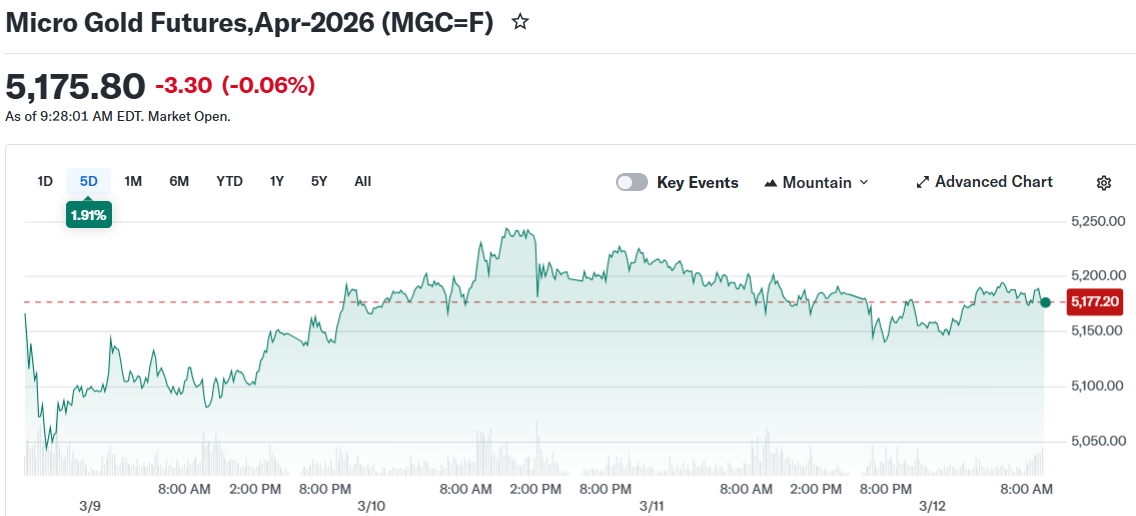
Spot gold showed minimal movement at $5,183.39 per ounce during Thursday’s New York morning session. April-delivery US gold futures advanced 0.2% to $5,190.50. The yellow metal has accumulated approximately 20% in gains year-to-date.
Ongoing hostilities in the Middle East represent the primary source of market volatility presently. Reports emerged Thursday of two tankers engulfed in flames in Iraqi territorial waters, signaling a potential intensification of Iranian assaults on energy infrastructure throughout the region.
Brent crude momentarily surged beyond the $100 per barrel threshold during Asian market hours. Petroleum prices have surged nearly 60% since the year began. Elevated oil prices increase logistics and manufacturing expenses, contributing to widespread inflationary pressures.
Gold maintains its reputation as an inflation protection vehicle. However, these same inflationary concerns are simultaneously diminishing market expectations for near-term Federal Reserve interest rate reductions. Elevated interest rates enhance the appeal of yield-generating investments relative to gold.

The US dollar extended its winning streak to three consecutive sessions Thursday. Dollar appreciation increases gold’s cost for international buyers using alternative currencies, potentially dampening overall demand.
“Gold has been range bound recently. The higher dollar index, rising treasury yields and lack of interest rate cuts are the negative factors, but the conflict in the Middle East has been generating some safe-haven flows,” said Phillip Streible, chief market strategist at Blue Line Futures.
Gold ETF Holdings Drop
Despite price stability, exchange-traded fund holdings backed by gold declined last week at their fastest pace in over two years. Market participants have been liquidating gold positions to generate liquidity for covering deficits in other portfolio segments.
Jeff Currie from Carlyle Group shared his perspective with Bloomberg Television, anticipating enhanced gold demand following resolution of the current conflict. He noted that emerging economy purchasers increasingly favor gold over American assets to mitigate exposure to potential foreign reserve freezes, similar to Russia’s experience in 2022.
Silver and Platinum Also Move Higher
Silver demonstrated superior performance relative to gold Thursday, advancing 1.6% to $87.19 per ounce. Silver has accumulated gains exceeding 146% during 2025.
BMI analysts project silver will average $93 per ounce throughout 2026. Their forecast anticipates robust investment appetite will counterbalance softer demand from solar energy and jewelry manufacturing sectors at current elevated price points.
Spot platinum increased 0.7% to $2,184.00. Palladium advanced 1.6% to $1,666.70.
Core inflation data for the United States remained subdued at year’s start, according to Thursday’s latest statistical release. Nevertheless, forward-looking inflationary concerns connected to Middle Eastern hostilities prompted traders to scale back their expectations for Fed rate reductions in 2025.
Streible from Blue Line Futures noted that stabilization or decline in petroleum prices could alleviate pressure on treasury yields and the dollar, potentially catalyzing higher gold futures prices.
Get 3 Free Stock Ebooks
Discover top-performing stocks in AI, Crypto, and Technology with expert analysis.
- Top 10 AI Stocks - Leading AI companies
- Top 10 Crypto Stocks - Blockchain leaders
- Top 10 Tech Stocks - Tech giants


