



TLDR
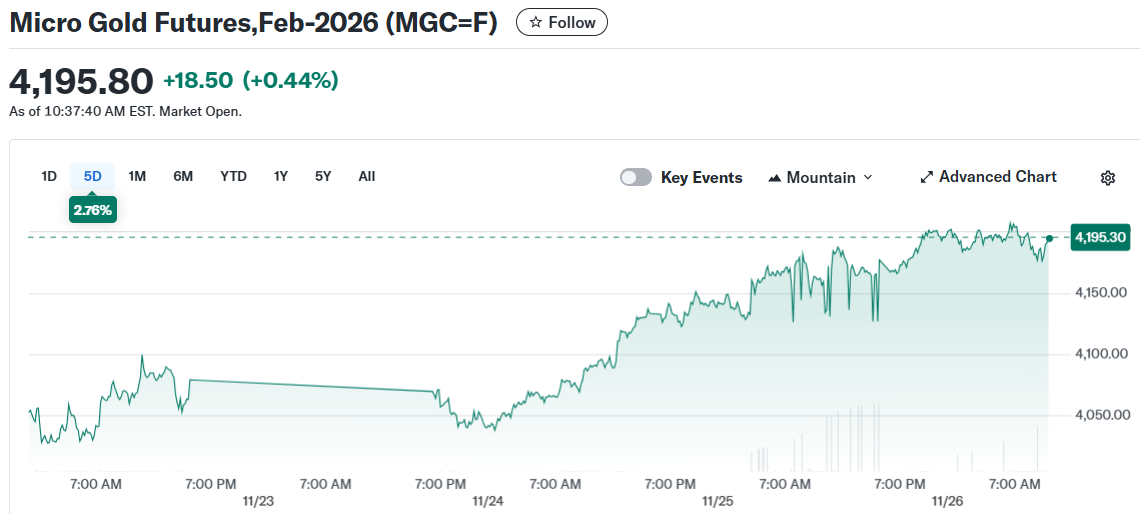
- Gold prices increased 0.9% to $4,166.13 per ounce as disappointing US economic data strengthened the case for Fed rate cuts
- September retail sales showed minimal growth while core producer inflation fell more than expected, indicating economic cooling
- Federal Reserve rate cut probability for December 9-10 meeting rose to 80.7% from 42.4% in just one week
- US dollar weakened 0.5% from recent highs, providing additional support for gold and precious metals
- Emerging market central banks continue structured gold buying programs to diversify reserve holdings
Gold posted gains during Asian trading hours on Wednesday as weaker than expected US economic data increased market confidence in a December Federal Reserve rate cut. Spot gold rose 0.9% to reach $4,166.13 per ounce.
Gold futures expiring in February climbed 0.9% to $4,201.15 per ounce. The increases followed the publication of September economic reports showing softness in key areas.
Retail sales data for September displayed almost no growth. Core producer inflation figures came in below forecasts, dropping more than analysts predicted.
The September readings will be among the last economic reports the Federal Reserve reviews before making its December policy decision. An ongoing government shutdown has delayed October data releases for employment and inflation.
The Bureau of Economic Analysis at the Commerce Department rescheduled the PCE price index for December 5. The PCE represents the Fed’s preferred gauge for measuring inflation trends.
Rate Cut Odds Surge Higher
Market participants have grown increasingly confident about a December rate reduction over recent days. Two members of the Federal Reserve made public comments favoring additional near-term policy easing.

Data from CME Fedwatch shows traders now assign an 80.7% chance to a 25 basis point rate cut during the Fed’s December 9-10 meeting. One week earlier, markets priced in only a 42.4% probability.
The US dollar index fell 0.5% after reaching a near six-month high last week. The index tracks dollar performance against major world currencies.
Gold typically benefits when interest rates decline because lower rates reduce the attractiveness of yield-generating assets like Treasury securities. Without yielding interest or dividends, gold becomes more competitive when other investment returns fall.
Dollar weakness provides additional support for gold prices. Commodities priced in dollars become less expensive for buyers using other currencies.
Precious Metals See Broad Gains
Silver and platinum also recorded price increases on Wednesday. Spot silver rose 1% to $52.0215 per ounce, trading near all-time record levels. Spot platinum added 0.2% to reach $1,559.90 per ounce.
Demand for safe-haven assets remained elevated despite gains in riskier markets this week. Ongoing geopolitical tensions between Japan and China contributed to sustained gold buying.
Questions about a possible Russia-Ukraine ceasefire added to uncertainty. Concerns regarding government fiscal spending levels in major economies also supported precious metals.
Base Metals and Institutional Buying
Industrial metals moved higher during the session. Copper futures on the London Metal Exchange gained 0.3% to $10,992.90 per tonne.
Copper prices received support from Codelco, Chile’s major mining producer. The company indicated it would implement higher prices for Chinese customers.
Central banks in emerging economies have maintained steady gold purchasing activity. These institutions are acquiring gold as part of long-term reserve diversification plans.
The buying represents strategic portfolio allocation rather than tactical market positioning. This consistent institutional demand creates a foundation of support beneath gold prices.
Haven demand for gold stayed strong through the week even as equity markets rallied. The combination of geopolitical tensions and economic uncertainty kept buyers active in precious metals markets.
Two Fed officials recently spoke publicly about their views on monetary policy. Both officials indicated openness to additional rate cuts if economic data continues to show weakness.
The rescheduled PCE price index data will arrive on December 5, providing the Fed with updated inflation information before its December meeting. This report will help shape the final rate decision.
Get 3 Free Stock Ebooks
Discover top-performing stocks in AI, Crypto, and Technology with expert analysis.
- Top 10 AI Stocks - Leading AI companies
- Top 10 Crypto Stocks - Blockchain leaders
- Top 10 Tech Stocks - Tech giants


