


TLDR
- Gold prices remained stable above $5,000 per ounce following disappointing December US retail sales data that increased Federal Reserve rate cut expectations
- The precious metal has regained approximately half of its 13% decline from late January’s all-time high exceeding $5,595 per ounce
- BNP Paribas forecasts gold reaching $6,000 by December 2026 while Goldman Sachs and Deutsche Bank maintain positive price projections
- The US dollar fell for a fourth consecutive session with 10-year Treasury yields dropping to their lowest level in nearly 30 days
- Markets now focus on Wednesday’s employment data and Friday’s inflation figures for guidance on Federal Reserve policy moves
Gold prices held steady above the $5,000 per ounce level Wednesday after weak US retail sales figures strengthened arguments for Federal Reserve interest rate reductions. Spot gold climbed 0.6% to $5,052.11 per ounce during Asian trading hours.
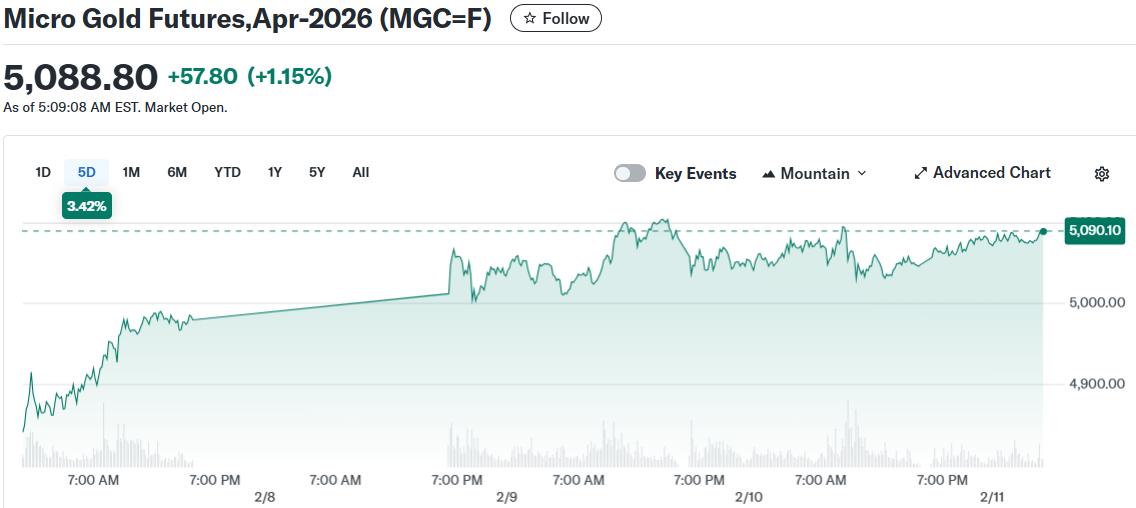
The advance came after December retail sales data revealed consumer spending unexpectedly stalled. These numbers raised concerns about economic growth in the coming months.
Other precious metals recorded gains during the session. Silver jumped 3.4% to reach $83.5555 per ounce while both platinum and palladium increased more than 2%.
The US dollar extended losses for a fourth straight day, declining 0.3% and marking a 1.3% drop over the period. Dollar weakness typically boosts gold demand from international purchasers.
Treasury yields provided support for precious metal prices. US 10-year bond yields fell to their lowest reading in approximately one month as economic concerns mounted.
Manav Modi from Motilal Oswal Financial Services stated that falling yields helped lift gold prices. The precious metal becomes more appealing when competing investments offer lower returns.

Recovery Following Late January Decline
Gold touched a record high above $5,595 per ounce in late January. The surge reflected geopolitical tensions, worries about Federal Reserve independence, and movement away from traditional investments.
Intense speculative activity drove prices higher before sparking a reversal. Gold dropped roughly 13% across two trading sessions as investors locked in profits.
The metal has since recovered about half of those declines. Trading has stabilized near the $5,000 mark during the current week.
Ahmad Assiri from Pepperstone Group said most speculative positioning has been cleared from the market. This cleanup lowers the chance of sharp price movements in coming sessions.
Reduced volatility may provide a foundation for renewed gains. Multiple banks have issued positive forecasts for gold prices through the remainder of 2026.
Rate Policy and Economic Reports
BNP Paribas established a $6,000 per ounce target for gold by year-end 2026. Deutsche Bank and Goldman Sachs have published similar bullish predictions for the precious metal.
Federal Reserve decisions remain crucial for gold price direction. President Donald Trump selected Kevin Warsh as his nominee for Fed chairman.
Warsh has historically favored more rate cuts. Lower interest rates usually benefit gold because the metal does not generate income.
Beth Hammack from the Cleveland Federal Reserve offered a different view Tuesday. She suggested rates might stay unchanged for an extended stretch while officials examine economic indicators.
Wednesday’s nonfarm payrolls report represents a key data point for traders. Employment figures will show whether labor market weakness continues.
Friday delivers consumer price index numbers measuring inflation levels. The Federal Reserve weighs both job growth and price pressures when adjusting monetary policy.
Analysts noted that speculative positions have been removed following January’s volatility. This creates space for more sustainable price movements based on economic fundamentals rather than short-term trading activity.
Get 3 Free Stock Ebooks
Discover top-performing stocks in AI, Crypto, and Technology with expert analysis.
- Top 10 AI Stocks - Leading AI companies
- Top 10 Crypto Stocks - Blockchain leaders
- Top 10 Tech Stocks - Tech giants


