


Key Takeaways
- Investment strategists at Goldman Sachs advise investors to view market declines as purchasing opportunities given robust fundamentals
- The Iran-Israel military confrontation has now extended into day five, with continued strikes affecting investor sentiment
- Tehran’s intelligence ministry allegedly initiated contact with US intelligence agencies through the CIA to discuss potential peace pathways
- Crude oil markets experienced a modest retreat on diplomatic developments, with Brent trading around the $82 level
- Futures contracts for major US indices rebounded following news of Iran’s diplomatic initiative
Wall Street futures moved higher on Wednesday following breaking news that Iran’s intelligence apparatus had secretly contacted the Central Intelligence Agency in an apparent effort to de-escalate hostilities with Israel.
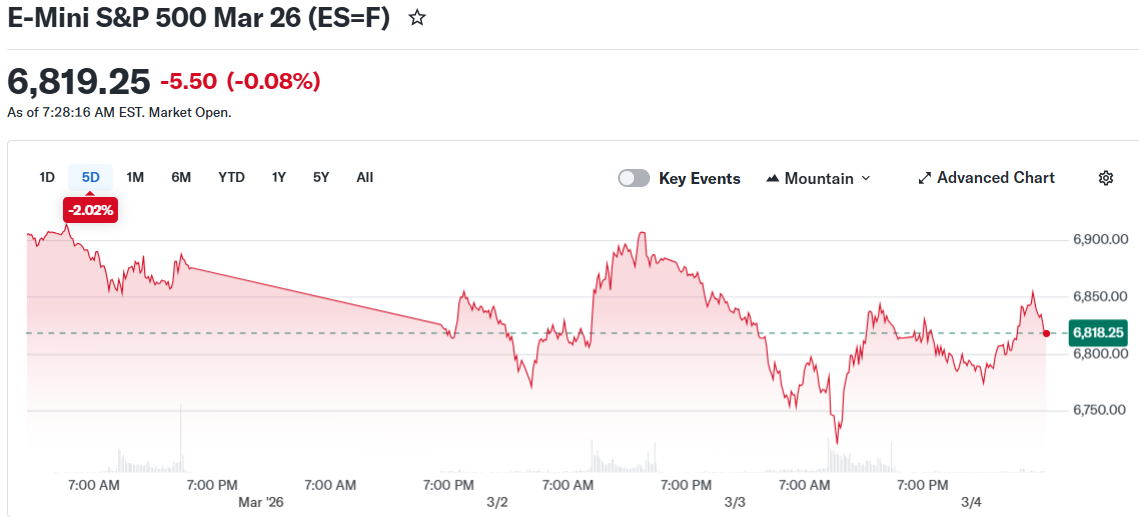
Futures tied to the S&P 500 index advanced 0.1% while Nasdaq 100 contracts climbed approximately 0.2%, erasing morning declines. Dow Jones Industrial Average futures hovered near unchanged territory following Tuesday’s broad selloff across all three principal indices.
Wednesday marked the fifth consecutive day of the escalating confrontation. Israeli military forces conducted additional strikes targeting Tehran as Iranian authorities organized memorial services for Supreme Leader Ali Khamenei, who perished in weekend military operations.
Global financial markets have experienced significant turbulence from the ongoing conflict. South Korea’s primary equity index recorded its largest single-session decline in history as investors grew increasingly concerned about broader regional implications.
News of Iran’s diplomatic initiative provided temporary relief to equity markets. Nevertheless, American government sources reportedly expressed doubt regarding the sincerity of the overture, with market observers suggesting it may be premature to draw definitive conclusions.

Goldman Sachs Endorses Buying Strategy
Goldman Sachs investment strategists, under the leadership of Peter Oppenheimer, issued research guidance recommending that investors treat market pullbacks as strategic entry points. Their analysis emphasized that any downturn would likely remain contained due to solid corporate profit expansion and durable economic conditions.
“We see correction risks as high given current valuations, but expect this to present a buying opportunity with relatively low risk of a more protracted and deep bear market,” Oppenheimer wrote.
The Goldman team recognized that equity valuations across all global sectors appear elevated when measured against two-decade historical averages. This valuation backdrop increases market vulnerability to disruptions including the Middle East conflict and concerns surrounding artificial intelligence developments.
Oppenheimer added that “most geopolitical shocks in recent years have not had a long-lasting impact on markets.”
Energy Markets and Strategic Waterways
Surging crude oil valuations have emerged as a primary market concern. President Trump announced on Tuesday that American forces would offer security guarantees and naval escorts for commercial tankers navigating the Strait of Hormuz, where shipping activity has stagnated following Iranian warnings.
Brent crude futures declined more than 2% following the diplomatic reports, settling near the $82 per barrel mark. West Texas Intermediate retreated to approximately $75 per barrel.
Elevated energy costs threaten to accelerate inflationary pressures, potentially constraining the Federal Reserve’s flexibility regarding monetary policy adjustments.
Market participants are closely monitoring Wednesday’s ADP private sector employment figures. This data precedes Friday’s comprehensive labor market report, both critical factors influencing Federal Reserve interest rate projections.
Quarterly earnings announcements from Broadcom, Costco, and Alibaba are anticipated during the current trading week.
Get 3 Free Stock Ebooks
Discover top-performing stocks in AI, Crypto, and Technology with expert analysis.
- Top 10 AI Stocks - Leading AI companies
- Top 10 Crypto Stocks - Blockchain leaders
- Top 10 Tech Stocks - Tech giants


