


TLDR
-
Natural gas prices across Europe experienced dramatic increases following Middle East hostilities that threatened LNG transportation through the Strait of Hormuz.
-
Production suspensions at QatarEnergy facilities following drone strikes created immediate global LNG supply constraints.
-
Benchmark Dutch TTF gas contracts experienced intraday spikes reaching 49% amid escalating concerns.
-
European energy security remains vulnerable due to heavy dependence on LNG following the Russian pipeline cutoff in 2022.
-
Market experts caution that extended supply interruptions could drive European gas costs significantly upward across global markets.
Tensions escalating across the Middle East sent European natural gas markets into volatile trading territory. Price movements reflected immediate concerns over potential interruptions to liquefied natural gas deliveries from critical production hubs.
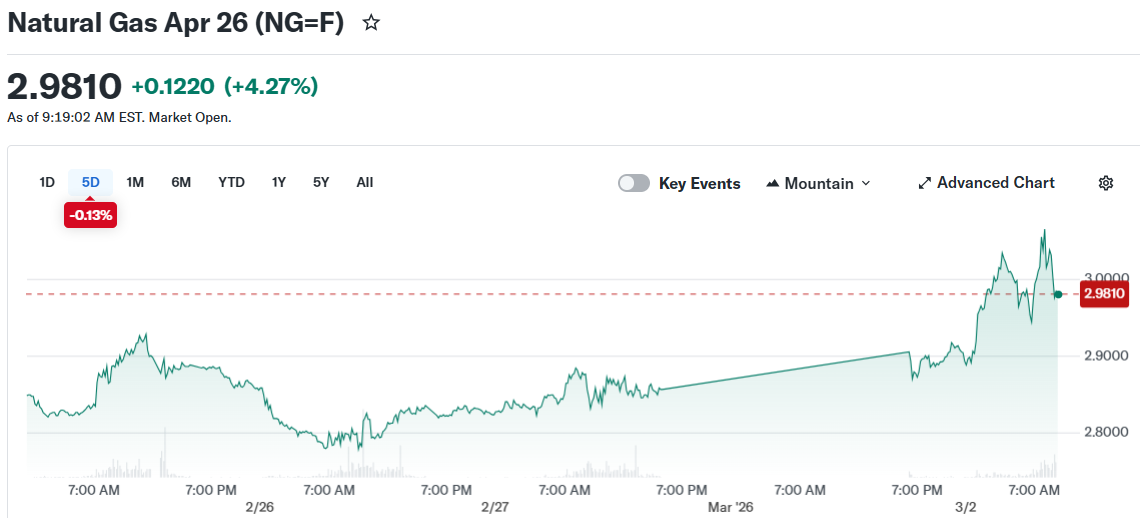
Trading sessions opened with European gas contracts surging approximately 25%. The Dutch TTF benchmark contract climbed even higher throughout the day, touching peak gains of 49%.
Price volatility intensified following military operations across the region. Shipping activity through the Strait of Hormuz faced significant complications tied to Iranian involvement in the conflict.
This narrow waterway serves as a crucial passage for worldwide LNG transport. Vessel movements through the corridor have declined considerably as risks mounted.
Production operations at QatarEnergy came to a standstill following drone assault on infrastructure. The company supplies approximately 20% of the world’s LNG exports from its facilities.

Europe’s Vulnerability to Supply Shocks
European energy infrastructure faces considerable risk from LNG delivery interruptions. The continent restructured its gas imports after severing dependence on Russian pipeline supplies in 2022.
Qatari LNG now represents a substantial portion of European gas consumption. Transit through the Strait of Hormuz represents an unavoidable route for these critical shipments heading to European import facilities.
Storage levels decline naturally throughout winter consumption periods. European nations must secure additional LNG volumes during spring and summer to replenish strategic reserves.
Market observers drew parallels to the 2022 energy emergency. Industrial curtailments and accelerating consumer prices characterized that turbulent period across European economies.
Goldman Sachs analysts projected that a 30-day suspension of LNG flows through the Strait would drive European gas contracts above double current levels. Their modeling suggested prices reaching €74 per megawatt hour in such circumstances.
Extended disruptions beyond 60 days could force prices past the €100 per megawatt hour threshold. Previous rallies to those levels forced significant demand destruction throughout European industrial sectors.
Worldwide Energy Trading Response
Commodity markets reacted swiftly to emerging supply threats. Oil prices advanced alongside gas as market participants incorporated regional disruption scenarios into valuations.
Annual LNG volumes passing through the Strait of Hormuz total approximately 80 million tonnes. This quantity accounts for nearly one-fifth of worldwide LNG trade.
Petroleum transport through this maritime chokepoint remains equally vital to international energy networks. Roughly 20% of global crude oil production traverses these waters.
Reports emerged over the weekend documenting damage to three oil tankers operating in regional waters. Scheduling uncertainties compounded existing market nervousness.
Charter costs for crude carriers have escalated dramatically in recent trading periods. Certain Persian Gulf to Asian routes have witnessed rates increase threefold within the past 30 days.
Asian LNG benchmarks confront similar upward pressure. Interconnected global gas trading mechanisms mean supply constraints in one region propagate across others.
Domestic U.S. natural gas pricing has exhibited relative stability thus far. Liquefaction facilities currently operate at maximum capacity, constraining opportunities to redirect additional volumes overseas.
European trading desks continue monitoring LNG availability closely. Market attention remains fixed on whether shipping operations through the Strait of Hormuz can normalize within the near-term outlook.
Get 3 Free Stock Ebooks
Discover top-performing stocks in AI, Crypto, and Technology with expert analysis.
- Top 10 AI Stocks - Leading AI companies
- Top 10 Crypto Stocks - Blockchain leaders
- Top 10 Tech Stocks - Tech giants


