


Key Takeaways
- German airline carrier could idle as many as 40 planes (approximately 5% of total fleet) following Middle East fuel supply constraints
- Closure of the Strait of Hormuz has disrupted worldwide jet fuel availability, with European markets relying on ~50% of supplies from Persian Gulf sources
- Morgan Stanley reduced DLAKY rating from “overweight” to “equal-weight,” reducing 2026 EBITDA projection by 17%
- Increased fuel expenses anticipated to create €1.6bn cost pressure and approximately €800m EBITDA decline
- Passenger load factors projected to decline roughly 2% year-over-year starting Q3 2026, with capacity expansion reduced from 4% to 2.5%
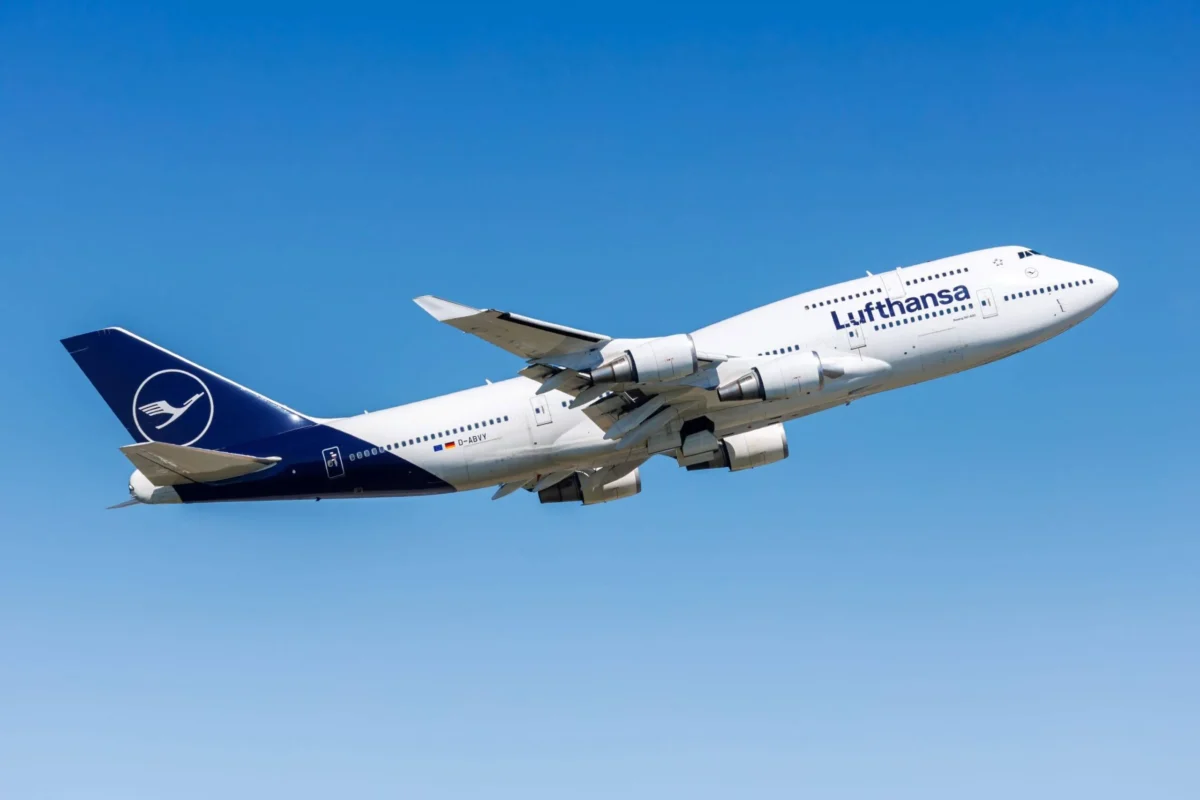
The German airline giant finds itself navigating dual headwinds this week — facing both a Wall Street downgrade and growing concerns over jet fuel availability. Lufthansa stands among the most vulnerable European airlines to ongoing energy market volatility, with financial projections now reflecting this exposure.
CEO Carsten Spohr has instructed operational teams to prepare multiple contingency scenarios across varying disruption levels. The most significant measure under consideration involves parking up to 40 aircraft — representing roughly 5% of the airline’s total fleet. Leadership seems focused on proactive cost management instead of adopting a wait-and-see approach as demand conditions evolve.
The fundamental issue stems from the practical shutdown of the Strait of Hormuz, a vital corridor for international jet fuel distribution. Asian refineries have begun reducing output in reaction, with European markets facing particularly acute vulnerability — approximately 50% of jet fuel consumed in the EU and UK originates from Persian Gulf exporters.
This supply constriction extends beyond mere pricing concerns. The possibility of actual fuel scarcity introduces operational uncertainty that’s challenging to mitigate through traditional hedging strategies, particularly problematic for an airline already trailing competitors in fuel hedging effectiveness.

Wall Street Firm Lowers Rating and Profit Projections
Morgan Stanley revised its stance on Lufthansa to “equal-weight” from “overweight” this Wednesday, pointing to deteriorating earnings prospects and inferior fuel hedging arrangements compared to rivals including IAG and Air France-KLM.
The investment bank slashed its 2026 EBITDA forecast for Lufthansa by 17% — markedly deeper than the 6% reduction applied to IAG or the 10% adjustment for Air France-KLM. This disparity stems primarily from hedging effectiveness. Morgan Stanley noted that Lufthansa’s fuel hedging strategy “remains less attractive vs. peers.”
In absolute figures, the firm projects a €1.6bn fuel expense increase for the fiscal year, driving an approximately €800m downward revision to FY26 EBITDA compared to previous estimates.
Capacity expansion forecasts were similarly adjusted downward, from 4% to 2.5%, with passenger load factors anticipated to contract around 2% year-over-year beginning in Q3 2026.
Fare Increases Provide Limited Relief
Regarding revenue generation, Morgan Stanley does anticipate Lufthansa will successfully implement higher ticket prices. Passenger yields are forecast to increase +7% in Q2, +11% in Q3, and +11% in Q4 of 2026.
However, these revenue improvements will fall short of completely offsetting elevated fuel expenses. Legacy carriers typically enjoy stronger pricing authority than budget airlines, yet Lufthansa still emerges less favorably positioned than European competitors when evaluating the complete fuel cost impact.
Notably, Morgan Stanley highlighted that Lufthansa’s year-to-date performance showing approximately 9% decline actually outperforms the roughly 16% decrease experienced by IAG and Air France-KLM, characterizing this differential as “a disconnect we view as unjustified.”
Shares had surged as much as 8.1% during early Frankfurt trading Tuesday following news of the contingency planning — after declining approximately 16% year-to-date at that juncture. Notwithstanding the temporary rebound, the combination of the analyst downgrade and fuel supply concerns continues applying downward pressure on the stock.
Get 3 Free Stock Ebooks
Discover top-performing stocks in AI, Crypto, and Technology with expert analysis.
- Top 10 AI Stocks - Leading AI companies
- Top 10 Crypto Stocks - Blockchain leaders
- Top 10 Tech Stocks - Tech giants


