


Key Takeaways
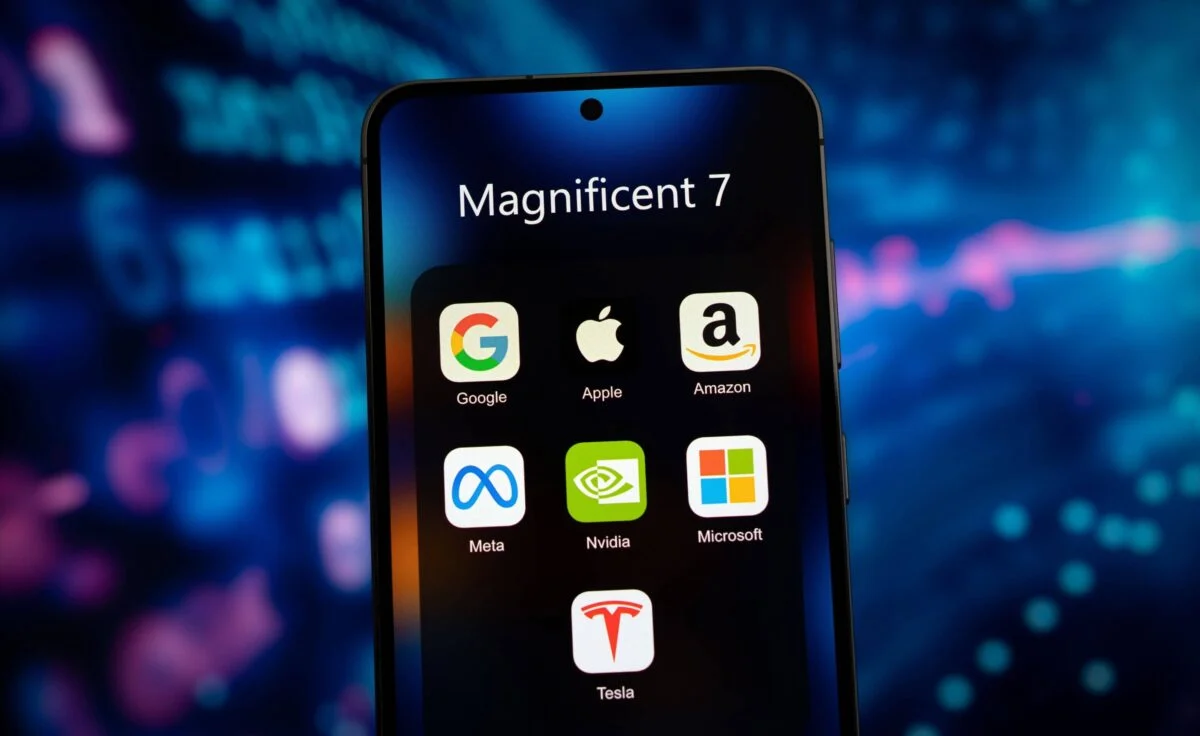
- Big Tech’s “Magnificent Seven” erased over $850 billion in market capitalization within five trading days.
- Meta experienced its steepest weekly decline since October 2025, plummeting more than 11% following a major social media platform liability ruling.
- Microsoft is heading toward its weakest quarterly performance in 16 years, sliding 6.5% over the period.
- Bitcoin hovers around $65,000 while the S&P 500 has declined over 7% year-to-date, with interest rate hike probabilities now exceeding cut expectations.
- Apple emerged as the sole Magnificent Seven winner this week, gaining ground on speculation about expanding Siri’s AI partnerships.
The world’s most valuable technology companies endured a brutal week, with the “Magnificent Seven” collectively erasing more than $850 billion in shareholder wealth. The carnage spread across markets, affecting everything from growth stocks to digital currencies.
[[LINK_START_1]]Meta[[LINK_END_1]] suffered its most severe weekly losses since October 2025, tumbling over 11%. The social media giant faced this setback after a jury ruled that both Meta and Alphabet, Google’s parent corporation, were negligent in their duty to safeguard minors using their platforms. Alphabet similarly retreated, closing down nearly 9% for the week.Microsoft’s stock declined 6.5% during the trading week, putting the software behemoth on course for its poorest quarterly showing since the 2008 financial crisis. The broader software sector has borne the brunt of the recent market turmoil.
Nvidia and Amazon both retreated approximately 3% over the week’s trading sessions. Tesla shed nearly 2% during the same period.

The Forces Behind Technology’s Collapse
Treasury yields surged throughout the week as market participants adjusted expectations for elevated inflation, driven partly by climbing crude oil prices. This shift has completely eliminated Federal Reserve rate reduction forecasts. Traders now assign higher probability to a 2026 rate increase than any decrease.
This macroeconomic backdrop creates headwinds for growth-oriented equities, which typically depend on inexpensive capital and future profit projections that diminish in value as borrowing costs escalate.
Chip manufacturers faced additional pressure midweek following Alphabet’s publication of breakthrough research detailing an algorithm capable of substantially decreasing AI memory requirements. This development hammered memory chipmakers like Sandisk and Micron Technology on Thursday. While both companies remained in negative territory for the week, the semiconductor sector experienced modest recovery during Friday’s session.
The S&P 500 has now surrendered more than 7% of its value in 2025. The tech-heavy Nasdaq has entered correction territory. The VIX volatility index jumped above 30 — reaching its highest point in twelve months.
Cryptocurrency and Traditional Hedges Under Pressure
[[LINK_START_4]]Bitcoin[[LINK_END_4]] remains anchored near $65,000, substantially below its previous peak levels. Gold has similarly retreated roughly $500 from its January all-time high.The challenging market conditions have left investors with limited refuge options. Global equities outside the United States are likewise trailing their domestic equivalents.
Apollo’s chief economist Torsten Sløk suggested that markets are exhibiting excessive reaction and predicted the current turbulence should persist for approximately four to six weeks before conditions normalize. Keith Lerner, Truist Wealth’s chief investment officer, advised clients that “measured cash deployment is warranted” in the current environment.
Apple stood out as the lone positive performer among the Magnificent Seven, ending the week marginally higher. Reports emerged that the iPhone maker plans to expand Siri’s artificial intelligence capabilities beyond its existing OpenAI partnership to include competing AI services.
As of Friday’s closing bell, the S&P 500 settled at 6,368, representing a 1.67% decline for the session.
Get 3 Free Stock Ebooks
Discover top-performing stocks in AI, Crypto, and Technology with expert analysis.
- Top 10 AI Stocks - Leading AI companies
- Top 10 Crypto Stocks - Blockchain leaders
- Top 10 Tech Stocks - Tech giants


