



Key Highlights
- Bitcoin plummeted from $75,000 to $66,000 throughout the week; Ethereum breached the critical $2,000 threshold
- Major U.S. equity benchmarks slipped into correction mode, with the S&P 500 recording its most extended decline since 2022
- Crude oil prices climbed beyond $100 per barrel amid escalating Middle Eastern tensions, prompting widespread risk aversion
- Coinbase introduced mortgage products backed by digital assets, while Tether engaged KPMG for comprehensive financial review
- David Sacks concluded his tenure as White House Crypto Czar following a year-long appointment
Financial markets endured a brutal week as both digital assets and traditional equities experienced significant downward pressure. Risk appetite evaporated as energy costs climbed and geopolitical uncertainties mounted.
The flagship cryptocurrency retreated from its weekly peak of $75,000, eventually settling near $66,000 by Friday, March 27. Ethereum couldn’t maintain momentum above the psychologically important $2,000 level, a threshold closely monitored by market participants.
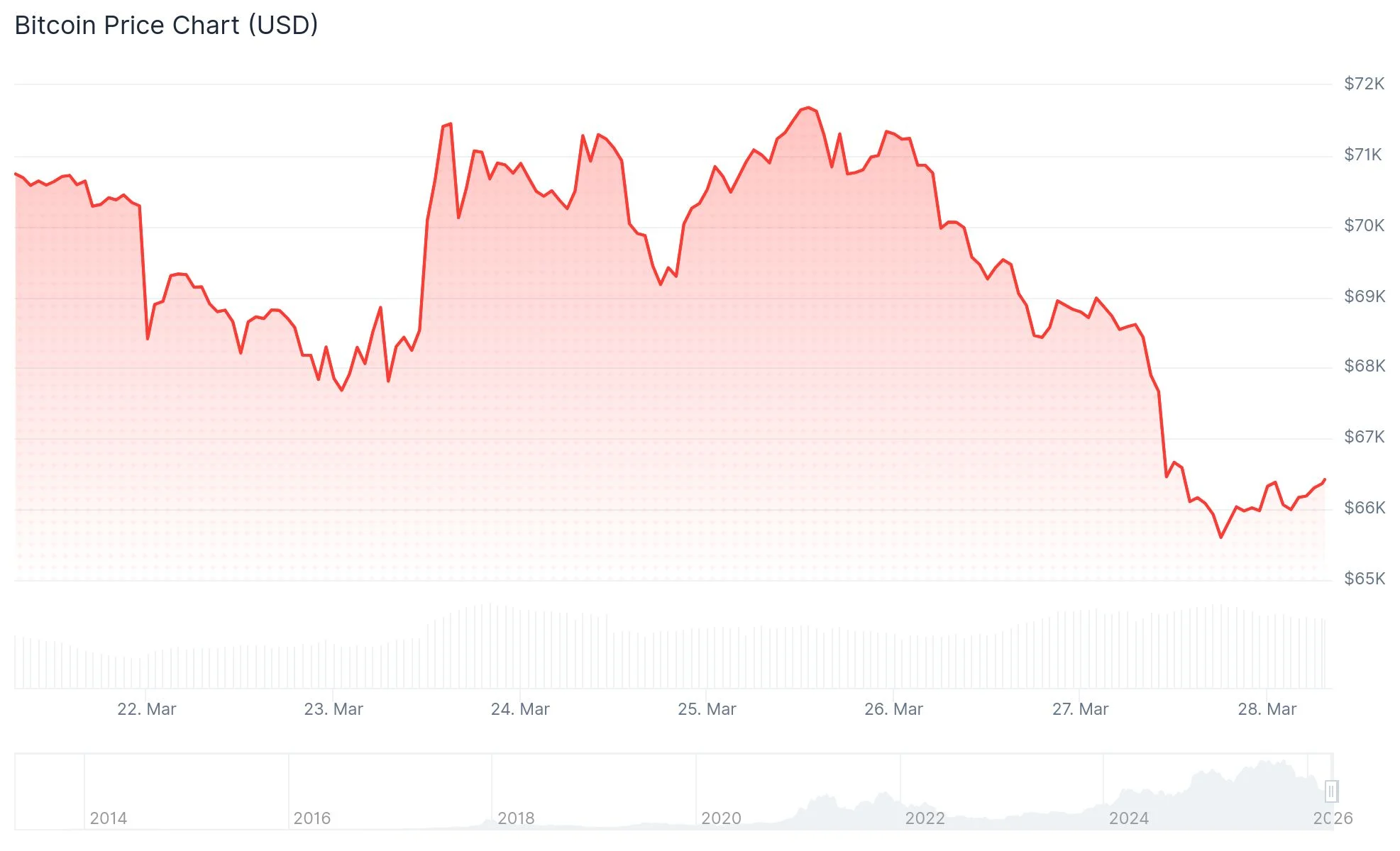
Both Solana and XRP concluded the trading week with substantial losses. The digital asset ecosystem mirrored the equity market downturn as anxiety rippled through investment channels.
Traditional markets fared no better, with the S&P 500 extending its decline to five consecutive weeks—the longest such streak in over two years. The Dow Jones Industrial Average officially entered correction territory after falling more than 10% from its peak.
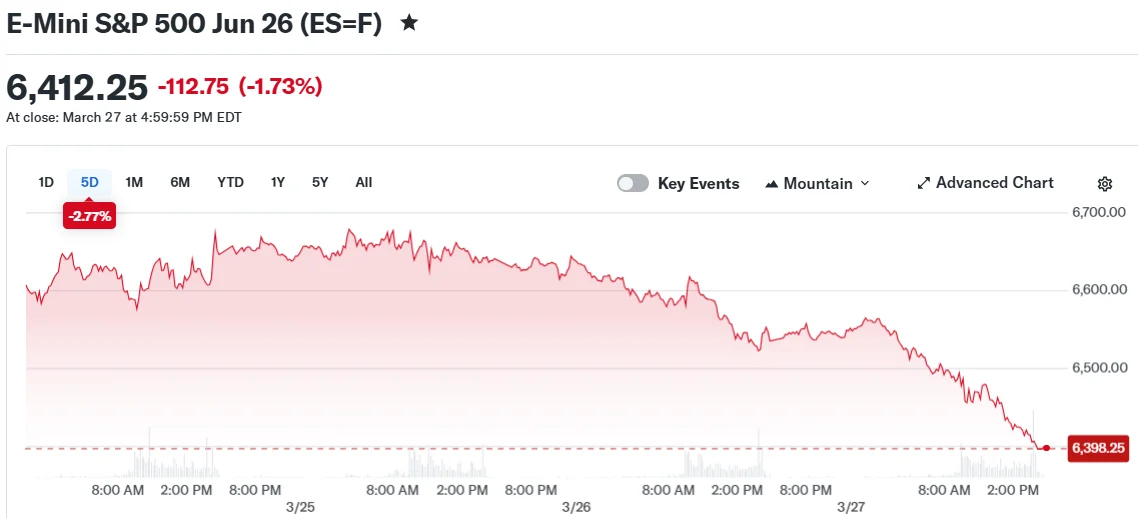
The tech-heavy Nasdaq tumbled 2.1% in Friday’s session alone, deepening its correction. The elite group of megacap technology companies known as the “Magnificent Seven” saw their combined market capitalization shrink by more than $330 billion in just 24 hours.

Energy markets played a pivotal role in the widespread selloff. Brent crude climbed above $106 per barrel while West Texas Intermediate exceeded the $100 mark, driven by escalating hostilities throughout the Middle East that could potentially continue through April.
President Trump granted Iran an additional 10-day extension, pushing the compliance deadline to April 6 before potential strikes on Iranian energy infrastructure. Market volatility persisted despite the temporary reprieve.
Notable Developments in the Digital Asset Space
The leading U.S. cryptocurrency exchange unveiled a new home financing product that accepts digital currencies as collateral. Through a collaboration with Better Home & Finance, prospective homeowners can now leverage Bitcoin for down payments, with the program receiving government support.
Tether, the company behind the world’s largest stablecoin, engaged Big Four accounting firm KPMG to conduct an audit of its $185 billion USDT reserves. This strategic move signals Tether’s ambitions to strengthen its position in American markets. The announcement triggered a 24% weekly decline in Circle Internet Group shares.
Intercontinental Exchange, the corporation controlling the New York Stock Exchange, committed $600 million to prediction platform Polymarket. This substantial investment provides Polymarket with resources for expansion as established financial institutions increasingly enter the prediction market sector.
Regulatory and Political Developments
David Sacks concluded his role as the White House’s cryptocurrency policy coordinator after serving for one year. During his tenure, Sacks guided initial crypto policy frameworks, including shepherding the GENIUS Act through passage, and has transitioned to the President’s Council of Advisors on Science and Technology. The administration has not announced a successor.
Prediction platform Kalshi experienced a dramatic valuation increase to $22 billion in its most recent capital raise, doubling from its $11 billion December valuation. The funding announcement coincided with Arizona prosecutors filing 20 criminal charges against Kalshi, alleging operation of unlicensed gambling activities.
Approximately $15 billion worth of Bitcoin options contracts reached expiration on Deribit on March 27, accounting for 40% of the platform’s total outstanding positions. A comparable $19 billion expiration event last September is believed to have catalyzed Bitcoin’s ongoing correction, which has now reached 40% from its October highs.
Get 3 Free Stock Ebooks
Discover top-performing stocks in AI, Crypto, and Technology with expert analysis.
- Top 10 AI Stocks - Leading AI companies
- Top 10 Crypto Stocks - Blockchain leaders
- Top 10 Tech Stocks - Tech giants


