


TLDR
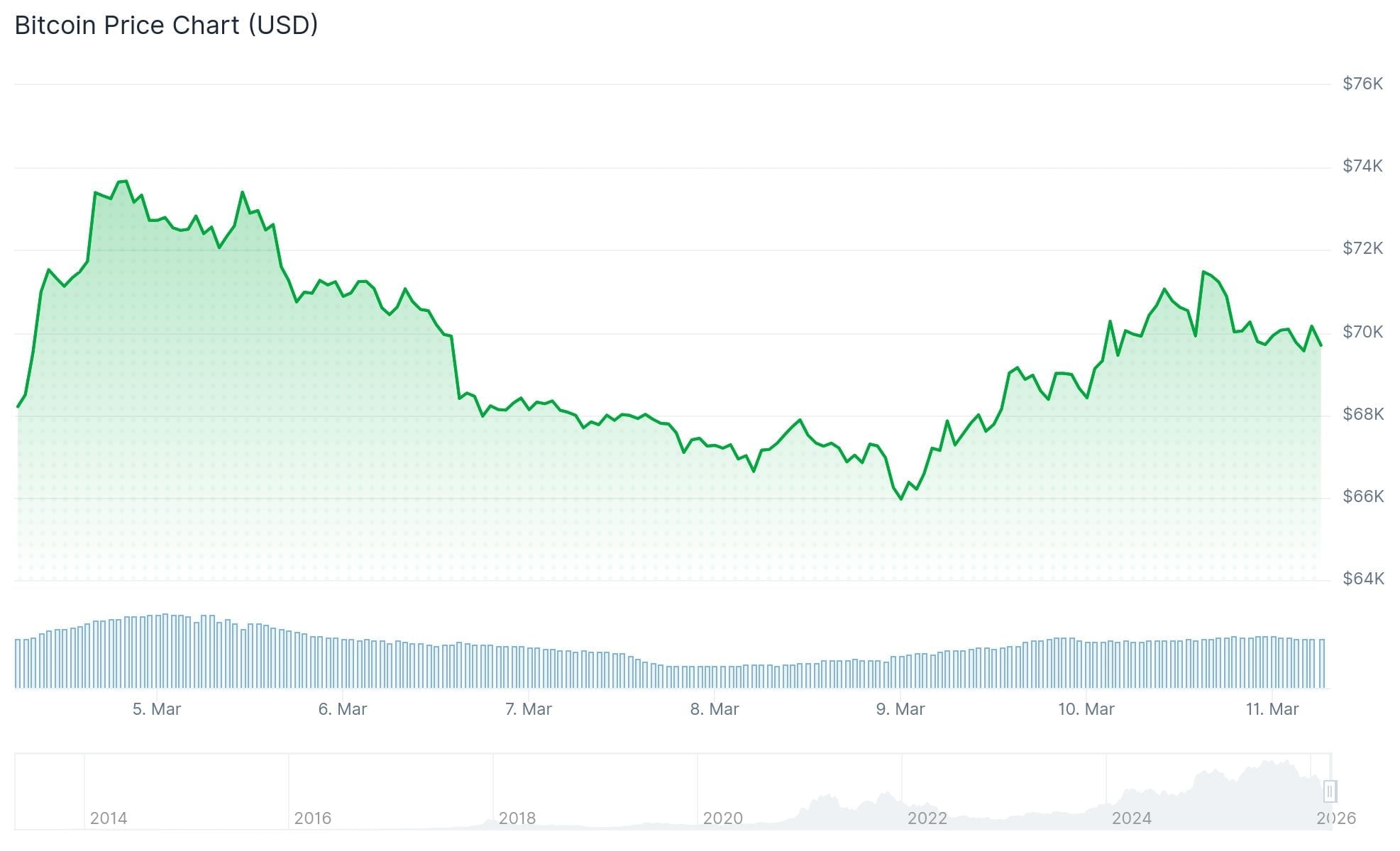
- Bitcoin (BTC) surged to $71,612 before retreating to approximately $70,000, representing an 8.5% gain from Monday’s $66,000 bottom
- IEA announced its biggest-ever strategic petroleum reserve release, sending Brent crude tumbling beneath the $90 threshold
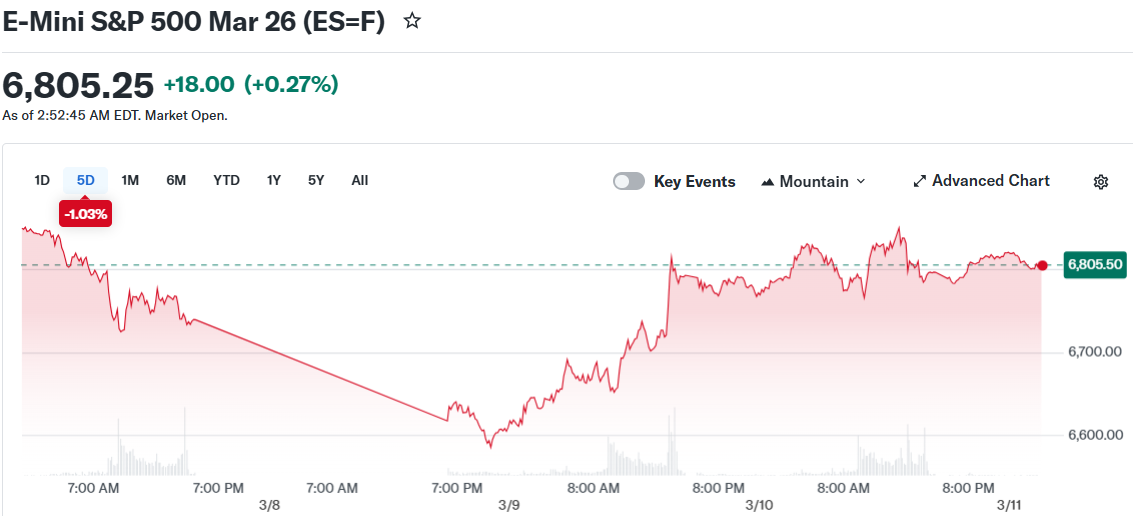
- Wall Street futures showed minimal movement, with Dow, S&P 500, and Nasdaq contracts gaining roughly 0.2% each
- Wednesday’s 8:30 a.m. ET release of February Consumer Price Index data represents a crucial indicator for Fed policy direction
- Oracle stock jumped following stronger-than-expected quarterly results; Adobe and Dollar General earnings scheduled this week
The leading cryptocurrency reached $71,612 Tuesday night before declining to $70,036 throughout Wednesday’s Asian market hours. This movement represents approximately 8.5% appreciation over a two-day period from Monday’s $66,000 trough.
Energy market weakness provided the bullish momentum. Brent crude slipped under the $90 mark Wednesday following Tuesday’s massive 11% selloff. The decline came after a Wall Street Journal article revealed the International Energy Agency’s proposal for an unprecedented strategic reserve deployment.
The anticipated release would surpass the 182 million barrel deployment from 2022 during the Ukraine crisis. This measure responds to Persian Gulf supply restrictions linked to the Iran conflict, which have eliminated approximately 6% of worldwide petroleum production.
Oil had temporarily climbed near $120 per barrel Monday before reversing course. A subsequently removed social media statement from Energy Secretary Chris Wright regarding US naval escort operations through the Strait of Hormuz also pressured Tuesday’s pricing. West Texas Intermediate tumbled to $76.73 per barrel before recovering modestly overnight.
Energy price movements significantly impact Bitcoin and broader risk markets because elevated crude costs intensify inflation pressures, diminishing Federal Reserve rate reduction probabilities. The recent petroleum decline has temporarily relieved this concern.

Bitcoin Attempts Breakout From Trading Channel
Market observers are monitoring critical thresholds: $70,000 representing downside support and $73,000 marking overhead resistance. The 50-day moving average similarly hovers around $73,000, coinciding with last week’s peak.
“Bitcoin maintaining levels above $70,000 demonstrates buyer determination to escape the consolidation pattern, though sustainability remains unproven,” explained Daniel Reis-Faria, CEO of ZeroStack. He emphasized that reduced leverage levels before this rally suggest improved structural foundation.
FxPro market strategists observed that Bitcoin has been establishing progressively higher local bottoms throughout late February, representing the initial structural evidence of accumulating buyer strength within the trading range.
Ether traded at $2,034, declining 0.3% daily while advancing 2.8% weekly. Solana increased 0.2% to $86.42 though remains the weakest performer among major cryptocurrencies over seven days. Dogecoin appreciated 1% to $0.093, preserving Tuesday’s gains connected to Elon Musk developments.
Inflation Data and Fed Policy Decision Dominate Stock Market Focus
US equity futures registered modest changes Tuesday evening. Dow Jones Industrial Average contracts advanced 0.2%. S&P 500 and Nasdaq 100 futures similarly climbed 0.2%.
Market participants await Wednesday’s 8:30 a.m. ET Consumer Price Index release. Friday delivers January’s Personal Consumption Expenditures data. These reports will substantially influence Federal Reserve policy expectations before its March 17-18 gathering.
Oracle equity jumped following quarterly earnings that exceeded analyst projections and optimistic forward guidance Tuesday. Adobe and Dollar General earnings announcements arrive later this week.
Bitcoin’s 90-day correlation coefficient with the S&P 500 currently measures 0.78, indicating cryptocurrency markets will probably respond to Federal Reserve communications from the approaching meeting.
Get 3 Free Stock Ebooks
Discover top-performing stocks in AI, Crypto, and Technology with expert analysis.
- Top 10 AI Stocks - Leading AI companies
- Top 10 Crypto Stocks - Blockchain leaders
- Top 10 Tech Stocks - Tech giants


