



Key Highlights
- February’s employment data revealed an unexpected loss of 92,000 jobs versus forecasts calling for 55,000–60,000 new positions
- The jobless rate climbed to 4.4%, surpassing the anticipated 4.3% figure
- Major index futures including the Dow, S&P 500, and Nasdaq tumbled during Friday’s pre-market session
- Crude oil rallied more than 6%, pushing WTI beyond $86 per barrel amid concerns over Persian Gulf disruptions
- The Dow Jones Industrial Average has declined over 2% this week, slipping into negative territory for 2026
Equity futures took a significant hit Friday morning as market participants digested two major developments: disappointing employment figures and escalating energy costs linked to Middle Eastern geopolitical tensions.
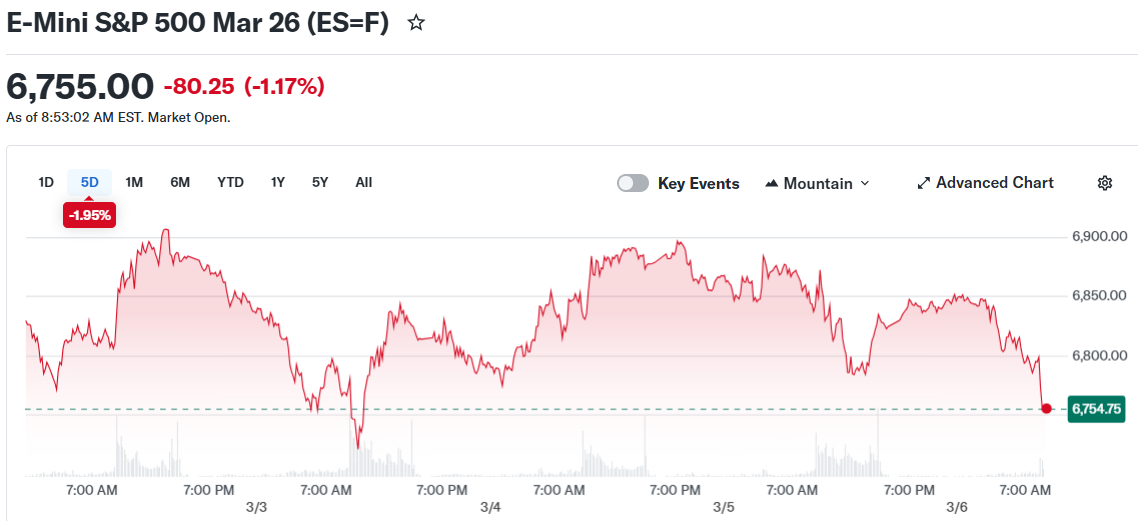
February’s employment situation report revealed the American economy eliminated 92,000 nonfarm payroll positions. Market economists had projected gains ranging from 55,000 to 60,000 new jobs.
The nation’s unemployment rate increased to 4.4%, marginally higher than consensus estimates of 4.3%. The Bureau of Labor Statistics published these figures during Friday’s trading session.
Dow Jones Industrial Average futures declined approximately 0.7% to 0.8% in the aftermath of the employment announcement. S&P 500 futures retreated roughly 0.8%, while Nasdaq 100 futures decreased about 1%.
Each of the three major benchmark indexes had been trading in negative territory prior to the jobs data release, with losses deepening following the announcement.

Treasury yields declined in response to the employment figures. The 2-year note yield retreated to approximately 3.57%, while the benchmark 10-year yield fell to 4.13%. Declining yields typically indicate market participants are anticipating a greater likelihood of monetary policy easing.
Crude Prices Rally on Persian Gulf Supply Concerns
Oil prices experienced substantial gains Friday. West Texas Intermediate futures advanced more than 6%, breaking above the $86 per barrel threshold. Brent crude futures increased nearly 5%, trading north of $89.
Qatar’s energy minister issued warnings that the Iranian conflict could compel Gulf region exporters to suspend output within a matter of days. He further suggested prices might climb to $150 per barrel should the crisis intensify.
Shipping activity through the Strait of Hormuz has slowed to a near halt, compounding global supply anxieties. Both WTI and Brent benchmarks are positioned for their most substantial weekly gains in four years.
Retail gasoline prices across the United States have reached their highest levels since 2024. The Trump administration granted India a temporary exemption to buy Russian crude as part of efforts to moderate the price surge.
Implications for Federal Reserve Policy
Subdued employment data generally amplifies expectations for the Federal Reserve to implement interest rate reductions. Nevertheless, market analysts suggest the probability still favors maintaining current policy through the year’s first half.
The employment statistics will receive heightened attention before upcoming Federal Open Market Committee gatherings. Any policy adjustments will depend on broader economic performance indicators.
The Dow Jones Industrial Average has shed more than 2% during the current week and has entered negative territory for 2026. The S&P 500 is similarly positioned for a weekly decline.
The Nasdaq Composite may conclude the week with modest gains, diverging from the broader market trend.
As of Friday’s opening, the 30-year Treasury yield registered 4.74%, mirroring the evolving rate expectations following the employment disappointment.
Get 3 Free Stock Ebooks
Discover top-performing stocks in AI, Crypto, and Technology with expert analysis.
- Top 10 AI Stocks - Leading AI companies
- Top 10 Crypto Stocks - Blockchain leaders
- Top 10 Tech Stocks - Tech giants


