


TLDR
- Bitcoin declined to $66,700 on Monday amid market volatility triggered by escalating U.S.-Iran tensions
- Crude oil prices jumped more than 6%, with Brent reaching $77.50 in the steepest climb since the 2022 Russia-Ukraine conflict
- Futures for major U.S. stock indices retreated approximately 1% as geopolitical risks intensified
- The critical Strait of Hormuz waterway, responsible for about 20% of worldwide oil transport, has been effectively shut down
- Rising energy costs are stoking inflation concerns that may push the Federal Reserve to postpone interest rate reductions
Cryptocurrency and equity markets experienced significant turbulence Monday following weekend military operations conducted by the United States and Israel against Iranian targets. As trading sessions commenced, markets swiftly incorporated the geopolitical developments into asset valuations.
[[LINK_START_2]]Bitcoin[[LINK_END_2]] retreated to $66,702, representing a 1.1% decline over the preceding 24-hour period. This downturn eliminated the majority of Sunday’s temporary surge toward $68,000, which had been driven by reports confirming Supreme Leader Khamenei’s passing.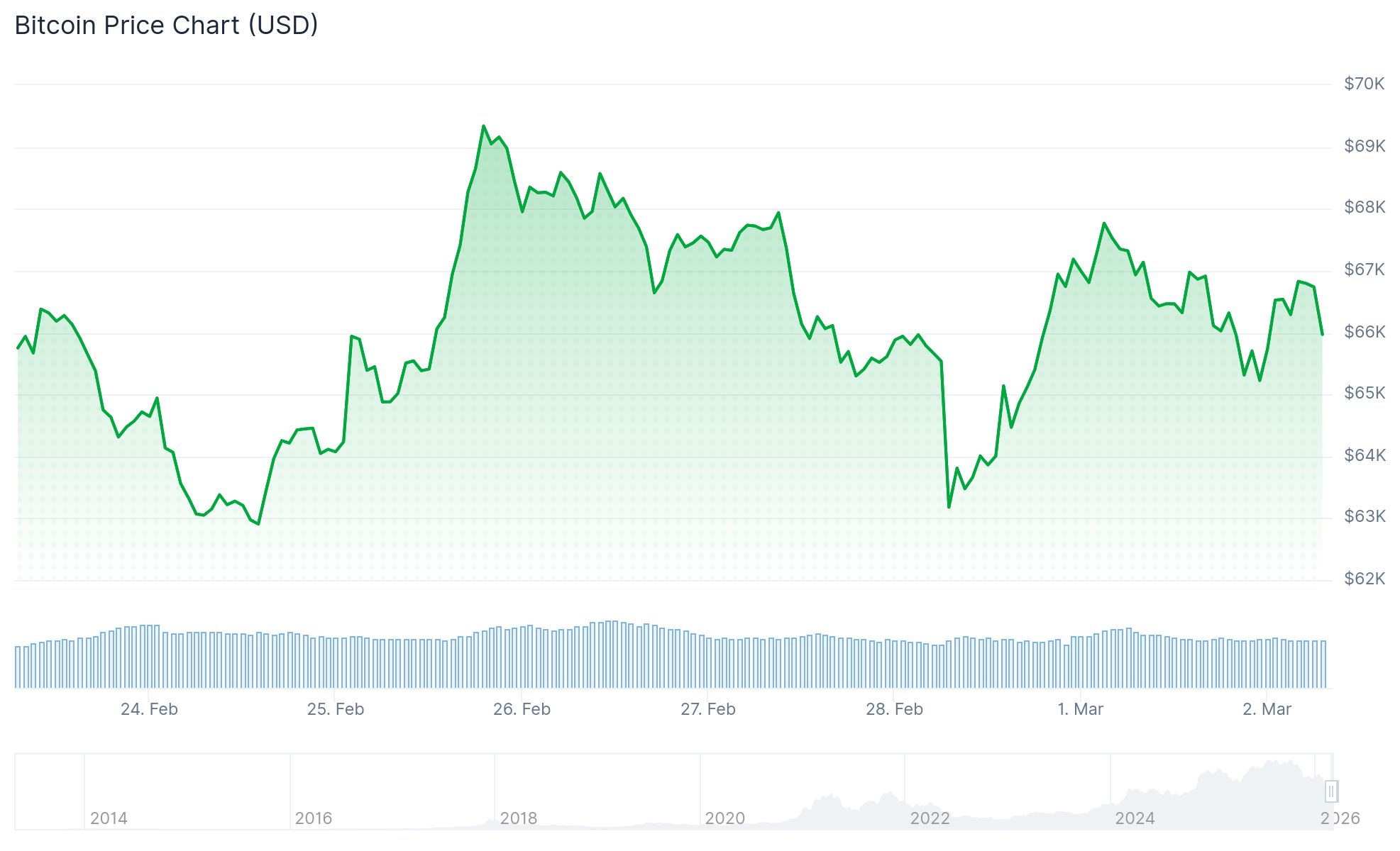
The broader cryptocurrency sector mirrored Bitcoin’s weakness. Ether declined 2.5% to reach $1,967, while Solana experienced a 4.1% drop to $84. XRP shed 3.6% to settle at $1.36. Examining the seven-day performance, Solana registered the steepest losses among prominent digital assets, falling 8.1%.
The military operations were initiated after Tehran refused Washington’s demands to curtail its nuclear development activities. Iranian officials have vowed a forceful retaliation, intensifying worries about escalating regional hostilities.
Oil prices responded dramatically to the unfolding situation. Brent crude initially spiked 13% at market opening before moderating to approximately $77.50, maintaining a 6.4% gain. This represents the most substantial single-session increase since the commencement of Russia’s Ukrainian military campaign in 2022.

West Texas Intermediate, the primary U.S. pricing benchmark, hovered near $73 per barrel. As OPEC’s fourth-largest oil producer, Iran’s involvement significantly amplifies supply-related uncertainties.
According to Bloomberg reports, the Strait of Hormuz—a chokepoint for roughly one-fifth of international oil shipments—has been effectively closed. This development is intensifying price pressures and creating widespread anxiety across global energy markets.
Stock Futures and Safe-Haven Assets React
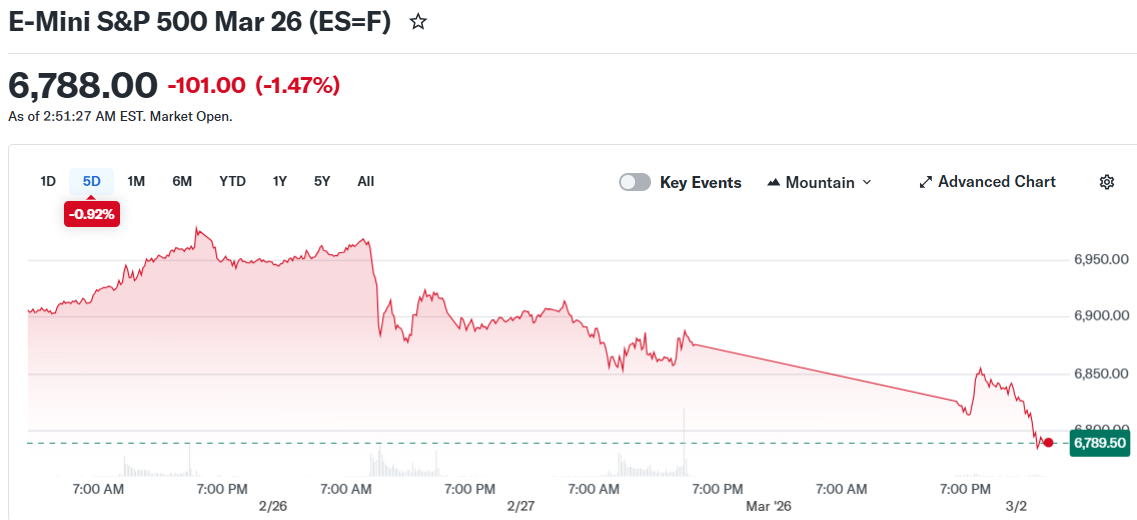
Futures contracts for U.S. equity indices uniformly declined by approximately 1%. Dow Jones futures retreated more than 500 points, while S&P 500 and Nasdaq 100 futures registered losses of roughly 1.4% and 1.8% respectively. Asian equity markets declined 1.4%.
Gold appreciated to $5,350 per ounce as market participants rotated capital into defensive assets.
The S&P 500 had already concluded February in negative territory. Heightened volatility affecting artificial intelligence and software equities had unsettled markets entering the current week.
Escalating energy prices are amplifying inflation anxieties. Should inflationary pressures accelerate, the Federal Reserve might postpone monetary easing measures, which would restrict market liquidity and intensify headwinds for speculative assets including equities and cryptocurrencies.
What Traders Are Saying About Crypto’s Downside Risk
Certain cryptocurrency market participants suggest that digital assets may face limited downside exposure. Jeff Mei, COO at BTSE, noted that Iran’s prolonged exclusion from international financial systems diminishes the direct impact on cryptocurrency markets.
Mei further suggested that production increases from OPEC members and U.S. suppliers could compensate for Iranian oil supply disruptions and help stabilize pricing dynamics over time.
Contradictory information surfaced Monday regarding potential diplomatic engagement between Iran and the United States on nuclear matters. The Wall Street Journal indicated Iran’s interest in negotiations, though Iran’s national security chief subsequently denied any willingness to negotiate.
President Trump stated that military operations would persist until strategic objectives are achieved.
Investors will monitor upcoming earnings releases from Broadcom and Marvell Technology this week, alongside retail sector results from Target and Costco. Friday’s February employment report looms large, with analysts projecting 60,000 job additions.
Get 3 Free Stock Ebooks
Discover top-performing stocks in AI, Crypto, and Technology with expert analysis.
- Top 10 AI Stocks - Leading AI companies
- Top 10 Crypto Stocks - Blockchain leaders
- Top 10 Tech Stocks - Tech giants


