


TLDRs;
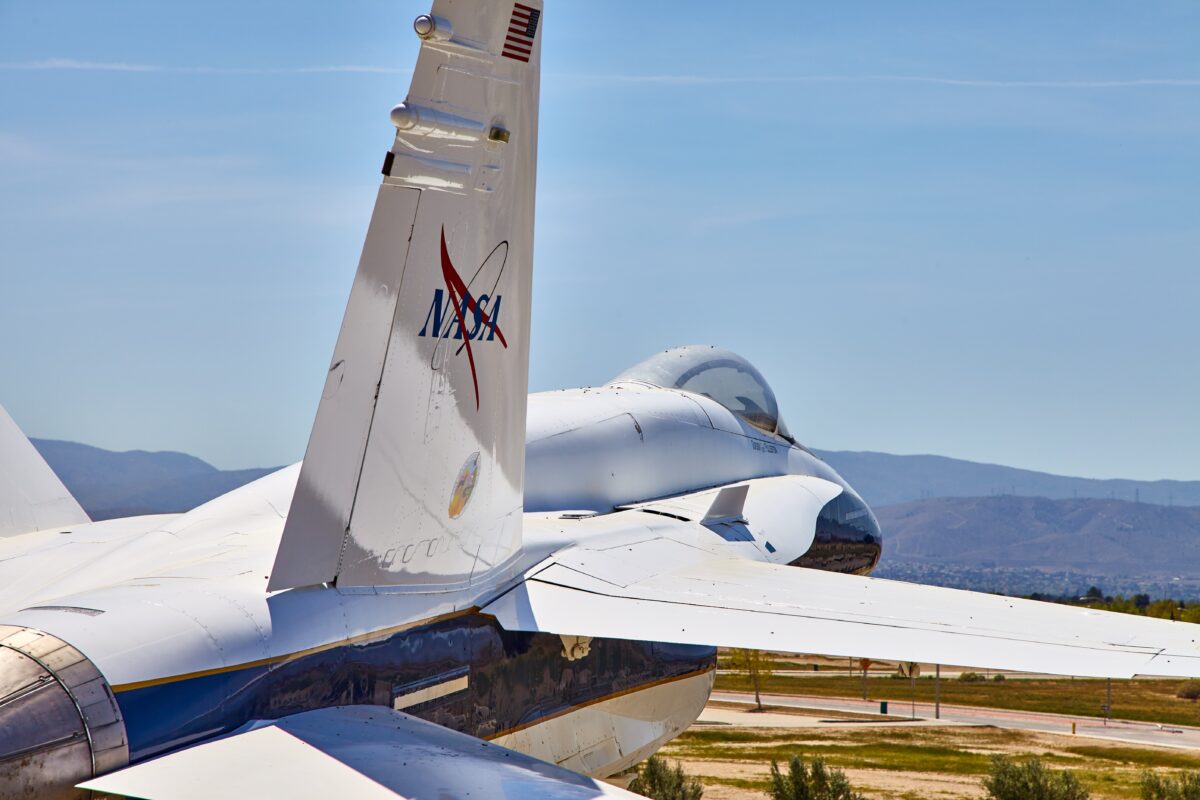
- NASA’s X-59 supersonic jet completed its first test flight over California, marking a new era in aviation.
- The aircraft aims to replace the disruptive sonic boom with a quiet “thump,” enabling faster overland flights.
- The project could lead to regulatory approval for supersonic passenger travel within the U.S. for the first time in decades.
- The X-59 represents NASA’s latest effort to revive the dream of fast, efficient, and quiet air travel.
NASA has successfully taken the first major step toward bringing back supersonic air travel, only this time, it’s designed to be whisper-quiet.
The U.S. space agency’s experimental X-59 jet, built in collaboration with aerospace giant Lockheed Martin, completed its maiden flight this week over the Southern California desert.
Shortly after sunrise, the sleek, needle-nosed aircraft lifted off from Lockheed Martin’s Skunk Works facility in Palmdale, California, and cruised smoothly toward NASA’s Armstrong Flight Research Center, roughly 40 miles away. While the test flight did not break the sound barrier, it validated the X-59’s aerodynamic structure and safety systems, marking a critical milestone in NASA’s mission to make supersonic travel over land possible once again.
From Sonic Booms to Gentle Thumps
Since the 1940s, engineers have built aircraft capable of surpassing the speed of sound, approximately 767 mph (1,235 kph). Yet commercial flights have been restricted to subsonic speeds over land due to one major issue: the sonic boom. When a plane exceeds Mach 1, it produces a thunderous shockwave that rattles windows and disturbs communities below.
NASA’s X-59 aims to change that. By redesigning the jet’s fuselage, wings, and nose to disperse shockwaves differently, engineers hope to transform the ear-splitting boom into a “gentle thump”, barely audible from the ground. This innovation, if proven successful, could lead to regulatory changes that open U.S. skies to faster commercial routes.
“Reducing the noise is the final frontier of supersonic flight,” said a NASA engineer involved in the project. “If the X-59 meets expectations, we could witness a new chapter in aviation, one that combines speed, safety, and comfort.”
The Concorde’s Legacy and Lessons
The test comes more than two decades after the Concorde’s retirement in 2003. Operated by British Airways and Air France, the Concorde once cut transatlantic flight times in half, whisking passengers from New York to London in just over three hours. However, a tragic crash in 2000 and mounting operational costs ended the program.

In contrast, NASA’s approach is not about luxury but innovation and regulation. The X-59’s purpose is to gather data from real-world flights that will be shared with U.S. and international regulators.
If approved, the data could pave the way for future commercial supersonic jets, potentially halving travel times between major cities like New York and Los Angeles, without causing public disturbance.
Building the Future of Flight
The 100-foot (30-meter) X-59 is powered by a single jet engine and features a narrow body optimized for quiet supersonic performance. Pilots won’t rely on traditional windshields but instead use high-resolution external cameras displayed on cockpit screens for enhanced visibility.
NASA and Lockheed Martin have spent years perfecting the design through simulation and wind-tunnel testing. Tuesday’s flight marked the transition from theory to reality, a tangible sign that quiet supersonic travel may no longer be a distant dream.
Future test flights will progressively increase speed, eventually crossing the sound barrier as engineers collect data on acoustic performance and public perception. If successful, the results could usher in a new generation of commercial aircraft capable of connecting cities in record time.
Get 3 Free Stock Ebooks
Discover top-performing stocks in AI, Crypto, and Technology with expert analysis.
- Top 10 AI Stocks - Leading AI companies
- Top 10 Crypto Stocks - Blockchain leaders
- Top 10 Tech Stocks - Tech giants


