


TLDRs;
- Nvidia CEO Jensen Huang predicts $1 trillion in orders for Blackwell and Rubin chips
- Rubin chips offer up to 5x faster inference speeds compared to Blackwell processors
- Nvidia plans to scale Rubin chip manufacturing during the second half of 2026
- Nvidia stock jumps as investors react to strong AI growth outlook and demand projections
Nvidia (NVDA) shares climbed on Monday following a bold projection by CEO Jensen Huang that the company’s next-generation AI chip business could reach $1 trillion in demand by 2027.
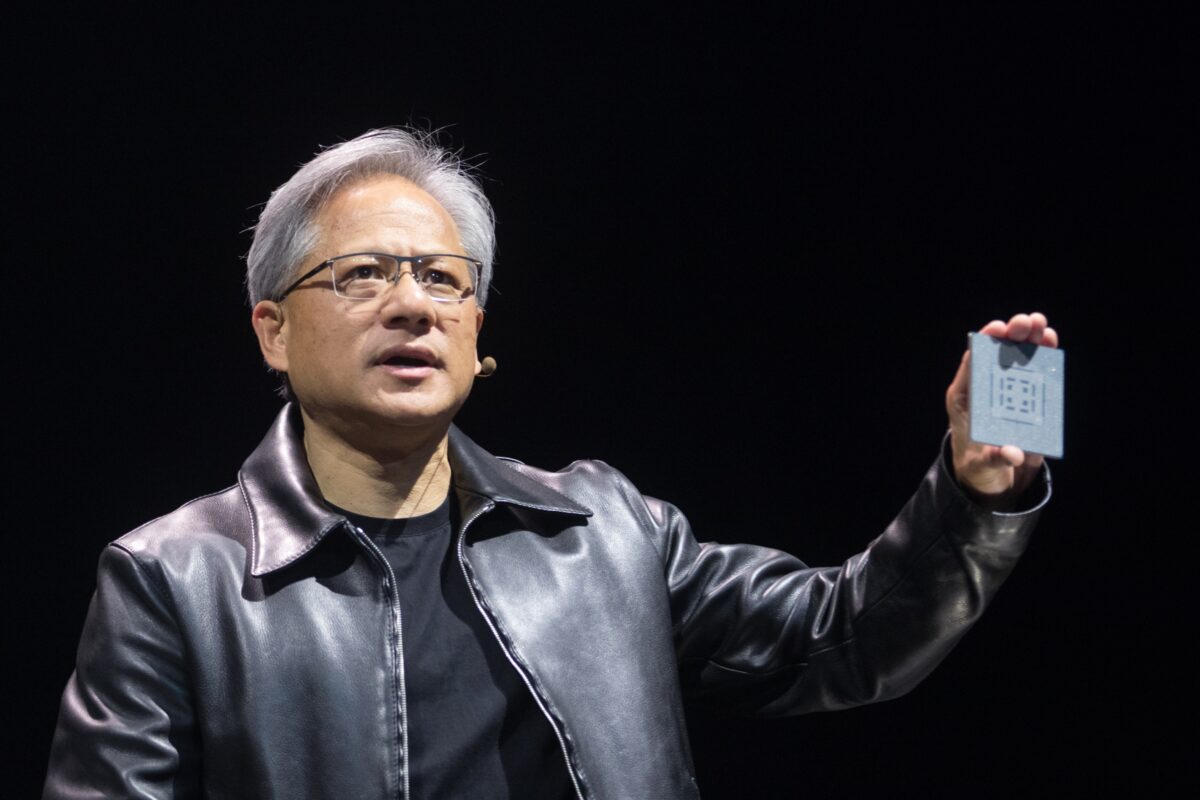
The announcement came during the keynote address at Nvidia’s annual GTC Conference in San Jose, California, where Huang outlined ambitious growth expectations for the company’s Blackwell and Vera Rubin chip architectures.
Huang highlighted that in the previous year, Nvidia already observed roughly $500 billion in demand for these chips through 2026. His new projection effectively doubles that figure, signaling the enormous appetite for AI computing hardware as businesses and developers ramp up AI initiatives worldwide.
Rubin Architecture Outpaces Predecessor
The Vera Rubin architecture, officially unveiled in 2024, has been positioned as Nvidia’s most advanced AI chip to date. According to the company, Rubin delivers performance that surpasses the Blackwell generation, operating 3.5 times faster on model-training tasks and up to 5 times faster on inference tasks. The chips are capable of reaching up to 50 petaflops, placing them at the forefront of AI acceleration technology.
Huang emphasized that Rubin represents a significant step forward for AI workloads, allowing enterprises and researchers to tackle more complex models with greater speed and efficiency. This performance leap is expected to drive even higher adoption across AI-focused industries, from cloud providers to autonomous systems.

Production Ramp-Up Expected This Year
To meet anticipated demand, Nvidia has announced plans to increase Rubin chip production in the latter half of the year. While supply chains for advanced semiconductor manufacturing remain complex, the company is confident it can meet growing orders from global clients. Analysts note that the ramp-up is a critical factor in translating Huang’s trillion-dollar projection into realized revenue.
Investors responded positively to the announcement, sending Nvidia shares higher during Monday’s trading session. Market watchers interpret the surge as a reflection of both the excitement surrounding AI-driven growth and confidence in Nvidia’s technological leadership.
Market Reaction and Investor Sentiment
Financial analysts point to Huang’s projection as a signal of the company’s ability to dominate the AI hardware market for years to come.
“The $1 trillion figure isn’t just aspirational, it’s indicative of Nvidia’s strategic position as a supplier of essential AI infrastructure,” said one industry observer.
The market’s positive response also underscores the broader enthusiasm for AI-related technologies. With Rubin and Blackwell chips forming the backbone of AI compute, Nvidia’s forecast may set the tone for investor expectations across the semiconductor sector.
As the company continues to innovate and expand production, all eyes will be on Nvidia to see if it can meet or exceed this monumental forecast. For now, Huang’s ambitious projections have reinforced the company’s image as a dominant force in AI hardware, fueling both market excitement and speculation about the next chapter in AI computing.
Get 3 Free Stock Ebooks
Discover top-performing stocks in AI, Crypto, and Technology with expert analysis.
- Top 10 AI Stocks - Leading AI companies
- Top 10 Crypto Stocks - Blockchain leaders
- Top 10 Tech Stocks - Tech giants


