



TLDR
- Oil prices remain mostly unchanged with Brent at $67.75 and WTI at $62.44 per barrel during early European trading
- Trump’s regime change remarks for Iran maintain elevated risk premium in oil markets despite flat price action
- Some OPEC members believe the group can restart production increases in April according to media reports
- OPEC+ meeting on March 1 will determine whether cartel proceeds with output boosts starting next month
- Russia-Ukraine peace talks could lower oil’s geopolitical risk premium and expose weaker market fundamentals
Oil prices demonstrated minimal movement during Monday’s early European trading session. Brent crude futures remained flat at $67.75 per barrel. West Texas Intermediate crude added 0.1% to reach $62.44 per barrel.
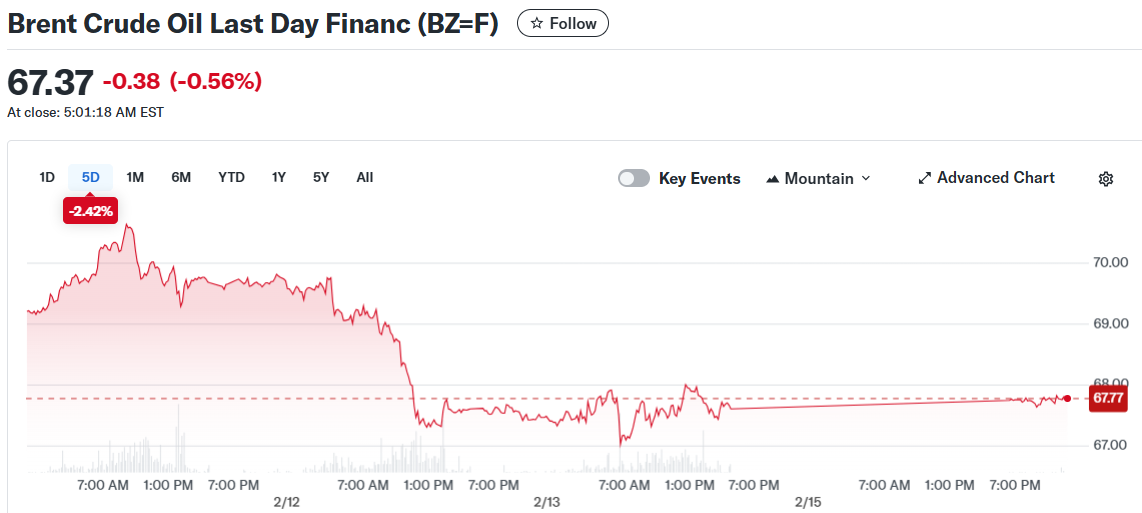
The oil market continues to price in elevated geopolitical risk. Uncertainty surrounding U.S.-Iran relations keeps a premium embedded in current prices. ING analysts Warren Patterson and Ewa Manthey noted this factor in their latest market assessment.
President Trump recently stated that regime change represents the best outcome for Iran. These comments have amplified concerns about potential escalation in the Middle East. The region remains critical to global oil supply chains.
Trading activity remains subdued due to market closures in major economies. Both China and the United States observed holidays that limited participation. This reduced volume contributes to the narrow trading ranges observed.
Peace Negotiations Could Shift Market Focus
Separate diplomatic efforts between Russia and Ukraine present a different dynamic. U.S.-brokered peace talks aim to conclude the four-year military conflict. These negotiations appear to be progressing toward de-escalation.
Patterson and Manthey suggested these talks could reduce oil’s risk premium. If successful, the market would need to reassess pricing without geopolitical support. This shift would likely highlight weaker underlying fundamentals.

The analysts explained that removing the risk premium would change market dynamics. Bearish factors related to supply and demand would take center stage. Such a transition could push oil prices lower from current levels.
OPEC+ Supply Decision Looms Over Markets
Media reports indicate several OPEC members see opportunities to increase production. The cartel could resume output boosts starting in April. This information has drawn attention from traders and analysts.
OPEC+ members are scheduled to meet on March 1. The gathering will address the group’s supply agreement and future production plans. ANZ Research analysts highlighted this meeting as a key event for price direction.
The prospect of additional OPEC+ barrels adds downward pressure to markets. Global supply already appears adequate based on current demand levels. Saxo Bank analysts noted that sustained moves above $70 seem unlikely without actual supply disruptions.
The combination of ample supply and potential output increases creates challenges for bulls. Even with geopolitical tensions, fundamental factors point toward limited upside. The market must balance these competing influences.
Oil prices consolidated in morning Asian trading sessions as participants awaited clarity. The coming weeks will reveal whether diplomatic progress or production decisions dominate. Both factors carry implications for price trajectories through spring.
Traders continue monitoring developments on multiple fronts. The intersection of Middle East tensions and OPEC+ strategy will shape market behavior. Current prices reflect this uncertainty as participants weigh competing scenarios.
Get 3 Free Stock Ebooks
Discover top-performing stocks in AI, Crypto, and Technology with expert analysis.
- Top 10 AI Stocks - Leading AI companies
- Top 10 Crypto Stocks - Blockchain leaders
- Top 10 Tech Stocks - Tech giants


