



Key Takeaways
- Crude markets recovered Tuesday following Monday’s 11% plunge, with Brent climbing above $102 per barrel
- Tehran contradicted President Trump’s assertions about ongoing diplomatic discussions with Washington
- The critical Strait of Hormuz passage continues to obstruct roughly 20% of worldwide petroleum shipments
- Market analysts forecast crude will trade within an $85–$110 range until shipping lanes reopen
- Nations including Slovenia, Chile, Japan, and the Philippines have implemented fuel conservation measures
Crude oil markets staged a significant recovery Tuesday following the previous session’s dramatic decline. Brent crude advanced to approximately $102 per barrel, while West Texas Intermediate gained roughly 3% to reach around $90.
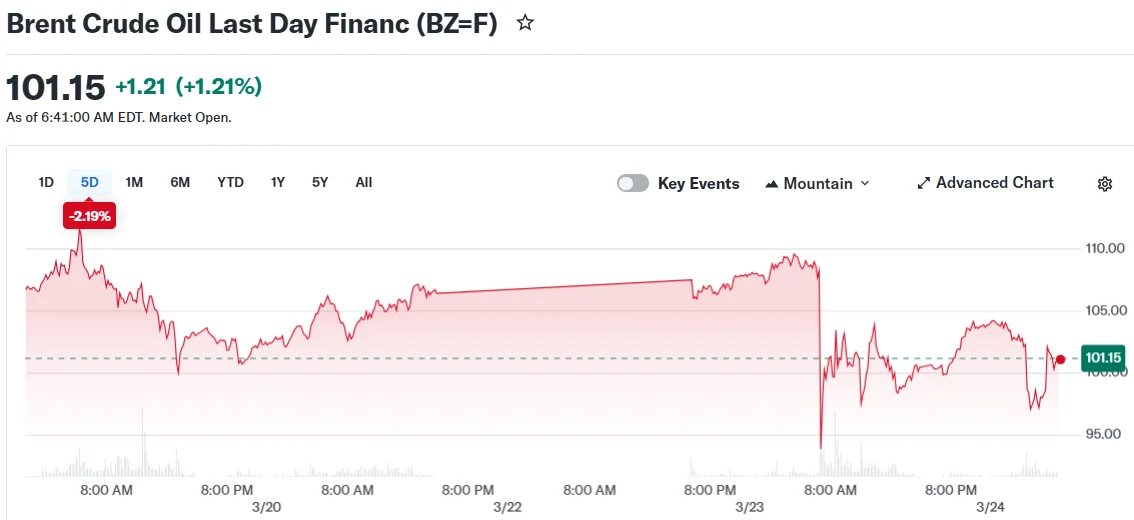
The previous day’s market retreat followed President Trump’s announcement that Washington and Tehran had entered into discussions. This assertion temporarily pressured oil prices downward. However, Iran’s Foreign Ministry swiftly refuted any ongoing diplomatic engagement, with a high-ranking Iranian legislator stating unequivocally: “No negotiations have been held with the U.S.”
This contradiction triggered renewed upward momentum in energy markets.
The central concern remains the strategic Strait of Hormuz. This critical maritime corridor links Persian Gulf producers to international oil exports and typically facilitates approximately 20% of the planet’s petroleum trade. Tehran has maintained its blockade since hostilities with Washington and Israel intensified.
Brent prices have surged approximately 40% during the current month, propelled by anxiety over potential prolonged energy disruptions. Refined products like diesel and aviation fuel have experienced even steeper price increases than raw crude.
Worldwide Consequences Accelerate
Nations across continents are confronting the crisis’s consequences. Slovenia became the European Union’s inaugural member to implement fuel distribution controls. Chile plans to increase pump prices by as much as 50%. Japan initiated a comprehensive assessment of its petroleum supply infrastructure.

Throughout Asia, China’s dominant refining company announced plans to prioritize domestic distribution. The Philippines indicated that suspending air travel due to aviation fuel scarcity represents a “distinct possibility.”
New Zealand unveiled weekly financial assistance for approximately 150,000 households to offset escalating energy expenses.
Goldman Sachs cautioned that prolonged supply disruption would ultimately require demand destruction to restore market equilibrium.
Diplomatic Communications Stay Ambiguous
Trump had earlier issued an ultimatum to strike Iran’s energy installations unless the Strait reopened completely within 48 hours. He subsequently postponed that deadline for five days. He also floated the possibility of joint U.S.-Iranian administration of the waterway, suggesting it might reopen “very soon.”
Iran’s deputy parliamentary leader declared the Strait would not return to previous operational status and ruled out negotiations with Washington.
According to CBS News citing a senior Iranian official, Tehran is examining correspondence from Washington delivered through third-party intermediaries. Energy installations in Isfahan, located in central Iran, sustained damage during weekend attacks.
Saudi Arabia informed Washington of its readiness to launch strikes against Iran should its own utilities and water systems face assault. Intelligence suggests Saudi Crown Prince Mohammed bin Salman is nearing a determination on potential military participation.
RBC Capital Markets strategists observed that physical vessel movements—rather than political rhetoric—would ultimately dictate outcomes in actual petroleum markets.
A limited number of tankers have successfully navigated Persian Gulf waters in recent days, although the majority of Strait traffic remains suspended.
Macquarie Group energy analyst Vikas Dwivedi projected that even with de-escalation, crude prices would likely maintain an $85-$90 minimum, drifting toward $110 until the Strait achieves full operational restoration.
Get 3 Free Stock Ebooks
Discover top-performing stocks in AI, Crypto, and Technology with expert analysis.
- Top 10 AI Stocks - Leading AI companies
- Top 10 Crypto Stocks - Blockchain leaders
- Top 10 Tech Stocks - Tech giants


