



TLDR
- Crude oil benchmarks climbed Monday with Brent at $66.11 and WTI at $61.26 after Friday’s 2% rally
- Extreme winter weather knocked out 250,000 barrels per day across US oil fields in Oklahoma and Texas
- US naval armada deployment toward Iran sparked concerns about potential Middle East supply cuts
- Caspian Pipeline Consortium completed maintenance and returned to full Black Sea export operations
- Traders await Federal Reserve interest rate decision this week for clues on economic growth outlook
Crude oil prices extended gains on Monday as severe winter conditions forced production halts across major US drilling regions and escalating tensions with Iran threatened global supply chains. Brent crude futures increased 23 cents to settle at $66.11 per barrel while West Texas Intermediate futures rose 19 cents to $61.26 per barrel.
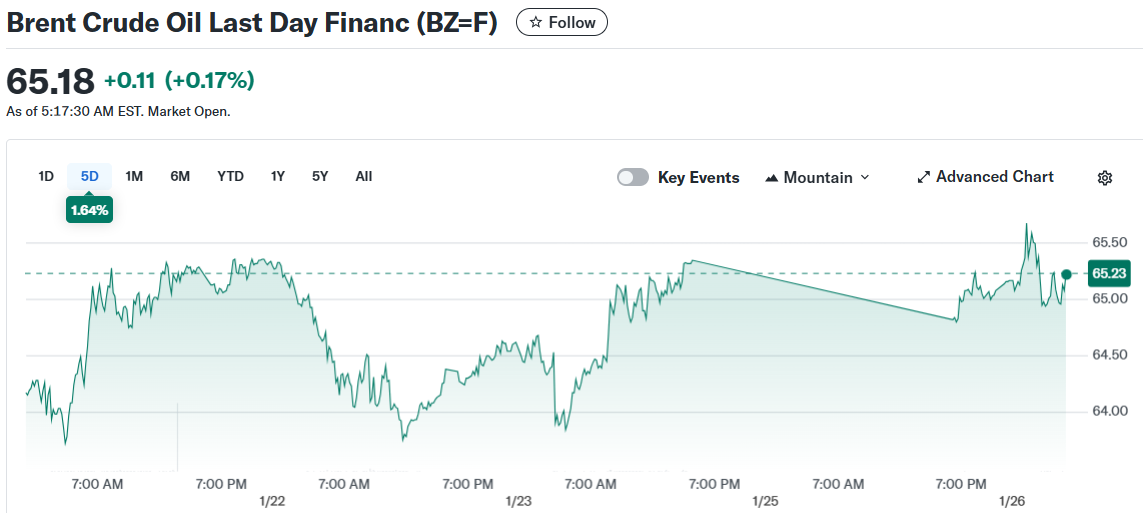
The benchmarks recorded weekly increases of 2.7% through Friday’s close, marking their highest settlements since mid-January. Monday’s gains built on more than 2% advances from the previous trading session.
Winter storm Fern caused widespread disruption across US energy infrastructure last week. Production facilities and wells were forced offline while power systems faced strain across affected states.
JPMorgan energy analysts estimated approximately 250,000 barrels per day of crude output went offline due to extreme cold. Production cuts hit Oklahoma’s Bakken formation and several Texas basins hardest.
Market analyst Priyanka Sachdeva at Phillip Nova noted that forced shutdowns across major producing areas tightened available supply. The reduced output is creating upward pressure on benchmark prices.
Iran Naval Standoff Raises Supply Fears
Military tensions between the United States and Iran added further support to oil values. President Trump disclosed last week that American naval assets are repositioning toward the Persian Gulf region.

The deployment features an aircraft carrier battle group and supporting vessels. Trump issued warnings to Tehran regarding treatment of demonstrators and nuclear program activities.
Analysts at SEB bank assessed that geopolitical developments carried more weight than weather factors in driving prices higher. The Abraham Lincoln carrier strike group has been ordered to Middle East waters.
A senior Iranian government official stated Friday that military aggression would trigger a full-scale conflict response. Energy traders continue monitoring the situation for potential disruption scenarios.
Iran maintains position as a major global crude supplier. Military conflict involving the nation could remove barrels from international markets.
Pipeline Restoration and Central Bank Watch
Kazakhstan’s Caspian Pipeline Consortium reported Sunday that Black Sea terminal operations returned to maximum throughput. Repairs on a damaged mooring facility have been finished.
The company operating Tengiz oilfield in Kazakhstan announced Monday that production is gradually coming back online. The site underwent an extended shutdown for maintenance work.
Attention shifts to the Federal Reserve’s monetary policy meeting scheduled for this week. Market consensus expects no change to current borrowing rates.
Oil market participants will study Fed commentary for signals about potential rate reductions later in 2026. Borrowing costs influence crude consumption through effects on economic expansion and currency values.
Some analysts warn that supply could exceed demand later this year. Production from countries outside OPEC continues at strong levels despite price fluctuations.
Get 3 Free Stock Ebooks
Discover top-performing stocks in AI, Crypto, and Technology with expert analysis.
- Top 10 AI Stocks - Leading AI companies
- Top 10 Crypto Stocks - Blockchain leaders
- Top 10 Tech Stocks - Tech giants


