


Key Takeaways
- The PI token from Pi Network experienced approximately 30% gains on Friday following Kraken’s announcement to list the cryptocurrency.
- This listing represents significant validation as Kraken ranks among the industry’s top-tier cryptocurrency exchanges.
- The project employs a unique mobile application-based approach rather than conventional mining methods, boasting approximately 19 million users who completed KYC verification.
- Ben Zhou, Bybit’s CEO, has declined to list PI on his platform and labeled the initiative a fraudulent scheme, referencing a 2023 alert from Chinese authorities.
- The token currently trades on multiple platforms including OKX, Gate, and Bitget, alongside numerous smaller trading venues.
The PI token from Pi Network experienced substantial price appreciation during Friday’s Asian trading session. The surge occurred immediately following an announcement from cryptocurrency exchange Kraken regarding its intention to list the digital asset.
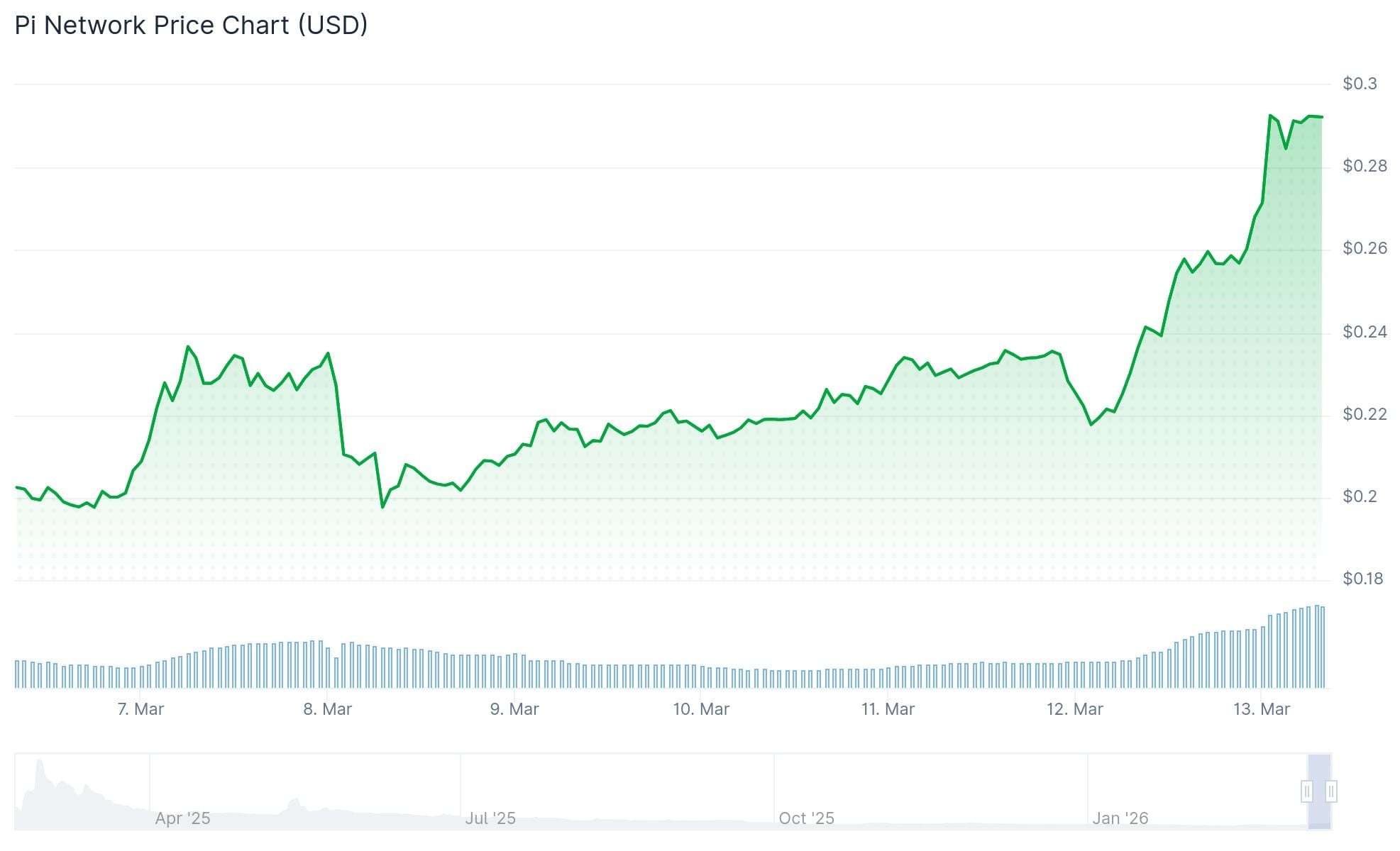
Data from CoinGecko indicates that PI outperformed the general cryptocurrency market, registering approximately 30% gains within a brief timeframe.
As a widely recognized tier-1 cryptocurrency exchange, Kraken’s decision to list PI represents one of the most significant endorsements the Pi Network initiative has secured from an external entity.
The token has already established a presence across multiple trading platforms, including major exchanges like OKX, Gate, and Bitget, in addition to various smaller venues.
Pi Network’s operational model diverges significantly from conventional cryptocurrency projects. Rather than employing traditional proof-of-work mining protocols, the platform utilizes a smartphone-based trust network where participants interact with a mobile application daily to accumulate tokens.

This framework creates identity-authenticated security networks that integrate into a consensus algorithm adapted from the Stellar protocol.
Journey Toward Open Mainnet Launch
The initiative activated its externally accessible mainnet during February 2025. At that juncture, the project documented approximately 19 million users with completed KYC verification and roughly 10 million successfully migrated accounts.
Prior to the February 2025 deployment, Pi Network functioned within a closed environment for multiple years, limiting external connectivity and preventing exchange listings.
Kraken’s listing commitment depends on Pi Network successfully completing its migration to Open Mainnet status. This development stage would enable PI tokens to be traded freely beyond the project’s restricted internal ecosystem.
The Pi Core Team established three prerequisites for launching Open Mainnet: finalizing KYC procedures for a substantial portion of its community exceeding 35 million members, developing practical utility applications, and encountering advantageous market circumstances.
Tokens presently exchanging under the PI designation on certain platforms represent IOUs rather than official tokens endorsed by the Pi Core Team. A Kraken listing would feature authentic PI tokens.
Token Supply Questions Persist
Pi Network maintains a comprehensive token allocation of 100 billion units. This substantial supply quantity remains a focal point that analysts frequently emphasize when evaluating the token’s valuation potential.
Notwithstanding the positive listing announcement, the project remains subject to ongoing scrutiny. Ben Zhou, chief executive of Bybit, openly declined to list PI during February 2025, characterizing the project as fraudulent.
Zhou referenced a 2023 advisory from Chinese law enforcement, which claimed that Pi Network exploited elderly individuals, harvested personal data, and resulted in certain victims forfeiting their retirement funds.
Pi Network has not issued a comprehensive public statement addressing these particular accusations.
Friday’s 30% price increase positioned PI among the highest-performing digital assets that day, based on CoinGecko’s market data.
Kraken has not announced a definitive listing date beyond its provisional March 2026 timeframe.
Get 3 Free Stock Ebooks
Discover top-performing stocks in AI, Crypto, and Technology with expert analysis.
- Top 10 AI Stocks - Leading AI companies
- Top 10 Crypto Stocks - Blockchain leaders
- Top 10 Tech Stocks - Tech giants


