


TLDR
- Gold reached $5,542.40 per ounce on January 29, 2026, marking a 27-28% increase since early January
- Silver hit an all-time high above $120 per ounce, surging approximately 60-67% in 2026
- Investment demand for gold jumped 84% to 2,175 tons in 2025, according to World Gold Council data
- Weak dollar, Federal Reserve policy concerns, and geopolitical tensions are fueling the precious metals rally
- Reduced bank trading activity has decreased market liquidity, contributing to higher volatility in gold and silver
Gold prices broke through the $5,500 barrier on January 29, 2026, reaching $5,542.40 per ounce. The metal has now posted gains for nine consecutive trading sessions.
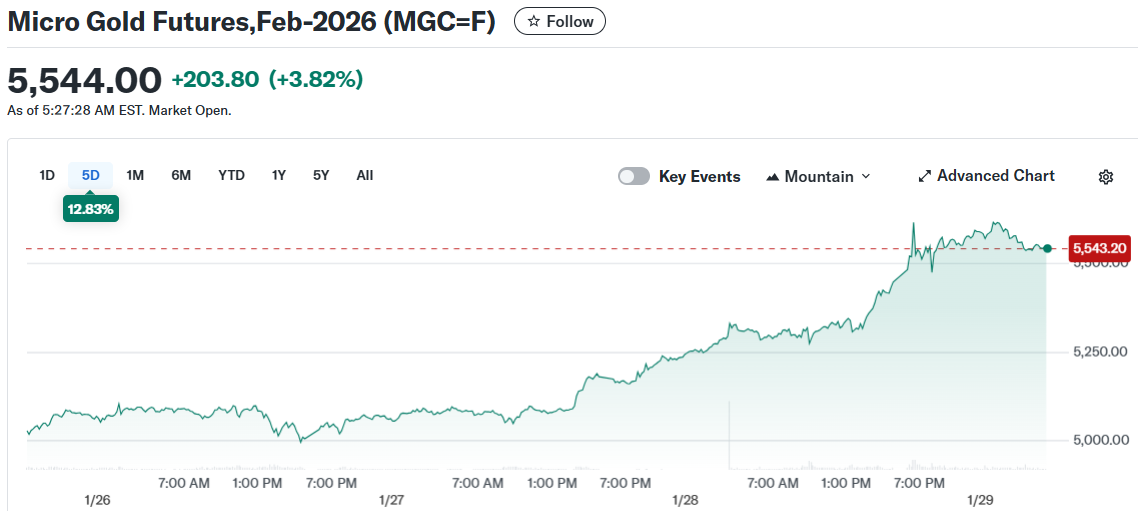
Year-to-date performance shows gold up 27-28% since the beginning of 2026. The $5,000 level was only breached days earlier in the same week.
Silver matched gold’s performance with its own record-breaking rally. The white metal climbed above $120 per ounce for the first time in history.
Data from the World Gold Council shows 2025 set a record for global gold demand. Investment purchases were the main contributor to this milestone.
Investors bought 2,175 tons of gold through ETFs, physical bars, and coins last year. This figure marks an 84% increase compared to 2024.
Market analyst Louise Street from the World Gold Council linked the demand surge to ongoing economic and geopolitical uncertainty. She said investors are treating gold as protection against these risks.

The trading pattern reflects what market participants call the debasement trade. This involves shifting assets away from fiat currencies amid concerns about monetary stability.
Federal Reserve Decisions and Currency Movements
The Federal Reserve left interest rates unchanged on January 28 in a widely anticipated decision. Market participants increased expectations for rate cuts later in the year.
Gold benefits from lower interest rates since the metal generates no yield. Reduced rates make holding precious metals more attractive relative to interest-bearing assets.
Rick Rieder from BlackRock has been mentioned as a possible successor to Fed Chair Jerome Powell. Rieder has voiced support for more substantial rate decreases.
The dollar fell to its weakest level in almost four years during the rally. President Donald Trump commented that he was not concerned about the currency decline.
Treasury Secretary Scott Bessent clarified the administration’s position, saying it supports a stronger dollar. He ruled out any intervention to weaken the currency against the yen.
Invesco’s Christopher Hamilton said multiple factors are working together to push gold higher. He noted the rapid price increases indicate diminishing trust in conventional policy approaches.
Market Structure and Geopolitical Factors
Financial institutions have scaled back their precious metals trading operations. Tullet Prebon’s Simon Biddle explained that banks face constraints on how much capital they can allocate to these markets.
Reduced participation from major traders has lowered overall liquidity. This has amplified price swings in both gold and silver markets.
Geopolitical developments continue to drive safe-haven demand. Washington issued warnings to Tehran about its nuclear program this week.
Trade policy remains a source of market uncertainty. The administration has threatened new tariffs on imports from South Korea and Canada.
Lotus Asset Management’s Hao Hong characterized gold and silver as premier hedges against geopolitical turbulence. He argued that gold provides a stable reference point for asset valuation.
CME Group raised margin requirements for silver futures following the sharp price movement. Chinese authorities formed a task force to monitor gold trading platforms after domestic prices exceeded international levels.
Technical analysis shows potential warning signs for both metals. Gold’s relative strength index climbed above 90, with silver’s indicator near 84.
Street from the World Gold Council projects continued strength in precious metals markets. She pointed to persistent economic instability and geopolitical stress as factors likely to maintain investment demand throughout 2026.
Get 3 Free Stock Ebooks
Discover top-performing stocks in AI, Crypto, and Technology with expert analysis.
- Top 10 AI Stocks - Leading AI companies
- Top 10 Crypto Stocks - Blockchain leaders
- Top 10 Tech Stocks - Tech giants


