



Key Takeaways
- The Pudgy Penguins brand secured distribution across 3,100 Walmart locations plus Target stores, achieving mainstream retail penetration unprecedented for crypto-originated projects.
- Parent company Igloo secured an $11 million funding round in 2024 with Founders Fund as lead investor.
- PENGU’s official documentation explicitly states the token exists solely “for fun and entertainment only” and possesses “no commercial value.”
- With 88.89 billion tokens at maximum supply, PENGU maintains approximately $396 million in market capitalization and roughly $503 million fully diluted valuation.
- Combined insider and corporate allocations represent 29.28% of total supply, with vesting schedules extending to 2028.
What began as an NFT collection has evolved into one of crypto’s most recognizable consumer brands. Igloo, the corporate entity managing Pudgy Penguins, successfully transitioned from digital collectibles to tangible products now available at Walmart and Target locations nationwide. This achievement stands apart from typical blockchain ventures that remain confined to digital ecosystems.
The physical retail breakthrough represents a significant validation point for the brand. Distribution across 3,100 Walmart stores delivers mass-market exposure at a scale virtually unmatched among cryptocurrency-related initiatives.
Furthermore, Igloo’s successful $11 million fundraising in 2024, anchored by Founders Fund’s participation, demonstrates traditional venture capital’s confidence in the business model—extending legitimacy beyond typical crypto investor demographics.
Token Utility and Official Position
The PENGU token exists as a separate entity from the brand’s commercial operations. Official claim documentation explicitly characterizes PENGU as existing “for fun and entertainment only” while possessing “no commercial value.” This distinction carries significant implications.
Token ownership confers no legal entitlement to toy revenues, licensing income, or any financial streams generated by Igloo’s operations. Rather than functioning as an investment vehicle, PENGU operates primarily as a community engagement mechanism.

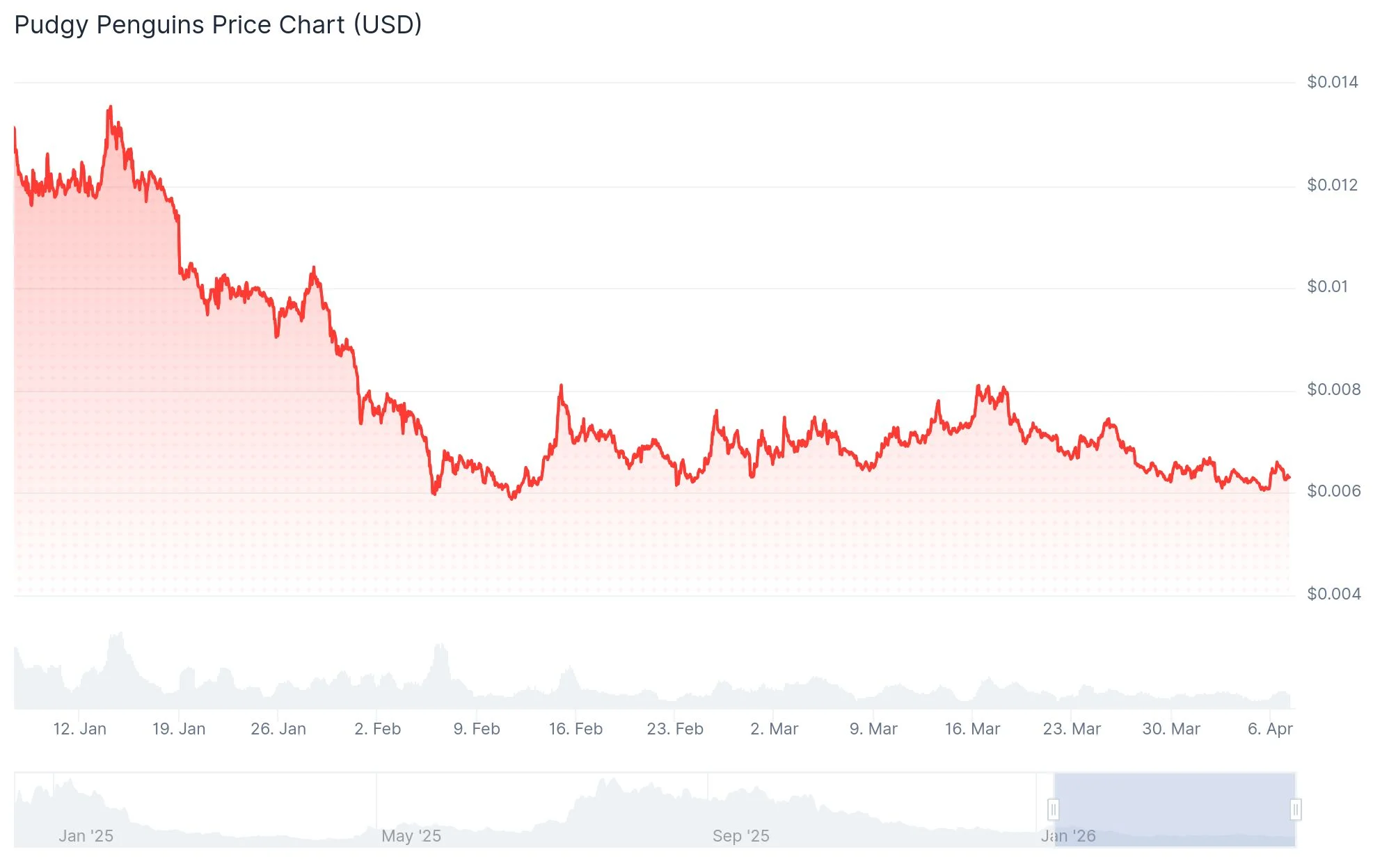
Despite these limitations, PENGU maintains active secondary market trading with substantial volume. According to CoinGecko metrics, the token features an 88.89 billion maximum supply with approximately 62.86 billion tokens presently in circulation. Current market capitalization hovers around $396 million, while the fully diluted valuation reaches approximately $503 million.
Distribution Structure and Vesting Considerations
The allocation framework warrants careful examination. Tokenomist data reveals that 17.80% of supply has been designated for existing and future team members, while an additional 11.48% remains under direct company control. This cumulative 29.28% represents substantial centralized holdings.
Token release schedules extend through 2028. This protracted vesting timeline means markets will continuously absorb newly unlocked tokens from these allocations throughout the coming years.
For an asset explicitly disclaiming utility connections to corporate revenue streams, this concentration of insider-controlled supply presents meaningful considerations for prospective holders.
The underlying brand demonstrates continued momentum, evidenced by prominent shelf placement at America’s two largest retail chains alongside institutional capital secured during 2024.
Concluding Assessment
Pudgy Penguins stands among the exceptionally rare cryptocurrency-originated brands achieving meaningful physical retail penetration. The Walmart and Target distribution network is verifiable, while Founders Fund participation lends institutional validation. However, the PENGU token represents a fundamentally different proposition—lacking formal revenue participation rights, carrying substantial insider allocation weight, and explicitly characterized as entertainment-focused in official documentation. While the brand may continue its upward trajectory, that commercial success contains no inherent mechanism for transferring value to token holders.
Get 3 Free Stock Ebooks
Discover top-performing stocks in AI, Crypto, and Technology with expert analysis.
- Top 10 AI Stocks - Leading AI companies
- Top 10 Crypto Stocks - Blockchain leaders
- Top 10 Tech Stocks - Tech giants


