


Key Highlights
- Sandisk delivered a 168% quarterly jump in Q1 2025, marking its strongest performance on record, with 12-month gains reaching 1,220%
- Technology Select Sector SPDR ETF declined 7.90% during Q1, underperforming the S&P 500’s 4.81% quarterly loss
- AppLovin topped quarterly tech declines at 44.78%, with Workday, Fair Isaac, Gartner, and Intuit rounding out the bottom five
- Artificial intelligence usage has expanded rapidly — approximately 75% of Americans now utilize it for personal activities, while 72% apply it professionally
- Market strategists remain divided: some view the tech downturn as an entry point, while others caution about AI-related workforce disruption
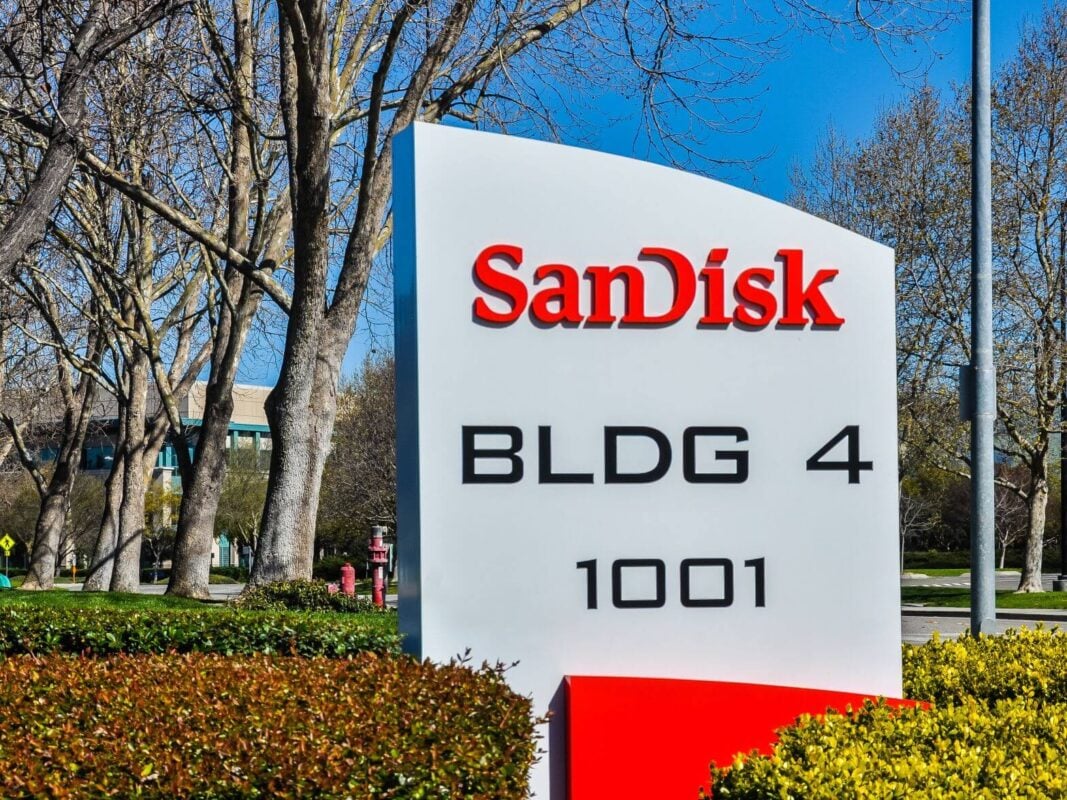
The flash memory specialist Sandisk recorded an extraordinary first quarter performance, climbing 168% to claim the top position among S&P 500 technology stocks. The company’s remarkable momentum extends to a 1,220% surge over the trailing twelve months.
The wider technology sector experienced considerable turbulence by comparison. The Technology Select Sector SPDR ETF registered a 7.90% decline throughout Q1, exceeding the S&P 500’s 4.81% quarterly retreat.
Despite challenging market conditions, several technology names delivered impressive returns. Lumentum Holdings advanced 77.65%, while Ciena posted a 56.07% increase. Corning registered gains of 46.81%, and Western Digital climbed 46.09% during the three-month period.
Conversely, AppLovin emerged as the quarter’s most significant underperformer within tech, tumbling 44.78%. Workday retreated 40.05%, Fair Isaac declined 38.01%, Gartner slipped 36.92%, and Intuit finished down 35.23%.

Market participants attributed part of the downturn to anxiety surrounding artificial intelligence potentially rendering conventional software platforms outdated. During a February appearance on CNBC, Constellation Research’s Ray Wang characterized this market reaction as excessive.
Wang dismissed the notion of an impending “SaaS apocalypse,” arguing that fundamentally sound software-as-a-service providers were facing unjustified selling pressure.
Morgan Stanley research published that same month highlighted artificial intelligence’s rapid integration into everyday workflows. Their survey covering approximately 2,000 American consumers revealed that 75% deploy AI tools for personal purposes and 72% incorporate them into professional activities, with nearly one-fifth using these technologies daily.
Artificial Intelligence Anxiety Triggers Market Pressure
Concerns that artificial intelligence would erode traditional software demand contributed significantly to the technology sector’s weakness. This sentiment particularly impacted companies like Workday and Intuit, both providers of workforce management and financial software solutions.
Wedbush Securities’ Dan Ives countered this pessimism in March, characterizing the decline as an attractive entry opportunity — particularly for cybersecurity firms and software companies positioned to benefit from AI infrastructure expansion.
Seeking Alpha’s David Templeton similarly contended that artificial intelligence is more likely to augment employment rather than destroy it. He drew parallels to previous industrial transformations and technological advances, noting these shifts historically generated more opportunities than they eliminated.
Sandisk’s Unprecedented Performance
Sandisk’s trajectory distinguished it dramatically from sector peers. The flash memory provider capitalized on robust demand driven by AI infrastructure requirements and expanding data storage needs.
Its 168% first quarter advance represented the strongest quarterly showing in company history. This performance materialized despite broader market headwinds stemming from U.S.–Iran geopolitical tensions and worldwide economic uncertainty.
Lumentum and Ciena, both serving the optical networking market, similarly recorded strong quarterly results as AI data center connectivity requirements intensified.
Sandisk equity concluded Q1 with year-to-date gains of 141.17% based on one dataset, while alternative reporting showed the isolated Q1 increase at 168%, reflecting sustained accumulation throughout March.
Get 3 Free Stock Ebooks
Discover top-performing stocks in AI, Crypto, and Technology with expert analysis.
- Top 10 AI Stocks - Leading AI companies
- Top 10 Crypto Stocks - Blockchain leaders
- Top 10 Tech Stocks - Tech giants


