


TLDR
- Samsung Electronics has cleared final qualification hurdles and will begin HBM4 memory chip production for Nvidia in February 2026
- The company provided test samples to Nvidia in September and has now entered the mass production phase
- Micron Technology maintains strong positioning with completely sold-out 2026 inventory and expected low-20% market share through 2027
- Industry-wide supply constraints prevent major market share shifts despite Samsung’s advancement in the sector
- Combined market capitalization of Samsung, SK Hynix, and Micron has increased $900 billion since September
Samsung Electronics plans to launch HBM4 memory chip manufacturing in February 2026. The South Korean company has finished qualification testing with Nvidia after submitting prototype samples last September.
Shipments will begin soon after production commences, though exact delivery schedules remain undisclosed. A Samsung spokesperson declined to provide additional details about the timeline.
Samsung stock climbed 3.2% during Seoul trading before moderating. SK Hynix shares dropped by a similar percentage on the same day.
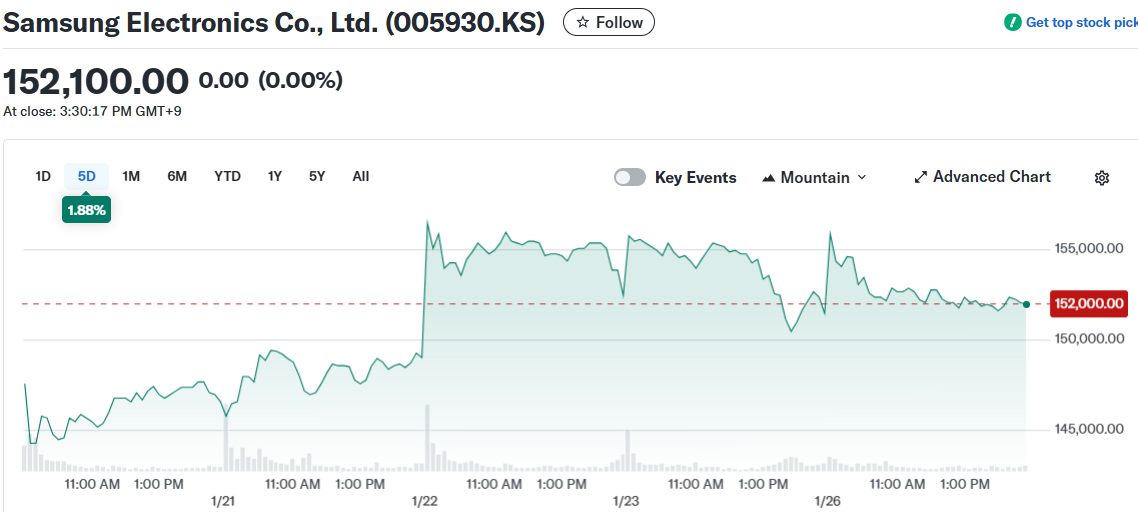
High-bandwidth memory technology powers contemporary artificial intelligence processors. These chips enable AI systems to process enormous data volumes at high speeds.
The company aims to narrow the gap with industry leaders SK Hynix and Micron Technology. SK Hynix currently holds the position as Nvidia’s primary provider for cutting-edge memory components in flagship AI hardware.
Reports indicate Samsung will deliver HBM4 chips to Nvidia and Advanced Micro Devices beginning next month. Market observers are evaluating whether Samsung can secure orders for Nvidia’s next-generation Rubin processor lineup.

Strong Demand Supports Multiple Suppliers
Samsung’s expanded role in Nvidia’s supply network does not necessarily impact Micron’s revenue outlook. The AI sector continues to consume all available high-bandwidth memory production.
Manufacturers of AI hardware are acquiring every HBM chip suppliers can produce. This demand creates favorable conditions for all memory chip producers.
Analyst Sebastien Naji from William Blair launched coverage of Micron with an Outperform recommendation. His analysis noted Micron has committed its full 2026 production run to customers.
Naji forecasts Micron will maintain market share between 20% and 25% through the end of 2027. The firm anticipates Micron’s HBM business will grow nearly four times its current size within two years.
Micron could generate around $20 billion from HBM sales in 2027. This expansion reflects superior profit margins on HBM products versus traditional memory chips.
The company’s share price has multiplied more than four times during the previous 12 months. Investor confidence stems from accelerating HBM adoption in AI applications.
Production Capacity Limits Market Changes
Supply restrictions impact all three major producers equally. This dynamic prevents dramatic market share redistribution among Samsung, SK Hynix, and Micron.
The trio of memory chip manufacturers has added approximately $900 billion in total market value since early September. This growth mirrors the semiconductor industry’s pivot toward AI-focused products.
Both Samsung and SK Hynix have scheduled earnings presentations for Thursday. These calls will offer insights into HBM4 development progress and client relationships.
Demand from AI processor manufacturers continues exceeding available memory chip output. This mismatch guarantees robust sales for all three primary HBM producers regardless of individual competitive positioning.
Get 3 Free Stock Ebooks
Discover top-performing stocks in AI, Crypto, and Technology with expert analysis.
- Top 10 AI Stocks - Leading AI companies
- Top 10 Crypto Stocks - Blockchain leaders
- Top 10 Tech Stocks - Tech giants


