


TLDR
- Fourth quarter operating profit surged to 19.2 trillion won, beating forecasts by 15%
- Revenue jumped 66% to 32.8 trillion won as AI memory demand outpaces supply
- Annual 2025 profit reached 47.2 trillion won, more than doubling previous year
- Microsoft tapped SK Hynix as sole HBM3E supplier for its Maia 200 processor
- Shares climbed 6% after earnings, tripling since September on AI momentum
SK Hynix reported blockbuster fourth quarter results that crushed Wall Street expectations. The memory chipmaker posted operating profit of 19.2 trillion won, beating analyst estimates of 16.7 trillion won.
Revenue came in at 32.8 trillion won, exceeding the 32.1 trillion won consensus. These figures mark a 137% profit increase and 66% revenue growth versus the same period last year.
Investors responded enthusiastically. Shares jumped more than 6% in extended trading following the announcement.
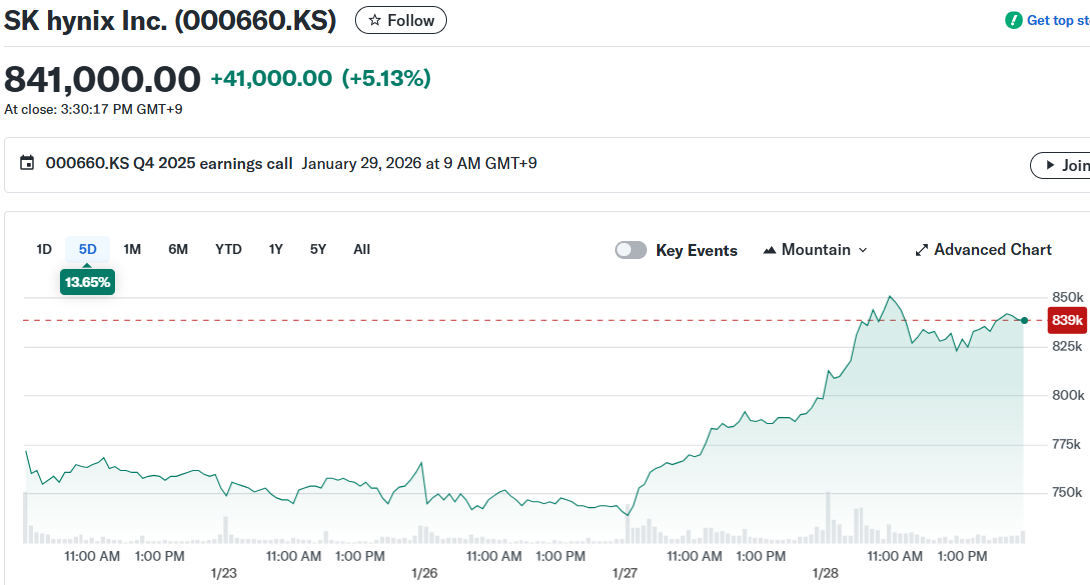
The stock has been on a tear. Since early September, SK Hynix shares have roughly tripled as the AI boom fuels demand for advanced memory chips.
Annual Numbers Shatter Previous Records
The full-year picture looks even better. SK Hynix generated 97.1 trillion won in revenue for 2025, representing nearly 50% growth from 2024.
Operating profit hit 47.2 trillion won. That figure more than doubles the company’s 2024 earnings.

High-bandwidth memory drove the exceptional performance. HBM revenue more than doubled throughout 2025.
These cutting-edge chips are essential for AI data centers. SK Hynix dominates the HBM3E market, supplying chips for Nvidia’s AI accelerators and other major tech platforms.
Supply Deficit Creates Pricing Advantage
A severe supply shortage transformed the memory market. HBM demand has far exceeded manufacturing capacity across the industry.
The shortage spreads beyond AI chips. Standard DRAM and NAND memory face tight supplies as producers prioritize premium products.
SK Hynix redirected production toward high-margin AI chips. This strategic shift reduced conventional memory output, intensifying the supply crunch.
The shortage gives manufacturers unprecedented pricing leverage. Citigroup projects DRAM prices will surge 120% this year, while NAND could climb 90%.
Portfolio manager Richard Clode from Janus Henderson explained the dynamic. AI customers evaluate memory costs differently than traditional consumer electronics buyers, he noted.
Exclusive Microsoft Contract Boosts Outlook
SK Hynix secured a critical partnership. South Korean media outlets report the company won exclusive rights to supply HBM3E chips for Microsoft’s Maia 200 AI processor.
This arrangement strengthens its competitive edge against Samsung Electronics. The two Korean giants are battling for next-generation HBM4 supply contracts with major tech companies.
The company plans to cancel 12.24 trillion won in treasury shares. Management also distributed 2.1 trillion won in total dividends for 2025, including 1 trillion won in additional payouts.
SK Hynix confirmed it’s evaluating a potential US stock exchange listing. No decision has been reached yet.
Industry analysts view SK Hynix as a prime AI beneficiary. SemiAnalysis highlighted the company’s HBM leadership and overall memory market strength.
Standard DRAM products will contribute to earnings growth too. Expanding profit margins and persistent supply constraints support demand across memory categories.
The memory shortage will likely persist. Strong appetite for next-generation HBM consumes more manufacturing capacity while overall supply remains constrained.
Samsung Electronics releases its complete quarterly results Thursday, offering investors a direct comparison between Korea’s two memory powerhouses.
Get 3 Free Stock Ebooks
Discover top-performing stocks in AI, Crypto, and Technology with expert analysis.
- Top 10 AI Stocks - Leading AI companies
- Top 10 Crypto Stocks - Blockchain leaders
- Top 10 Tech Stocks - Tech giants


