


TLDRs:
- Buybacks show Standard Chartered’s confidence despite shifting interest rates.
- Stock edges lower as investors anticipate February full-year results.
- Wealth division expansion underlines focus on high-net-worth clients.
- Market monitors potential rate changes and regulatory constraints closely.
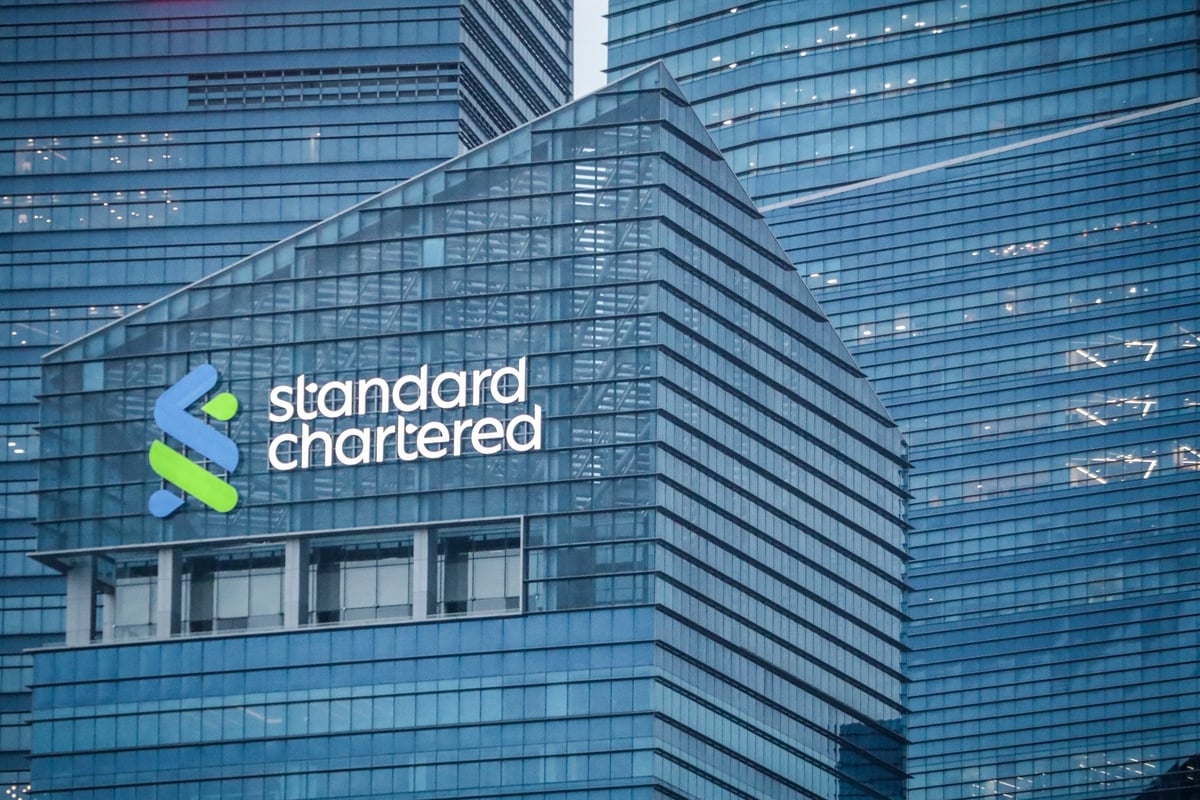
Standard Chartered (STAN.L) shares opened slightly lower on Tuesday in London following the bank’s latest update on its ongoing share buyback program.
Early trading saw the stock dip by 1.0 pence, or roughly 0.05%, to 1,854.5 pence, remaining near its 52-week peak of 1,875.5 pence. Investors are closely observing the bank’s upcoming February 24 full-year results, which are expected to provide guidance on 2026 capital returns and broader growth expectations.
The bank confirmed that it purchased 535,931 shares on January 5 at a volume-weighted average price of 1,858.69 pence. To date, Standard Chartered has allocated approximately $1.087 billion to share buybacks, with plans to cancel these shares. This reduction in outstanding shares is designed to increase earnings per share and signal management confidence to the market.
Buybacks Reflect Management Confidence
Buybacks have become a key component of European banking strategies, often signaling that management views capital buffers as strong enough to support shareholder returns. Analysts interpret Standard Chartered’s continued repurchases as a message of confidence despite the uncertainty surrounding future interest rate movements.
Investors are mindful that a shift from “higher-for-longer” interest rates to potential rate cuts could influence the bank’s net interest income, the difference between what it earns on loans and what it pays on deposits. Any unexpected change could tighten profit margins before fee-based businesses can fill the gap.
Wealth Business Expansion Strengthens Strategy
Beyond capital management, Standard Chartered is investing in its affluent client segment. The bank recently appointed Sundeep Gantori as Chief Investment Officer for equities and Jonathan Liang as CIO for fixed income and foreign exchange, expanding its Global Chief Investment Office. According to Steve Brice, the bank’s global CIO, this office plays a pivotal role in delivering investment strategies that support the bank’s Wealth Solutions business.

This strategic move highlights the bank’s commitment to diversifying revenue streams and solidifying its position in the high-net-worth market. Analysts suggest that investments in wealth management could help offset pressure on traditional lending income if interest rates evolve faster than expected.
Market Outlook and Risks Remain in Focus
London’s broader market opened on a positive note, with the FTSE 100 up around 0.5% and banks providing early support. European strategists have also turned more optimistic, with Goldman Sachs recently raising its 12-month target for the STOXX 600 and upgrading financial services to “overweight,” citing improving earnings momentum.
Technically, traders are watching whether Standard Chartered can surpass its 52-week high. A sustained drop below the mid-1,850s could cap the recent rally, while strong momentum could attract further buying. However, regulatory constraints remain a key consideration; any tightening of capital requirements could slow the pace of buybacks.
With the February results approaching, investors are balancing optimism over share repurchases and wealth business growth against potential macroeconomic headwinds. The bank’s ability to navigate rate fluctuations, regulatory demands, and market expectations will likely dictate its performance in the coming months.
Get 3 Free Stock Ebooks
Discover top-performing stocks in AI, Crypto, and Technology with expert analysis.
- Top 10 AI Stocks - Leading AI companies
- Top 10 Crypto Stocks - Blockchain leaders
- Top 10 Tech Stocks - Tech giants


