


TLDR
- Starbucks is selling 60% of its China retail operations to private equity firm Boyu Capital in a deal valuing the business at $4 billion.
- Starbucks will retain 40% ownership and continue to own the brand and intellectual property while receiving licensing income.
- The coffee chain operates approximately 8,000 stores in China and plans to expand to 20,000 locations under the new partnership.
- Same-store sales in China dropped 6% in the quarter ending December 2024 but improved to a 2% increase by September 2025.
- The joint venture is expected to close in the second quarter of Starbucks’ fiscal year 2026 after regulatory approval.
Starbucks announced Monday it is selling a 60% stake in its China retail operations to private equity firm Boyu Capital. The deal values the entire China business at $4 billion on a cash-free, debt-free basis.
Under the joint venture agreement, Starbucks will retain 40% ownership. The company will also maintain control of its brand and intellectual property rights.
Starbucks expects the total value of its China retail business to exceed $13 billion. This figure includes upfront proceeds from the sale, its remaining 40% stake, and future licensing income.
The market response was muted following the announcement. Shares rose just 0.3% in after-hours trading Monday.
Investors had long anticipated Starbucks would bring in a local partner for its China operations. The modest price movement suggests shareholders are waiting for concrete operational improvements.

Local Competition Drives Strategic Shift
Starbucks entered the Chinese market nearly 30 years ago. The company has been credited with developing coffee culture in the country.
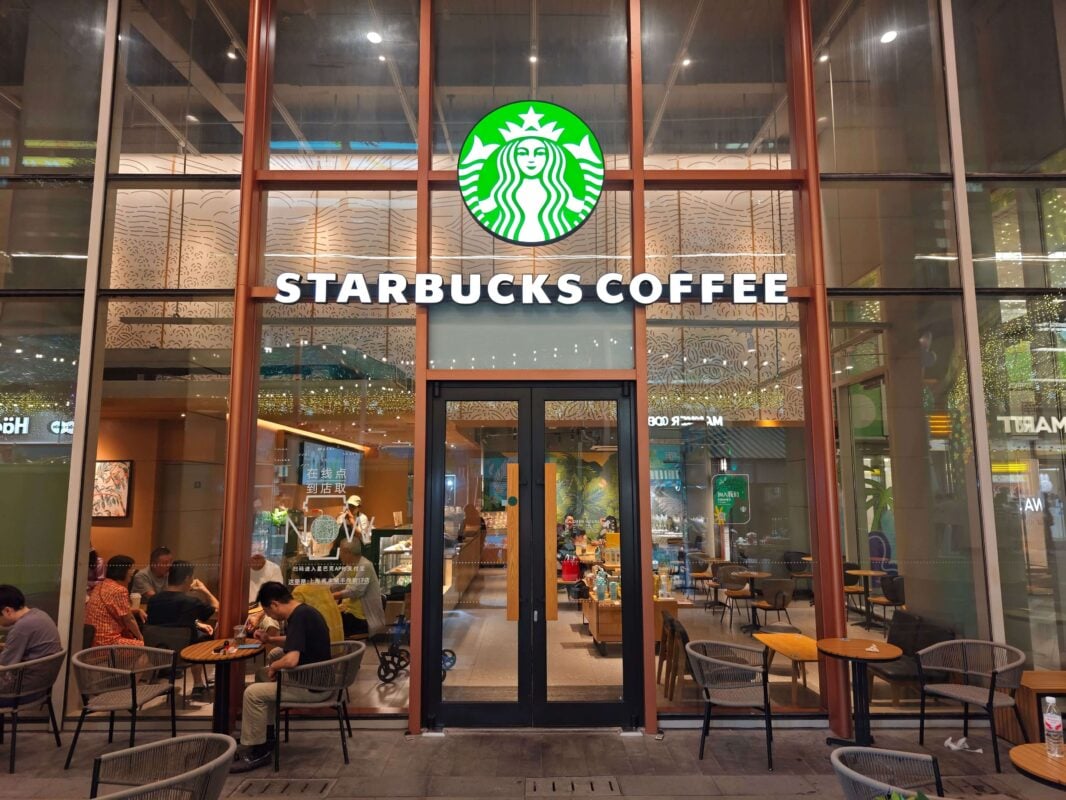
China is now Starbucks’ second-largest market outside the United States. The company operates approximately 8,000 stores across the country.
Recent years have brought challenges for the coffee chain. Local competitors like Luckin Coffee have gained ground by offering cheaper drinks and more locations in smaller cities.
Chinese consumers have become increasingly price-sensitive. This shift has eroded some of Starbucks’ premium positioning in the market.
The company reported a 6% drop in same-store sales in the quarter ending December 2024. Both transaction volume and average order prices declined during that period.
Performance Shows Recent Recovery
Starbucks has adjusted its China strategy in response to competition. The company has introduced more local-flavor drinks, flexible store formats, and lower prices.
These changes have started to pay off. Same-store sales in China improved 2% in the latest quarter ending September 2025.
Average order prices continued to shrink. However, increased transaction volume more than offset this decline.
CEO Brian Niccol said the partnership combines Starbucks’ global brand with Boyu’s local market knowledge. He expects this will help accelerate growth into smaller cities and new regions.
“Boyu’s deep local knowledge and expertise will help accelerate our growth in China, especially as we expand into smaller cities and new regions,” Niccol said in a statement.
Boyu Capital Partner Alex Wong said Starbucks has built a deep connection with Chinese consumers. He noted the partnership reflects confidence in the brand’s strength and opportunities for innovation.
Under the new partnership, the two companies plan to expand to 20,000 stores in China eventually. That represents more than double the current store count.
Starbucks’ China headquarters will remain in Shanghai. Boyu Capital, founded in 2011, has offices in Shanghai, Hong Kong, Singapore, and Beijing.
Niccol said in July the company had been evaluating around 20 offers for a stake in the China business. Boyu was selected from this group of potential partners.
The joint venture is expected to close in the second quarter of Starbucks’ fiscal year 2026, which ends next September. The deal requires regulatory approval before completion.
Get 3 Free Stock Ebooks
Discover top-performing stocks in AI, Crypto, and Technology with expert analysis.
- Top 10 AI Stocks - Leading AI companies
- Top 10 Crypto Stocks - Blockchain leaders
- Top 10 Tech Stocks - Tech giants


