



Key Takeaways
- Military operations targeting Iran resulted in the death of Supreme Leader Khamenei, sparking concerns about major disruptions to oil flows via the Strait of Hormuz.
- Tehran has issued warnings prohibiting vessel traffic through the Strait, a waterway responsible for transporting approximately 20–26% of the world’s crude oil plus substantial LNG shipments.
- Energy analysts project Brent crude may hit the $100 mark; extended hostilities could contribute 0.6–0.7 percentage points to worldwide inflation pressures.
- Shipping company equities including Frontline and DHT Holdings have experienced dramatic gains this year, with freight rates already at levels unseen in years.
- Cryptocurrency markets saw Bitcoin decline 2%, extending losses beyond 25% over two months, while traditional safe havens like gold, U.S. Treasuries, and the Swiss franc attract capital.
Coordinated military strikes by the United States and Israel against Iranian targets on Saturday resulted in the death of Supreme Leader Ali Khamenei, immediately sending ripples through commodity, equity, and cryptocurrency markets worldwide.
Following the military action, Iran’s Islamic Revolutionary Guard Corps issued directives prohibiting maritime traffic through the Strait of Hormuz. This narrow passage serves as the transit route for roughly 26% of worldwide crude oil shipments and 23% of global liquefied natural gas trade.
Brent crude closed Friday’s session near $73 per barrel, marking approximately 20% gains year-to-date. Market strategists anticipate further upward pressure when trading resumes Sunday night.
Barclays analysts indicate Brent could approach the $100 threshold as traders assess potential supply interruptions. Capital Economics suggests that even limited engagement could elevate prices toward the $80 level.
Iran’s daily production stands at approximately 3.3 to 3.5 million barrels, representing roughly 3% of worldwide output. The Kharg Island export facility, which processes nearly 90% of Iranian crude shipments, has reportedly experienced explosions.

Qatar’s entire LNG export volume—accounting for about 20% of global LNG maritime trade—must transit the Strait. No alternate shipping routes exist. Should the passage close, Asian purchasers would face direct competition with European buyers for American spot-market cargoes.
Goldman Sachs modeling suggests that eliminating one million barrels daily of Iranian exports over twelve months would add approximately $8 to barrel prices. Rystad Energy projects increases of $10 to $15 per barrel under broader conflict scenarios.
Maritime Transport Equities Rally on Freight Rate Outlook
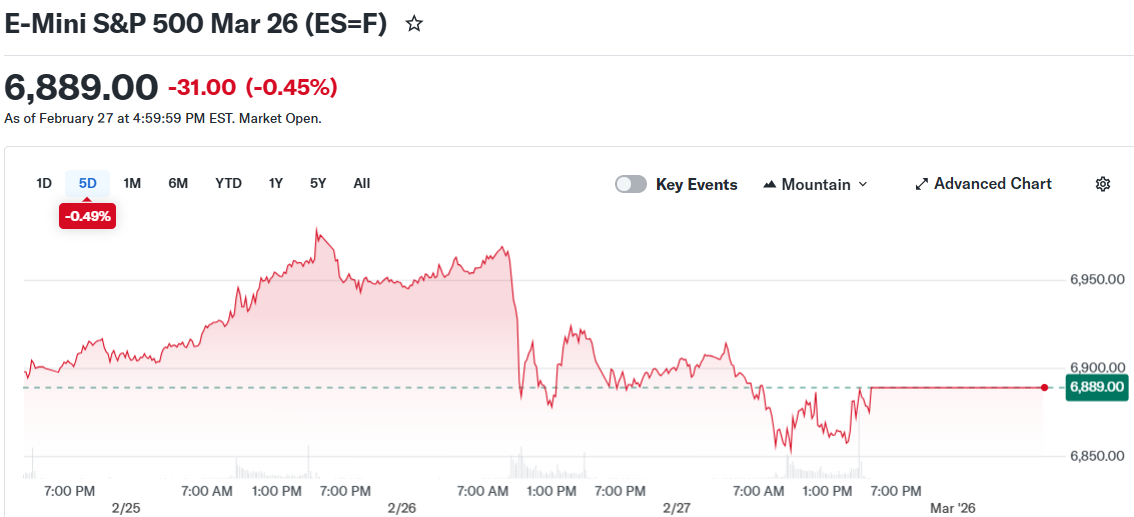
Shipping sector stocks have already incorporated substantial risk premiums. Frontline shares have surged 74% in 2026, DHT Holdings has climbed 60%, and Ardmore Shipping has advanced 55%. By comparison, the S&P 500 has gained merely 0.5% during the identical timeframe.
Frontline disclosed that 92% of its first-quarter VLCC spot capacity was contracted at mean rates of $107,100 daily. Evercore analyst Jonathan Chappell upgraded his target valuation for the company to $42 from $31.
Historical precedents show dramatic rate increases during Middle East conflicts. Very large crude carrier rates jumped over 40% during the 1991 Gulf War. The 2003 invasion of Iraq saw rates spike as much as 304%.
Cryptocurrency Weakens as Traditional Havens Gain Strength
Bitcoin retreated 2% on Saturday, extending its decline to more than 25% across the preceding eight weeks. Market observers note the digital asset is failing to demonstrate safe-haven characteristics.
Gold has appreciated 22% in 2026 and continues attracting defensive positioning. The Swiss franc has strengthened 3% versus the dollar year-to-date. U.S. Treasury yields have declined in recent sessions.
The VIX fear gauge has climbed one-third this year. Multiple major oil producers and commodity trading firms have already halted crude shipments through the Strait of Hormuz.
Get 3 Free Stock Ebooks
Discover top-performing stocks in AI, Crypto, and Technology with expert analysis.
- Top 10 AI Stocks - Leading AI companies
- Top 10 Crypto Stocks - Blockchain leaders
- Top 10 Tech Stocks - Tech giants


