


Key Points
- Federal prosecutors indicted three individuals linked to Super Micro, including co-founder Yih-Shyan “Wally” Liaw, for illegally exporting Nvidia-equipped servers to China
- The operation allegedly diverted at least $2.5 billion in advanced AI hardware, with over $500 million shipped during a brief period in mid-2025
- Conspirators reportedly used decoy servers and fraudulent documentation to circumvent both internal controls and federal export regulations
- Super Micro suspended two staff members and severed ties with a contractor upon notification of the criminal charges
- SMCI shares plummeted up to 22% during after-hours trading following the public disclosure of the indictment
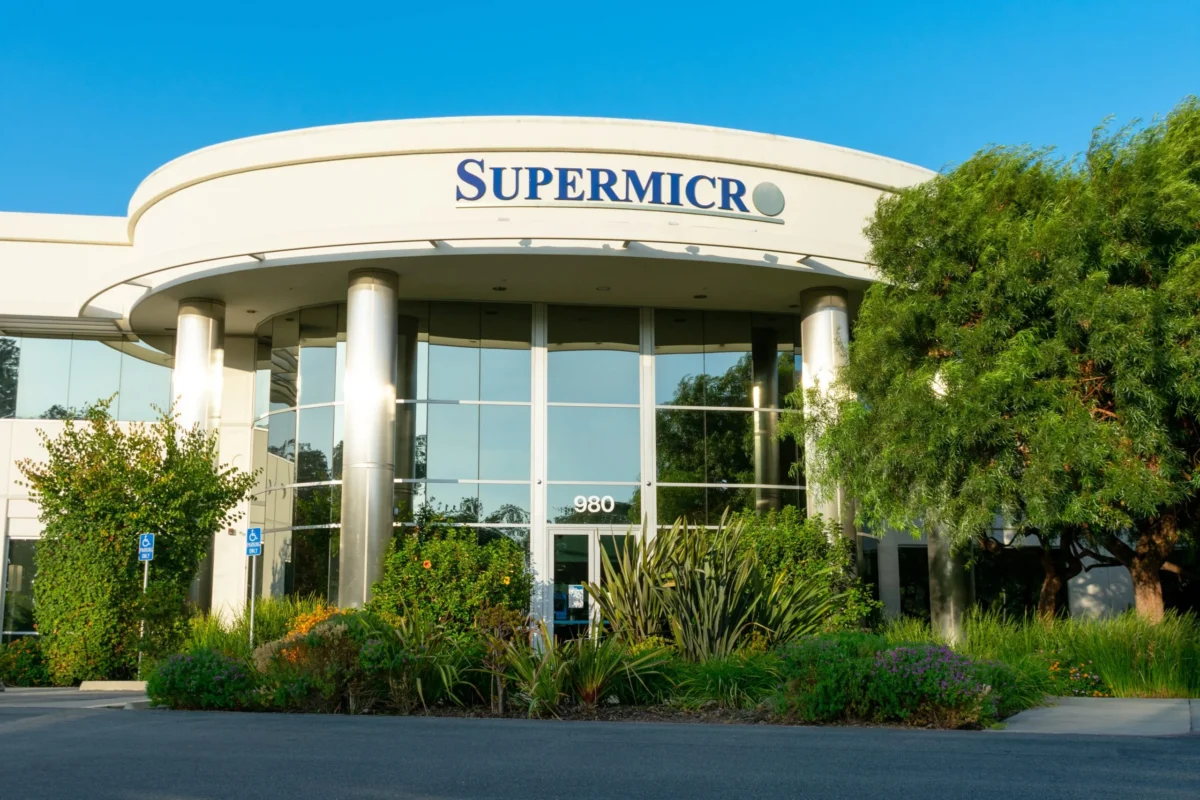
Super Micro Computer (SMCI) experienced a dramatic stock decline in after-hours trading Thursday following the unsealing of a federal indictment by U.S. prosecutors accusing three individuals associated with the company of orchestrating a multi-billion-dollar AI server smuggling ring to China.
The criminal charges originated from the U.S. Attorney’s Office for the Southern District of New York. Those indicted include Yih-Shyan “Wally” Liaw, a Super Micro co-founder and current board member; Ruei-Tsan “Steven” Chang, a sales manager working from the company’s Taiwan location; and Ting-Wei “Willy” Sun, who operated as an independent contractor.
Following the Manhattan federal court’s release of the indictment, SMCI stock tumbled by as much as 22% in extended trading hours.
The corporation itself faces no criminal charges. [[LINK_START_0]]Super Micro[[LINK_END_0]] issued a statement confirming it received notification from federal authorities Thursday and has maintained full cooperation with the investigation. The company immediately placed Liaw and Chang on administrative leave while terminating its business arrangement with Sun.
The alleged smuggling network operated through a Southeast Asian intermediary company serving as a cover operation. This entity accepted server shipments, submitted fraudulent documentation suggesting the equipment would remain within the region, then contracted a separate logistics provider to repackage the servers in unmarked containers before redirecting them to China.

Investigators say the conspirators employed sophisticated deception tactics, including using hair dryers to remove serial number labels from authentic machines and affixing them to non-functional replicas — referred to in the indictment as “dummy” servers — which remained at storage locations to mislead inspectors.
Prosecutors allege the defendants even deployed these dummy machines during an inspection by a U.S. export control officer.
Multi-Billion Dollar Export Violation
The cumulative value of illegally diverted equipment since 2024 reportedly totals approximately $2.5 billion. Between late April 2025 and mid-May 2025 alone, more than $510 million in server hardware allegedly reached China.
Liaw, whose Super Micro holdings are valued at roughly $464 million according to FactSet, was taken into custody Thursday. Sun was also arrested. Chang remains at large.
Federal prosecutors indicate Liaw actively promoted expanding the operation to include cutting-edge hardware. Text messages referenced in the indictment reveal him inquiring with the Southeast Asian company contact about monthly capacity for Nvidia’s B200 chips — featuring the Blackwell architecture — beginning in early 2025.
In another communication, Liaw allegedly forwarded a link to a White House statement regarding forthcoming AI export regulations and urged accelerated shipments before implementation.
When a broker shared a link about Chinese nationals arrested for AI chip smuggling, Liaw purportedly responded with sobbing emojis.
Nvidia Issues Statement
Nvidia, whose graphics processing units powered the servers central to this case, emphasized that export law compliance remains paramount. The company stated it maintains close collaboration with customers and government agencies on compliance initiatives.
“Unlawful diversion of controlled U.S. computers to China is a losing proposition across the board,” a Nvidia spokesperson stated, noting the company provides no service or support for such systems.
While the indictment doesn’t explicitly identify chip models, Nvidia commands the AI chip market, and its products face stringent U.S. export restrictions to China implemented since 2022.
In 2024, Super Micro revealed that its auditor Ernst & Young had resigned. The company subsequently hired BDO as a replacement. According to the indictment, Chang had arranged for what he described as a “friendly” auditor to examine data center facilities implicated in the scheme.
U.S. Attorney Jay Clayton, the Trump-appointed prosecutor who previously served as SEC chairman, stated: “Crimes involving sensitive technology must be met with swift action, otherwise the law is meaningless.”
Get 3 Free Stock Ebooks
Discover top-performing stocks in AI, Crypto, and Technology with expert analysis.
- Top 10 AI Stocks - Leading AI companies
- Top 10 Crypto Stocks - Blockchain leaders
- Top 10 Tech Stocks - Tech giants


