



Key Takeaways
- The Nasdaq Composite plummeted 2.4% Thursday, declining more than 10% from its October 29 peak, entering correction territory
- Market volatility stems from the ongoing U.S.-Israeli military operations against Iran and concerns about energy inflation
- U.S. gasoline prices surged to $3.98 per gallon, marking a $1.00 increase within 30 days
- Meta Platforms shares plunged 8% following two court rulings holding the company responsible for youth safety issues
- Major tech names including Nvidia, Alphabet, and Tesla declined between 3.4% and 4.2% in Thursday’s session
The tech-heavy Nasdaq Composite has entered official correction territory following Thursday’s sharp decline. The benchmark index tumbled 2.4%, pushing it nearly 11% beneath the record close achieved on October 29, 2025. This represents the first confirmed correction for the Nasdaq in twelve months.
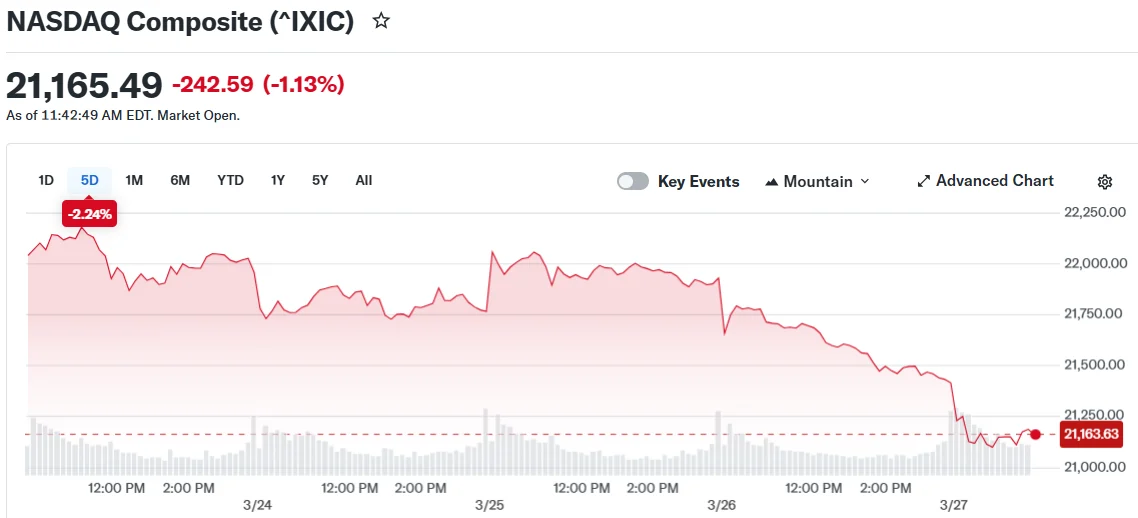
This downturn represents the index’s steepest fall since April 2025, when former President Trump’s tariff announcement on “Liberation Day” triggered a worldwide market retreat.
The Nasdaq has now shed nearly 8% year-to-date in 2026 and trades at levels last witnessed in early September 2025.
The primary catalyst behind this market turbulence is persistent uncertainty surrounding the U.S. and Israeli military campaign against Iran. Market participants remain unclear about the conflict’s duration and its potential economic ramifications.
According to a Seeking Alpha community survey, most participants anticipate operations lasting up to three months. Meanwhile, White House officials have projected a four-to-six week timeframe. This discrepancy between forecasts is intensifying market anxiety.

Energy costs are climbing rapidly. The national average for gasoline now stands at $3.98 per gallon, representing a full dollar increase from just 30 days earlier. Seasonal consumption patterns are anticipated to drive prices even higher as the spring season approaches.
Market analysts suggest this energy price shock could either accelerate inflation or suppress consumer spending sufficiently to trigger economic deceleration. The ultimate outcome hinges significantly on the conflict’s duration.
Technology Sector Bears the Brunt
Technology equities have experienced severe pressure. Nvidia declined 4.2%, Alphabet fell 3.4%, and Tesla retreated 3.6%. The Roundhill Magnificent Seven ETF dropped 3.3% and has now surrendered 17% since the Nasdaq reached its October zenith.
Market participants are also questioning whether the enormous artificial intelligence expenditures by tech giants like Microsoft, Alphabet, and Amazon are generating returns quickly enough. The primary concern centers on whether substantial infrastructure investments have yet produced significant revenue expansion.
“There definitely has been an erosion in market enthusiasm since hostilities broke out,” said Steve Sosnick, market strategist at Interactive Brokers.
Meta’s Legal Troubles Compound Market Woes
Meta Platforms emerged as one of Thursday’s heaviest index detractors, plummeting 8%. Two separate court decisions determined Meta bears liability for damages inflicted on young platform users, sparking concerns the company may need to fundamentally restructure its advertising business model.
The widespread losses throughout Big Tech are magnified because these corporations now constitute substantial portions of both the Nasdaq and S&P 500 indices. Any significant retreat in these stocks delivers outsized impacts to broader market benchmarks.
Jim Carroll, senior wealth adviser at Ballast Rock Private Wealth, characterized the market’s volatile swings as sufficient to “make people seasick.”
The Nasdaq previously declined nearly 23% from its 2024 peak before mounting a recovery through October 2025. Investors are now monitoring whether this current correction will trace a similar trajectory or deteriorate further.
Get 3 Free Stock Ebooks
Discover top-performing stocks in AI, Crypto, and Technology with expert analysis.
- Top 10 AI Stocks - Leading AI companies
- Top 10 Crypto Stocks - Blockchain leaders
- Top 10 Tech Stocks - Tech giants


