


TLDR
- White House officials are evaluating whether Tencent should divest its U.S. gaming properties due to national security considerations.
- The Chinese tech conglomerate fully owns Riot Games and maintains a 28% ownership in Epic Games, alongside Supercell and Turtle Rock Studios.
- A high-level cabinet meeting planned for Tuesday was delayed because of scheduling conflicts.
- The national security assessment follows similar actions taken against ByteDance regarding TikTok divestment.
- Shares of TCEHY declined 1.72% Wednesday and have fallen 16.29% since the start of the year.
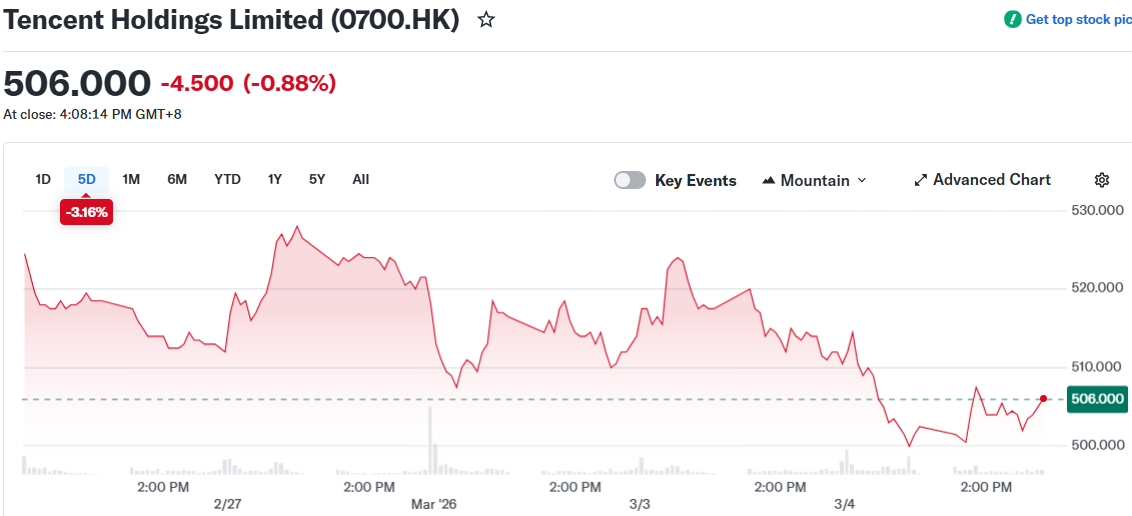
Shares of Tencent tumbled Wednesday following a Financial Times report revealing the Trump administration is considering requiring the Chinese technology behemoth to divest its American video game properties.
According to sources with knowledge of the discussions cited in the report, senior White House officials have convened internal discussions to determine whether Tencent’s video game assets pose national security risks.
The scenario bears striking resemblance to the ByteDance and TikTok saga, where Washington demanded complete divestiture citing security concerns.
Tencent maintains significant presence in America’s gaming industry. The corporation owns Riot Games completely—the California-based developer responsible for League of Legends.
Additionally, it controls a 28% ownership position in Epic Games, the company behind Fortnite. Turtle Rock Studios, famous for developing Back 4 Blood and Left 4 Dead, also falls under Tencent’s umbrella.

Internationally, Tencent acquired a controlling interest in Supercell, the Finnish mobile gaming company behind Clash of Clans, for approximately $8.6 billion in 2016.
Given the extensive nature of these investments, any mandated divestment would constitute a significant corporate restructuring rather than a simple portfolio adjustment.
A cabinet-level discussion was originally scheduled for Tuesday to further examine the matter. However, that session was delayed due to scheduling issues, the FT reported.
The White House has not yet provided comment on the matter. Tencent similarly declined to issue a statement.
Reuters indicated it was unable to independently confirm all aspects of the Financial Times’ reporting.
Trump-Xi Meeting Adds Complexity
The timing of this security review carries particular significance: President Trump is expected to visit China in April for meetings with Chinese President Xi Jinping.
Some industry watchers suggest this diplomatic engagement could affect the administration’s approach to Tencent’s American holdings ahead of the scheduled summit.
How this international relationship factor might influence final decisions remains uncertain.
Wall Street Reaction
Analyst coverage of TCEHY remains limited. Hans Engel from Erste Group represents the sole recent voice, issuing a Hold recommendation on February 18, 2026, after downgrading the security.
Engel did not establish a price target alongside his rating.
TCEHY shares decreased 1.72% during Wednesday’s trading session. The stock has declined 16.29% year-to-date and dropped 0.96% over the trailing twelve months.
The postponed cabinet discussion has not been rescheduled, leaving the assessment’s conclusion in limbo.
Get 3 Free Stock Ebooks
Discover top-performing stocks in AI, Crypto, and Technology with expert analysis.
- Top 10 AI Stocks - Leading AI companies
- Top 10 Crypto Stocks - Blockchain leaders
- Top 10 Tech Stocks - Tech giants


