


TLDR
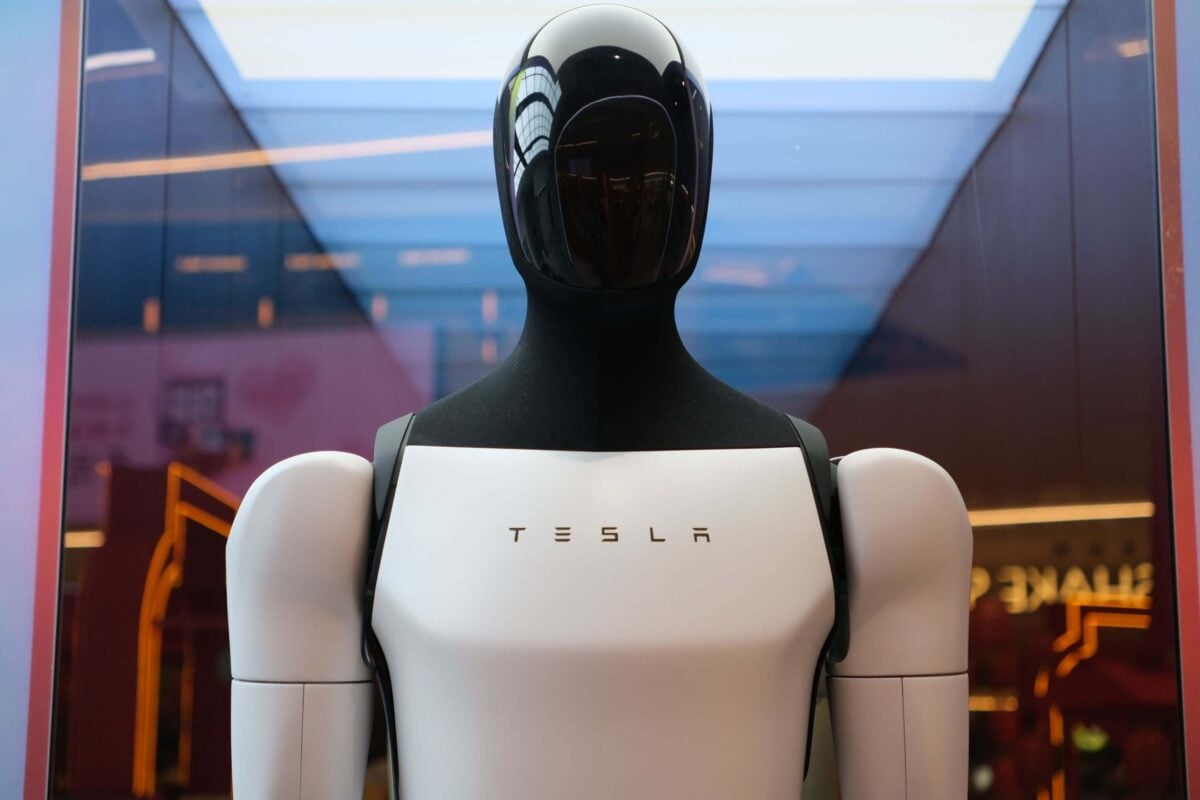
- Tesla CEO Elon Musk announced that Optimus humanoid robots could be available for public purchase by the end of 2026, pending safety and reliability standards.
- Optimus robots are currently being used in Tesla factories for simple tasks and are expected to handle more complex work by year-end.
- Musk stated Cybercab production will be “agonizingly slow” initially but eventually become “insanely fast,” with production slated for 2026.
- Tesla shares rose over 3% following Musk’s announcements at the World Economic Forum in Davos.
- Tesla’s core vehicle business faces pressure from an aging product lineup and loss of U.S. EV incentives, resulting in two consecutive years of declining deliveries.
Tesla stock climbed more than 3% after CEO Elon Musk provided concrete timelines for both the company’s humanoid Optimus robots and its purpose-built Cybercab robo-taxi. The announcements came during Musk’s appearance at the World Economic Forum in Davos.
Musk revealed that Tesla could begin selling Optimus robots to the public by the end of 2026. The robots are already operating inside Tesla factories, performing simple tasks. The CEO expects them to handle more complex work by the end of this year.
However, public sales won’t begin until Tesla confirms the robots meet strict standards. Safety, reliability, and functionality must all reach very high levels before consumers can purchase them.
This represents one of the clearest timelines Musk has given for Optimus. Previously, he mentioned limited deliveries to other companies might start in the second half of 2026. Now he’s talking about actual consumer sales.
Shares rose 0.5% to $433.74 in early trading before closing higher at $437.16. The S&P 500 and Dow Jones Industrial Average also posted gains during the session.

Cybercab Production Plans
Musk also addressed production plans for the Cybercab, Tesla’s dedicated robo-taxi vehicle. He warned that early production would be “agonizingly slow” but promised it would eventually become “insanely fast.”
The Cybercab is scheduled for production in 2026. Tesla already launched a robo-taxi service in Austin, Texas, in June using Model Y vehicles with human safety monitors.
Expanding the service to new cities and producing the Cybercab are key milestones for 2026. Bullish investors believe AI-powered self-driving cabs could be worth hundreds of billions or even trillions to Tesla’s valuation.
The robo-taxi service remains small and hasn’t generated material revenue yet. But removing safety monitors and introducing purpose-built vehicles would mark major progress.
Challenges in Core Business
Tesla’s push into robotics and autonomous vehicles comes as its car business faces headwinds. The company has posted two straight years of declining vehicle deliveries.
An aging product lineup and the loss of U.S. EV incentives have hurt sales. Tesla stock is down about 4% year-to-date but up roughly 4% over the past 12 months.
Wall Street analysts have a Hold consensus rating on the stock. The average price target of $401.77 implies about 8.5% downside from current levels. The rating is based on 12 Buy ratings, 10 Holds, and seven Sells.
Musk sees Optimus as a major part of Tesla’s future, alongside artificial intelligence and self-driving technology. The company is betting these new ventures will offset weakness in traditional auto sales.
Tesla currently uses Optimus robots internally for basic factory tasks. The robots will need to prove they can handle increasingly difficult work before any public rollout begins.
Musk emphasized that Tesla won’t rush the robots to market. The company plans to ensure they meet very high standards before selling them to consumers at the end of 2026.
Get 3 Free Stock Ebooks
Discover top-performing stocks in AI, Crypto, and Technology with expert analysis.
- Top 10 AI Stocks - Leading AI companies
- Top 10 Crypto Stocks - Blockchain leaders
- Top 10 Tech Stocks - Tech giants


