



TLDR
- Major U.S. equity indexes recorded losses for the third consecutive week as crude oil prices surpassed $100 per barrel, intensifying inflation concerns.
- Oil prices jumped approximately 9% following escalating Middle East conflicts that impacted shipping routes through the Strait of Hormuz.
- Oracle exceeded earnings forecasts with revenue climbing more than 20%, driven by robust AI and cloud infrastructure demand.
- Gold prices retreated roughly 1% despite heightened geopolitical tensions, as dollar strength weighed on safe-haven purchases.
- The energy sector led weekly gains, while consumer staples and healthcare sectors tumbled 4–5%.
Equity markets in the United States experienced their third consecutive week of declines as crude oil surged beyond $100 per barrel and escalating Middle East conflicts shook investor confidence. The three primary market benchmarks all posted negative returns for the week concluding March 13, 2026.
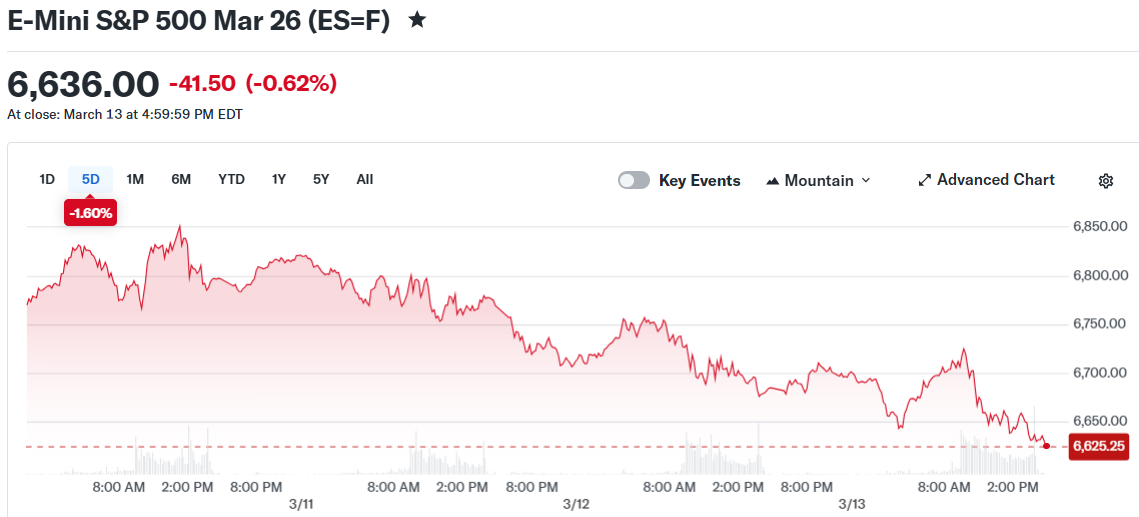
The S&P 500 declined approximately 1.6%, the Dow Jones Industrial Average shed around 2%, and the Nasdaq Composite fell roughly 1.3%. Smaller-capitalization stocks also retreated, with the Russell 2000 posting a loss of about 1.8%.
The week’s dominant narrative centered on oil markets. Crude prices surged approximately 9% after military confrontations involving the United States, Israel, and Iran created disruptions to tanker traffic navigating the Strait of Hormuz. Market analysts characterized this as one of the most dramatic weekly oil futures rallies observed since the 1980s.
The spike in energy prices reignited inflation anxieties across financial markets. Producer price index figures exceeded analyst forecasts marginally, fueling speculation that rising costs might eventually translate into higher consumer prices in coming weeks.
This development creates a challenging scenario for the Federal Reserve. While financial markets continue pricing in interest rate reductions later this year, the expected timing has become increasingly uncertain as energy-fueled inflation muddies the monetary policy outlook.

Oracle Stands Out in Earnings Week
Oracle emerged as the week’s most impressive earnings performer. The technology giant reported fiscal third-quarter results that exceeded Wall Street estimates, with total revenues expanding more than 20% and artificial intelligence infrastructure sales demonstrating triple-digit percentage growth.
Executives also provided optimistic forward guidance, forecasting revenue growth in the high-teens percentage range extending into fiscal year 2027. Shares surged during after-hours trading but concluded the week approximately unchanged as market participants balanced the positive outlook against a stock price already down more than 50% from previous year highs.
Campbell Soup presented a contrasting narrative. The food manufacturer marginally exceeded adjusted earnings expectations but delivered conservative 2026 guidance that disappointed analysts, triggering share price declines.
Energy and industrial companies bucked broader market weakness, with multiple mid-capitalization firms announcing solid quarterly results supported by strengthening demand and expanding export possibilities.
Gold Falls, Energy Stocks Rise
Gold temporarily recovered above $5,100 per troy ounce on Friday but nonetheless concluded the week down approximately 1%. Dollar appreciation and diminishing expectations for near-term rate cuts counterbalanced demand for traditional safe-haven assets.
Energy equities emerged as clear outperformers. Leading U.S. energy-focused exchange-traded funds advanced 2–3% during the week. Marathon Petroleum and peer refining companies climbed in the high single-digit percentage range as market participants anticipated improved profit margins resulting from elevated crude prices.
Consumer staples and healthcare represented the weakest-performing sectors, each declining 4–5%. Investment flows shifted away from these defensive categories as input cost pressures intensified and earnings risk escalated.
Financial stocks also underperformed, pressured by ongoing concerns surrounding private-credit exposure at several large banking institutions. Technology shares posted modest declines overall, though mega-cap technology names demonstrated greater resilience compared to smaller software enterprises.
The Cboe Volatility Index climbed from late February readings as market participants increased spending on downside protection instruments, signaling the more defensive sentiment prevailing as traders looked toward the upcoming week.
Get 3 Free Stock Ebooks
Discover top-performing stocks in AI, Crypto, and Technology with expert analysis.
- Top 10 AI Stocks - Leading AI companies
- Top 10 Crypto Stocks - Blockchain leaders
- Top 10 Tech Stocks - Tech giants


