


Sometimes the best way to understand where an industry is going is to compare two platforms that represent completely different ideas about how it should work. FanDuel is the polished product of the regulated US gambling boom. ZunaBet is what happens when a team builds an online casino and sportsbook from nothing with cryptocurrency as the foundation. Looking at them together says a lot about where the cracks in the traditional model are forming and what the next generation of gambling platforms looks like.

FanDuel: The Benchmark for US Sports Betting
FanDuel’s path to where it sits today started with daily fantasy sports in 2009 and accelerated sharply after the US opened up to legal sports betting in 2018. Now a subsidiary of Flutter Entertainment, it holds sportsbook and casino licenses in multiple American states and processes enormous volumes of bets every day.
The mobile sportsbook is FanDuel’s flagship and arguably the best-designed sports betting app available in the US market. Coverage spans every major American and international sport, odds are competitive, and the betting experience is smooth. There is also a casino product available in licensed states that includes slots, table games, and a selection of live dealer content, though it functions more as an add-on than a standalone attraction.
Money moves through traditional channels only. Players use bank accounts, debit cards, PayPal, Venmo, or similar services. Deposits tend to arrive quickly. Withdrawals are less predictable, sometimes processing within hours, other times sitting in queues for days while banks and payment processors do their work.
Promotional offers for new players generally revolve around sportsbook incentives — bonus bets, risk-free wagers, or similar mechanisms. Casino-specific bonuses are available but smaller in scope. The loyalty rewards system operates on points earned through wagering, exchangeable for bonus bets and platform credits. It sits within Flutter’s wider rewards infrastructure and works the same way as nearly every other mainstream operator’s program.

FanDuel delivers a premium sports betting product within a tightly regulated environment. For US players who want exactly that, it is hard to beat. But its casino depth is limited, its payment options are confined to fiat, and its rewards system does not do anything to separate itself from a crowded field of near-identical competitors.
ZunaBet: What a Clean-Sheet Design Looks Like
ZunaBet launched in 2026 with no legacy product behind it. Strathvale Group Ltd owns the platform, which runs under an Anjouan gaming license. The team responsible for it has accumulated more than two decades of gambling industry experience, and rather than iterating on something that already existed, they used that experience to build something new.
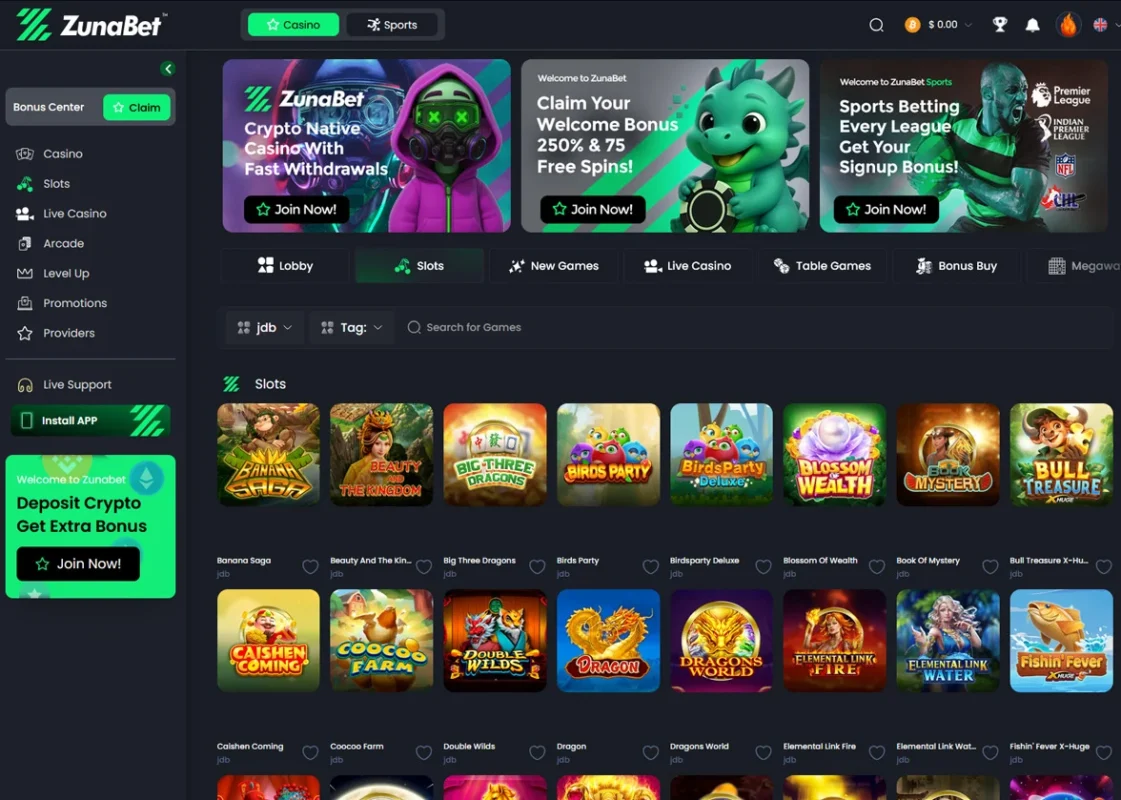
The scale of the game library hits differently than anything in the traditional operator space. ZunaBet lists over 11,000 games from 63 providers — Pragmatic Play, Evolution, Hacksaw Gaming, Yggdrasil, BGaming, and a long roster of additional studios. Slots dominate the catalog, with extensive RNG table games and live dealer content alongside them. FanDuel’s casino, in the states where it runs one, does not come close to this kind of depth. Very few platforms of any kind do.
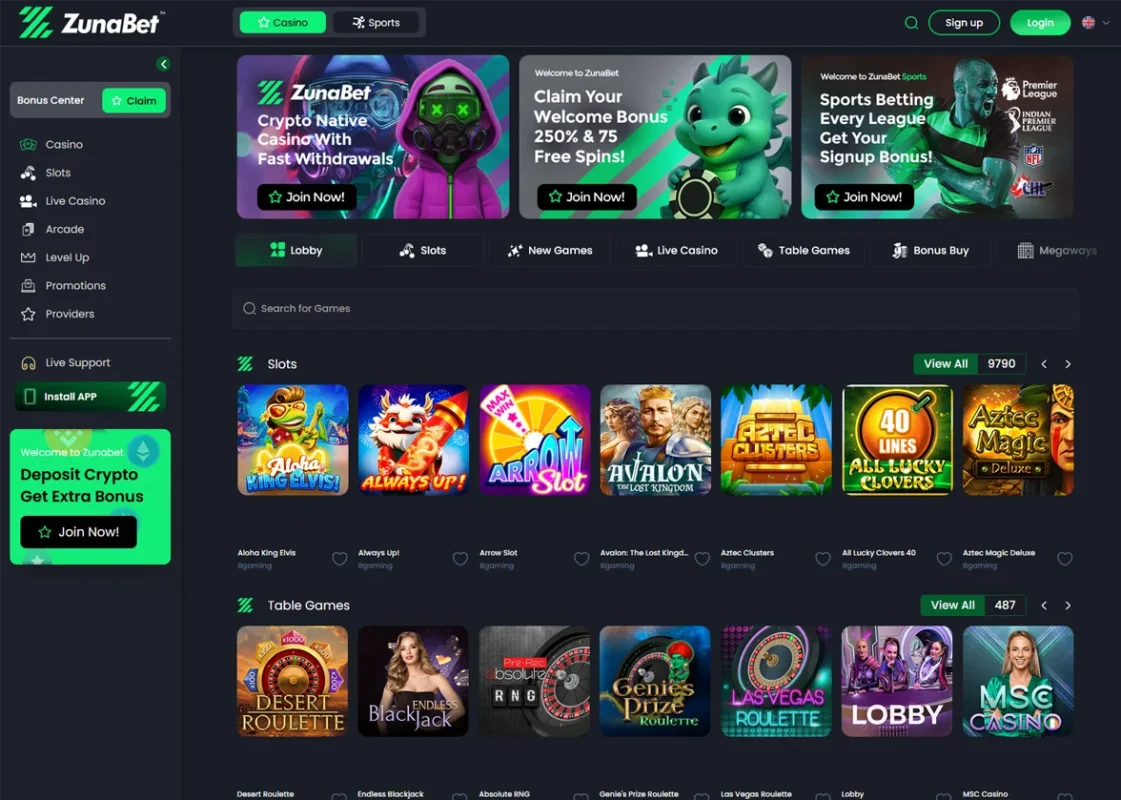
Sports betting gets equal billing. The sportsbook covers football, basketball, tennis, NHL, combat sports, and virtual sports with full market depth. Esports is treated as a first-class category, with dedicated coverage of CS2, Dota 2, League of Legends, and Valorant. FanDuel still holds an advantage in terms of US sports market integration and brand partnerships, but ZunaBet provides a globally oriented sportsbook with esports breadth that most mainstream operators have yet to take seriously.
The crypto infrastructure is what ties everything together. ZunaBet accepts upward of 20 cryptocurrencies — BTC, ETH, USDT across multiple blockchains, SOL, DOGE, ADA, XRP, and more. Platform transaction fees do not exist. Withdrawals process fast. The entire financial layer of the platform runs on crypto rather than banking rails, which means there are no intermediaries slowing things down or adding costs at every step.
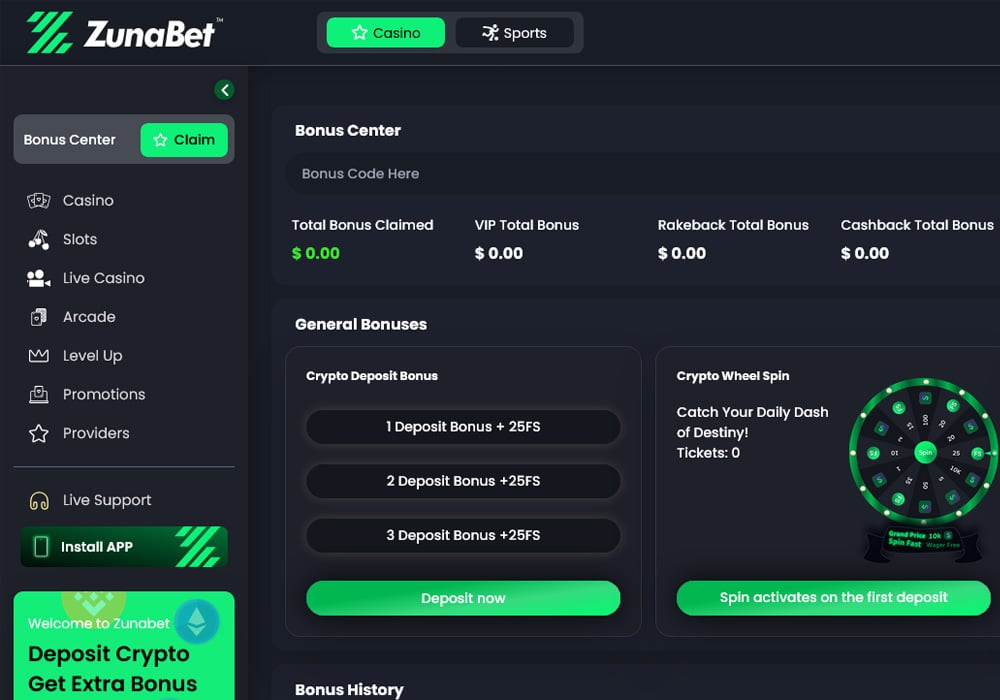
Welcome bonus value reflects the overall approach. New players at ZunaBet can collect up to $5,000 in matched deposits plus 75 free spins spread across three deposits. First deposit is matched at 100% up to $2,000 with 25 free spins. Second deposit is matched at 50% up to $1,500 with 25 spins. Third deposit is matched at 100% up to $1,500 with 25 spins. Stacked against what FanDuel offers on the casino side, it is a much larger initial incentive.
The platform runs a dark-themed HTML5 interface that is fast, responsive, and available through native apps on iOS, Android, Windows, and MacOS. Customer support via live chat is available 24 hours a day, seven days a week.
How Each Platform Thinks About Player Loyalty
The loyalty programs at these two platforms reflect entirely different philosophies about what keeps players coming back.
FanDuel’s approach is utilitarian. Play generates points. Points convert into bonus bets or credits. There are tier mechanics within the broader Flutter ecosystem, but the experience amounts to a ledger that grows when you wager and shrinks when you redeem. It serves high-volume players reasonably well and does almost nothing for everyone else. There is no personality to it, no sense of progress beyond numbers ticking upward, and no reason for a player to feel any particular attachment to the system itself.
ZunaBet went somewhere completely different. The loyalty program uses a dragon evolution theme centered on a mascot named Zuno. Players advance through six tiers — Squire, Warden, Champion, Divine, Knight, and Ultimate. Rakeback increases from 1% at entry level to 20% at the top. Along the progression path, players unlock free spins packages reaching 1,000 spins, VIP club membership, and double wheel spins.
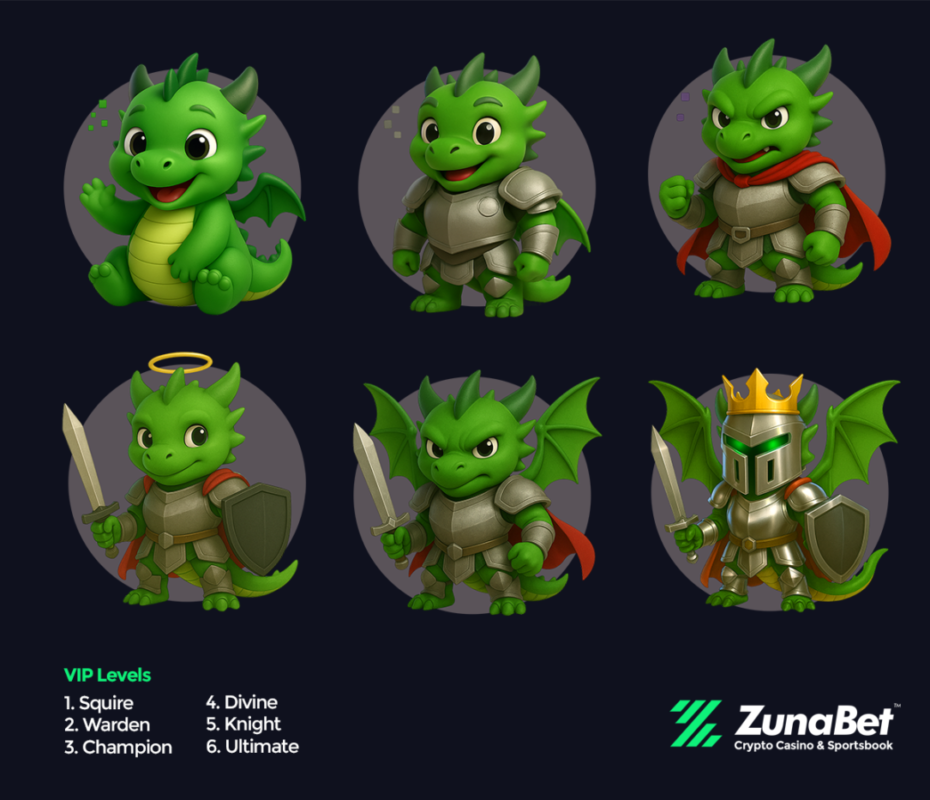
The gamification is the key. Each tier feels like a level to reach rather than a spending bracket to fill. Progress is visible and meaningful. Rewards at each stage are clearly defined before a player gets there, creating a pull toward the next milestone rather than passive accumulation of credits with no clear destination. It is the difference between a system that tracks how much you spend and one that gives you something to work toward. For players accustomed to progression systems from gaming, ZunaBet’s model clicks immediately in a way that FanDuel’s points ledger simply does not.
The Infrastructure Divide
Every difference between these platforms ultimately traces back to one fundamental split — how money moves.
FanDuel is built on traditional financial infrastructure. Every deposit passes through a bank or payment processor. Every withdrawal follows the same path in reverse, subject to the timelines and policies of those institutions. Weekends, bank holidays, processing queues, and fraud checks all introduce potential delays. This is not a FanDuel problem specifically. It is how every platform built on fiat currency works, from DraftKings to Caesars to BetMGM. The infrastructure was not designed for speed. It was designed for compliance and institutional oversight.
ZunaBet does not operate within that system. A crypto deposit moves from a player’s wallet to the platform directly. A withdrawal moves back the same way. No bank reviews the transaction. No payment processor queues it behind a thousand other requests. No one charges a percentage for the privilege of moving the player’s own money. The experience is direct, fast, and cost-free from the platform’s side.
For players who still operate primarily through bank accounts and cards, FanDuel’s system is familiar and acceptable. For the growing population of players who hold and transact in crypto regularly, ZunaBet’s system is not just better — it is the only approach that makes sense. Asking a crypto-native player to convert their holdings to fiat, deposit through a bank, wait for processing, and then reverse the whole chain on withdrawal is asking them to accept friction that does not need to exist.
Who Each Platform Is Really For
FanDuel was built for the American sports bettor who wants a legal, regulated, mainstream experience. It serves that audience exceptionally well, and its hold on that market is strong. Nothing about the emergence of platforms like ZunaBet threatens FanDuel’s position with that core customer.
ZunaBet was built for a different player entirely. Someone who wants tens of thousands of games instead of a few hundred. Someone who holds crypto across multiple chains and wants to use it without conversion. Someone who expects their withdrawals to arrive in minutes rather than days. Someone who finds a dragon evolution loyalty program more compelling than a points-for-credits exchange. Someone who bets on Valorant and League of Legends with the same seriousness as football and basketball.
That second group of players is not small, and it is getting bigger. As crypto adoption continues to expand and a generation raised on gaming culture enters its peak gambling years, the audience that ZunaBet was designed for will only grow.
What This Tells Us
FanDuel represents the best version of what traditional online gambling infrastructure can produce. ZunaBet represents something built without those same constraints.
Both platforms are good at what they set out to do. But only one of them feels like it was designed for where the industry is heading. ZunaBet launched in 2026 with over 11,000 games, 63 providers, 20+ cryptocurrencies, a $5,000 welcome package, a complete sportsbook with serious esports coverage, apps across every platform, and a loyalty system built on game design principles rather than casino industry conventions.
It is still a new platform finding its footing in the market. FanDuel has years of trust and regulatory standing that cannot be replicated overnight. But in terms of what is actually on offer to a player logging in today, ZunaBet has put together something that traditional operators — even the biggest ones — are not currently equipped to match. The question is no longer whether the market is shifting. It is how quickly.
Get 3 Free Stock Ebooks
Discover top-performing stocks in AI, Crypto, and Technology with expert analysis.
- Top 10 AI Stocks - Leading AI companies
- Top 10 Crypto Stocks - Blockchain leaders
- Top 10 Tech Stocks - Tech giants


