



Key Takeaways
- President Trump established an 8 p.m. ET Tuesday ultimatum for Iran to reopen the Strait of Hormuz or risk military action
- Oil markets showed muted response with Brent crude declining 0.3% while WTI climbed marginally
- The President warned of swift strikes against Iranian infrastructure including bridges and energy facilities
- Tehran issued counter-threats targeting Gulf region energy installations
- Trader skepticism may stem from previous deadline extensions by the administration
Global crude markets displayed remarkable composure Tuesday as President Donald Trump’s deadline for Iran to reopen the Strait of Hormuz approached. The standoff, now entering its seventh week, has already triggered significant disruptions in worldwide oil supply chains.
The President established an 8 p.m. Eastern Time Tuesday deadline requiring Iran to reach an agreement. Trump warned that American forces could demolish “every bridge in Iran by 12 o’clock tomorrow night” should Tehran refuse. He added that power generation facilities would be “burning, exploding and never to be used again.”
Market participants appeared unfazed by the escalating rhetoric. Crude benchmarks demonstrated minimal volatility throughout the trading session. Brent crude futures slipped 0.3% settling near $109.40 per barrel. West Texas Intermediate registered a modest 0.2% gain reaching $112.59. Both indicators remained relatively unchanged from Monday’s close.
July delivery contracts for Brent crude temporarily fell beneath the $100 per barrel threshold. WTI contracts for the same month settled at $90.43, representing a decline from the previous week’s levels.
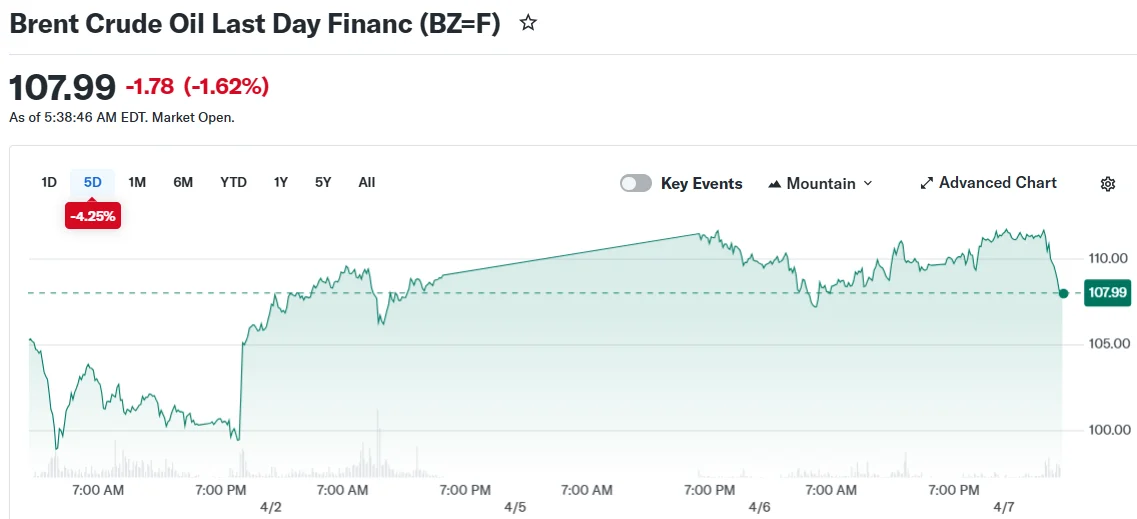
Market composure may be attributed to the administration’s track record of adjusting timelines. Trump has previously shifted similar deadlines on multiple occasions, potentially eroding trader confidence in enforcement.
According to AJ Bell’s Dan Coatsworth, several scenarios remain plausible. Either Washington or Tehran could retreat from their positions, potentially triggering equity rallies while energy prices decline. Alternatively, significant escalation could send shockwaves across broader financial markets.

Coatsworth identified a third scenario — another deadline postponement that would extend market uncertainty indefinitely.
Tehran’s Counter-Strike Warning
Iranian officials have pledged retaliatory strikes against Persian Gulf energy facilities if the United States launches military operations. Such counterattacks could further constrict global petroleum supplies and intensify economic headwinds worldwide.
Sources familiar with negotiations expressed pessimism regarding Iran’s willingness to satisfy Trump’s conditions, the Wall Street Journal reported. The Strait of Hormuz represents a critical artery for international oil transportation.
Societe Generale’s market strategists outlined two primary trajectories. The first involves a tenuous ceasefire without ground combat and gradual supply normalization. The second scenario envisions protracted warfare with deployed forces and permanently elevated energy market risk premiums.
Supply Constraints Already Emerging
Market indicators suggest traders are anticipating near-term supply limitations. The WTI prompt spread — measuring the price differential between its two nearest-dated futures contracts — approached $15.50 per barrel Monday, nearing historical peaks.
This spread widening coincided with international buyers aggressively securing American crude supplies. Expectations for domestic oil availability have deteriorated as the confrontation persists.
The President indicated Monday that diplomatic discussions with Iran were “going well,” while simultaneously emphasizing severe repercussions should negotiations fail before his established cutoff time.
Get 3 Free Stock Ebooks
Discover top-performing stocks in AI, Crypto, and Technology with expert analysis.
- Top 10 AI Stocks - Leading AI companies
- Top 10 Crypto Stocks - Blockchain leaders
- Top 10 Tech Stocks - Tech giants


